In this post I will discuss a very important topic for me and about which I have not found too much information on the Internet (apart from the fact that many people do not take it not seriously). It is belonephobia or needle phobia.
There are many phobias, and those who do not suffer any sometimes laugh at those who do. Phobia to spiders, mice, heights, enclosed spaces, crowds … I have a friend who once ran down an alley because we were in a crowded street and was overwhelmed, and she always wanted to be next to the door in pubs because she was claustrophobic. I know another who can’t stand seeing mice, even on television. Snakes make me feel very disgusting, but it’s not a phobia. Another person I know is afraid of flying and has never been on a plane (she says that she will die anyway, even if she doesn’t travel. I feel sorry for her because traveling is one of the best things that exist).
The main problem with belonephobia is that it interferes with important issues (medical check-ups) and that between 50 and 70% of people who suffer from it faint. Those who have passed out know that it is not pleasant, especially the moments before (when you start to feel bad and the most important thing is to lie down so as not to fall on the ground) and after (due to changes in blood pressure, you pass from feeling very hot to very cold and it takes some time to recover). The time that passes while you are unconscious is exactly like sleeping, the only difference is that when you wake up you are stunned because everyone is watching you, telling you “calm, quiet”, and it takes you a while to remember that you have passed out and you can start talking. It is really very distressing, at least for me, it seems the closest thing I’ve experienced to die or having an accident. Not to mention the anguish of people around you, the shame/ridicule you feel later …
Precisely because of this, people who have suffered fainting have a horrible fear of fainting, and that makes us avoid as much as possible what causes us to faint. Unless you have a health problem, very low blood pressure, a heat stroke or have not eaten for many hours, it is rare for a person to get dizzy and faint all of the sudden. In my case, all the times I’ve passed out have had to do with minor accidents, my period (as I related in the previous post) and, what I’m going to deal with today, belonephobia.
Belonephobia would be the fear of needles, of being punctured, and of blood. It has different grades. For example, in my case I am not afraid of dentists, when I had dental interventions (many years ago, now as I told in other post, I have no problem with interventions in my mouth) I saw huge needles, I have watched as the blood splashed the dentist’s glasses…and nothing, no problems. [Well, just one thing: once my heart accelerated a lot, and I was surprised because I was very calm and the dentist has never scared me, so they explained to me that local anesthesia has adrenaline and may cause that effect]. And paradoxically I have a whole experience with electric hair removal, which, although it is not puncturing, consists of introducing needles into a follicle, and I do it myself. In addition, in sessions of electrical hair removal I had local anesthesia punctured and I have not had problems either. Nor do I have problems getting a vaccine.
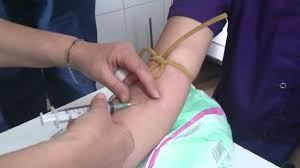
What is my problem then? Blood drawing. It is a Chinese torture to me. Or having a needle inserted (like anesthesia or an I.V.), although I still haven’t faced that. It’s so unpleasant when they put the tourniquet, they puncture you… There have been times that I have gotten along, especially if they do it fast (and I lie down and not looking, of course). Then I take a piece of chocolate and lie down for a while, get up and leave. But other times (especially when two tubes have been drawn) I have fainted. And I live in fear of the day that they I might need a surgery, or that I want to be a mother and my fainting problems can affect the baby, not to mention the moment of giving birth …
I talked to a doctor and told him that, perhaps, instead of the question of the extraction itself (which is not so bad, but I will never be a blood donor), the problem is the place of the extraction. They draw blood from the inside of the elbow, and for me that place is like my Achilles tendon or Samson’s hair, once I got dizzy because they pressed me with the round thing that they put on the inside of your elbow when measuring your body pressure. Maybe if they took it from somewhere else … The inside of the wrist seems even worse, but I think that in the forearm, the upper part, it wouldn’t be that painful. The doctor told me that the nurses search for places where they can see the vein, but I think there are other less painful places where they can see the vein too. I find it inhuman to be condemned to faint because a nurse doesn’t want to bother to take my blood from another site. The fact that blood is drawn in a fasting and in the morning does not help. In the morning I am at my worst moment, very low energy, and if I’m fasting even more. Although on this I learned that it is only necessary to go on an empty stomach if you are going to look at cholesterol, sugar and those things, for other types of analysis (blood count, hormonal) it would not affect being fasting or not. Nor does it help to go to the health center and see how people get in and out holding their arm, having to wait until the end to go have the procedure whilst lying (if you want your blood drawn this way you have to wait until the end) and that people look at you or the nurse laughs at you… well, for me it is a horrible experience. I also saw that there is a service of nurses who can go and do the extraction at home, the next time I have to do analysis I will try to do so, for me it would be money well spent.
Once I fainted watching a surgery on TV and another time because some friends were talking about a surgery, but happily all these issues can be avoided: the biggest problem for me is the necessity of having blood drawn for health check-ups. I also don’t know what will happen the day I have to take care of someone at the hospital (because I can’t see someone with the needle stuck in his arm, I’ve only gone to hospitals to see newborn babies). I have to admit, I don’t want to even think about it. I think that’s why I take care of my health so much …
The two possible solutions that I have found on the Internet, although for the moment I have not applied them, are hypnosis and “applied tension”. From hypnosis I heard a blogger (who I follow for cooking issues) who said she always fainted with the issue of needles, so when she decided to become a mother she underwent a few sessions and overcome it. It sounds too good to me, and I wrote to her personally, but she didn’t give me more information. In addition, she was from Chile, and what I would like is to find someone who knows about it in Spain. Another proposal I found was the one that appears in the book Overcoming Medical Phobias, by Martin M. Antony and Mark A. Watling (I found it online). In the book, the authors talk about applying “applied tension” to prevent vasovagal syndrome, which is what makes people faint from belonephobia. In the book they explain what biological and experience factors affect having belonephobia or vasovagal syndrome (it is quite hereditary), what happens when one passes out, what is the vasovagal syndrome and how it could be solved. Apart from the “applied tension”, they propose a gradual exposure to films or images of what is feared, until it is overcome, with “caregivers” who monitor if you pass out. I really already have enough problems and I’m busy enough to spend my free time watching videos that can make me pass out. So, I always postpone the attempt. The other proposal, given in Chapter 6, is “applied tension.” They explain it as follows.
To function, the brain needs a constant flow of oxygen-rich blood. Since the brain is above the head, when we stand, gravity tends to withdraw blood from the brain [hence when we get dizzy it is better to lie down and lift our legs]. Therefore, the blood needs enough pressure to reach the brain (just as in a house the water needs the pressure to get through the pipes to the floors above). The blood pressure is maintained by the muscles of the blood vessel walls, and by the rhythm and potency with which the heart beats.
When the muscles in the walls of the blood vessels contract, they narrow the diameter of the blood vessels, causing an increase in blood pressure. If those muscles relax, the blood vessels increase in diameter, resulting in a drop of blood pressure.
Blood pressure is also affected by the rhythm at which the heart beats. If the heart beats slowly, blood pressure drops. If the heart beats fast, blood pressure increases.
In summary: relaxed blood vessels and slow beating heart result in reduced blood pressure. That results in blood going to the legs (where gravity carries it) and less blood available to the brain, which deprives it of oxygen. A brain without oxygen cannot be alert and fainting occurs.
Then there is the nervous system. It includes all the nerves, organs and muscles of the body. It tells the heart how fast to beat and tells the muscles in the walls of the blood vessels how relaxed they should be. The nerve that is involved in fainting related to fear is the vagal nerve. When the vagal nerve is activated, it causes the heart to beat more slowly and the muscles in the blood vessels to relax. And that results in fainting. The vagal nerve can be activated by extreme reactions of fear, anxiety or pain, and is activated more easily in some people (those who faint) than in others.
The key to avoiding fainting would be to beat the vagal nerve by contracting the muscles in the walls of the blood vessels to avoid lowering blood pressure. People have no control over those muscles, but we have control over those of the body. Tensioning the muscles of the body (arms, legs, torso, feet, hands, neck) could help prevent fainting, as these muscles apply an external force to the blood vessels, and that way the blood pressure is increased. This is what is called “applied tension.” What they propose is to do exercises to tighten the muscles for 10 to 16 seconds and relax 30 seconds. Repeat 4 times. Make series 5 times a day, for a week. And then see if it works “in situ”, that is, during exposure exercises or in front of the needle.
I do not understand very well the concept of “tensing the muscles”, they say that it is “contracting the muscles”. Then, when blood is going to be drawn, just before, you apply the “applied tension” (but not at the moment, because it can make it difficult for the nurse to introduce the needle). I see it a bit complicated, but I understand the process. The idea is that there will come a time when you have overcome the phobia and you will not have to do anything anymore. The book is very good, I recommend it.
As I said, there are varying degrees of belonephobia and I am glad that I have not issues with dentists, that I can get vaccines… but it is something that I have to solve, and I do not know how. Above all I worry because one day I would like to be a mom. If you read me, nurses or people who have had the same problem and have overcome it, or are in the process, I would be very grateful if you could write me with advice. By the way, check this innovations for blood drawing, I’m looking forward to them to be available for the general public: https://www.tassoinc.com/press-releases/2019/3/5/tasso-raises-61m-to-bring-self-collection-of-blood-samples-into-pharma-trials
That’s all for today’s post, I hope it helps!
Regards!!

 en.secretsbeautyandhealth.blog