This is not the typical blog about makeup, hairstyles or fashion. Here I will speak, from my personal experience, of issues related to beauty and health that are not that known. I share my wisdom with the hope that it will help you to avoid complexes, annoyances and money.
Author: mariahelpsyou
This is not the typical blog about makeup, hairstyles and fashion. From my personal experience, I will talk about issues related to beauty and health which are not that known. I share my wisdom with the hope that it will help you to avoid complexes, annoyances and money.
It’s been a long time since I’ve written regularly on the blog, but whenever I have something important to share, I remember to post it here. Today, I want to talk about how important it is — for women who are thinking about having children — to get a 3D ultrasound.
I don’t have any medical training, so I’ll explain it as I understand it.
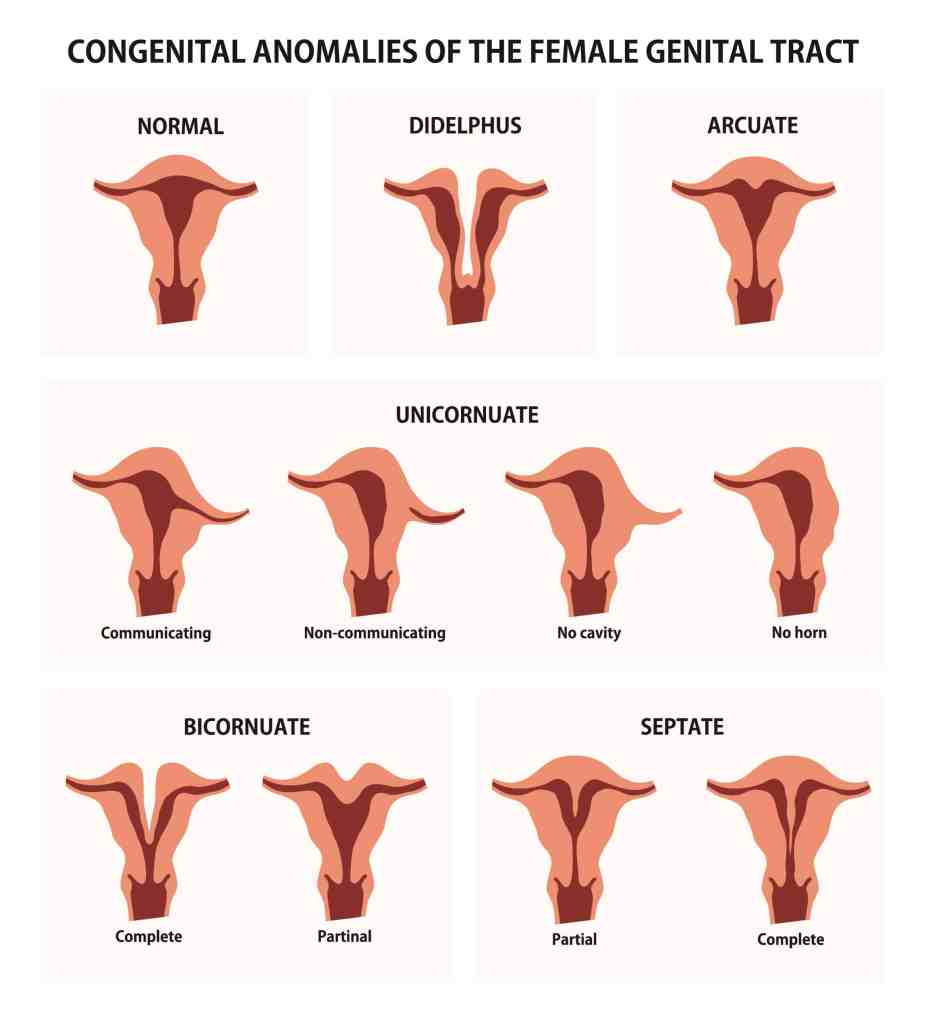
The routine ultrasounds done during gynecological visits are usually two-dimensional (2D), and they’re enough to check that everything looks fine. But 3D ultrasounds can reveal things that 2D ones can’t. I know this because it happened to me. A few months ago, I went through fertility tests, and since those do include a 3D ultrasound, they discovered I had an abnormal uterine shape — a Y-shaped uterus with thickened lateral walls. I’d been going to the gynecologist my whole life and had always been told everything was normal. But I’d never had a 3D ultrasound before.
An abnormally shaped uterus is something you’re born with and often doesn’t show symptoms (although, given my history of painful periods, I’m not sure if that’s related — they told me that link isn’t very clear). The problem is that if you’re thinking about having children, an abnormal uterine shape significantly increases the chances of complications: miscarriage, premature birth… Of course, it’s all about probabilities — nothing may happen — but you’re at a higher risk than someone with a typical uterus. Also, although again the connection isn’t certain, it might make it harder to conceive (check out the video at the end of this post).
TYPES OF UTERINE MALFORMATION (MINE WAS PARTIAL SEPTATE)
Yesterday I had the surgery, and I’m very happy — everything went well and I haven’t had any pain. I had the operation in the morning and was already home by the afternoon. It was a metroplasty. Everyone treated me so well, and I’m very grateful — the Spanish public healthcare system is truly a luxury. Even though it’s overwhelmed and there are administrative issues, it has excellent professionals, and I haven’t seen a system like this anywhere else in the world.
Now I have to wait three months for everything to heal properly, and then we can start trying for a baby.
When they told me I had an abnormally shaped uterus, at first I didn’t want to get surgery — I was scared. But then I thought about it more, did some research online, and came to the conclusion that it’s better to be safe than sorry. The video I’m sharing below really struck me: it’s about a woman who spent 8 years trying to conceive, going through treatments, and only succeeded after she was diagnosed with a uterine malformation and had surgery. Apparently, in all those years, she never had a 3D ultrasound. I guess she was going through private healthcare due to her age, because in the public system, at least when it comes to fertility issues, they do perform 3D ultrasounds — and they would have spotted it there.
Sure! Here’s the full translation of your blog post into English:
Hello everyone!
It’s been a very long time since I last wrote on the blog, but here I am again to share interesting and useful things. This is my latest discovery and, even though it’s a small thing, I’m really excited about it because I had never thought of it before.
I’ve been using solid shampoo for quite a while now because it’s more eco-friendly, practical for travel, and supposedly cheaper, since you’re not paying for a bottle filled with water and a bit of product (as you do with liquid shampoo). You’re paying only for the raw material — the shampoo itself. I say supposedly cheaper because the problem I was having is that when the bar was quite worn down, it was hard to use — not enough lather came out, it would slip from my hands…
I did some research online and found recipes where people cut up the leftover bits of shampoo (or soap), dissolve them in hot water, and make a liquid shampoo. There are also videos where people turn soap flakes into a new bar. I tried the first idea, but it didn’t work — the pieces didn’t dissolve well. Besides, if you do that, it would only be for one-time use, since you’re mixing the product with water and not adding any preservatives like commercial liquid shampoos do. I didn’t try making a new bar, but to do that you need to have enough leftover bits.
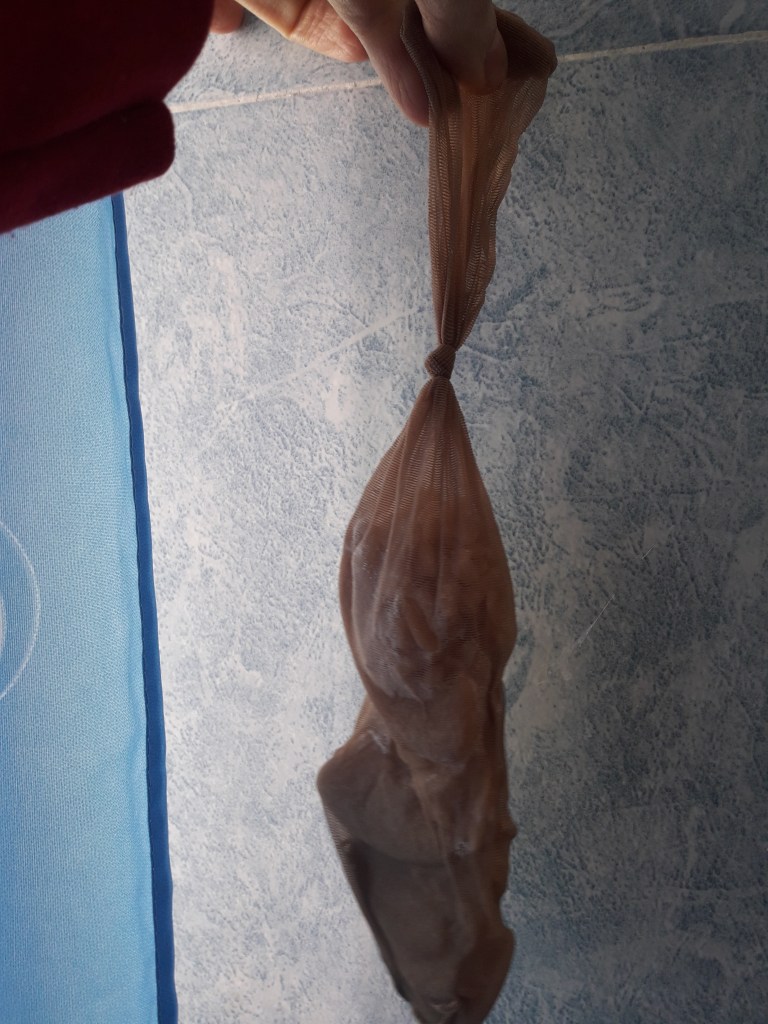
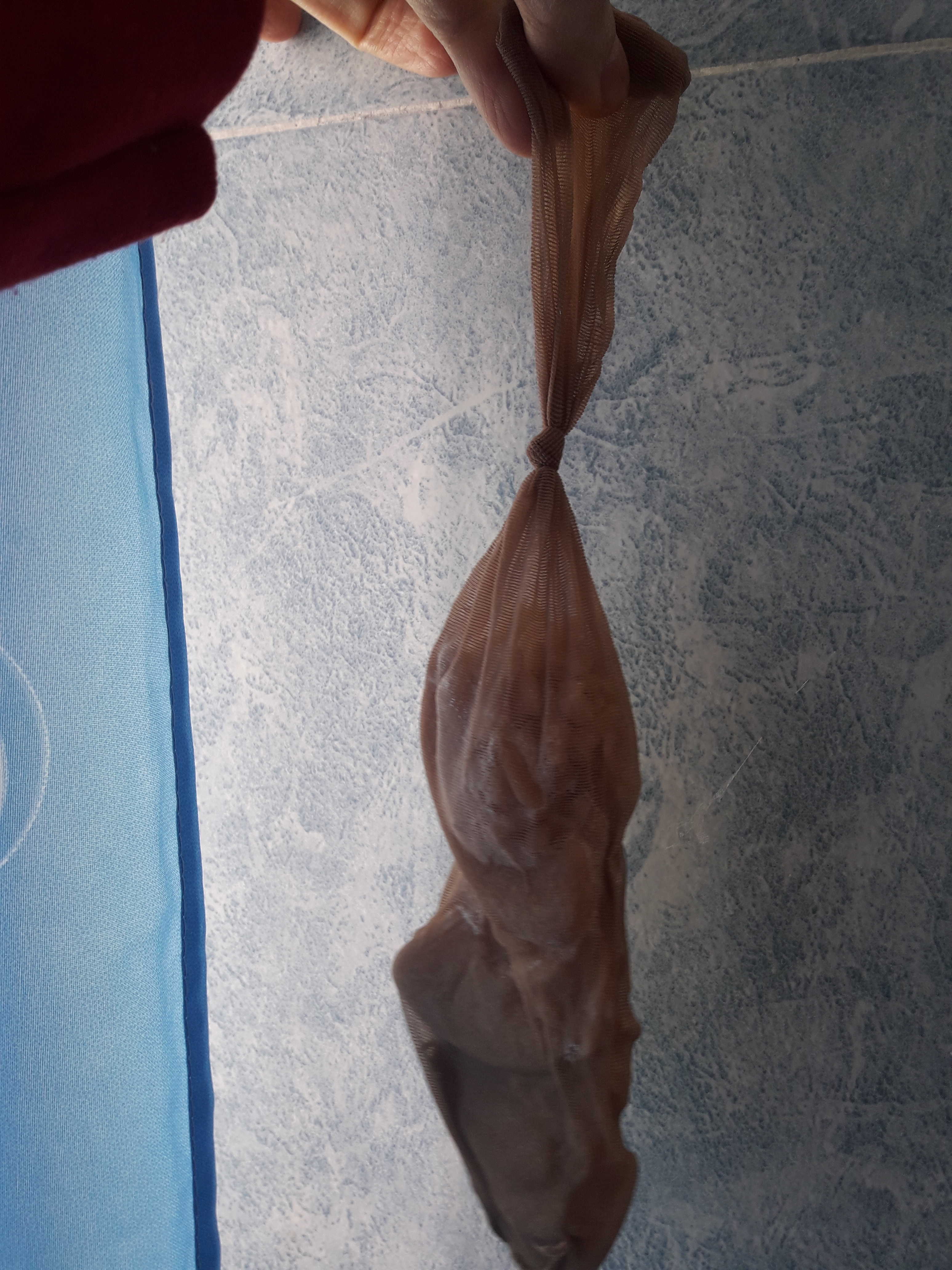
Anyway, the other day I came across a video where a woman said they used to wrap the soap bar (for body use, in this case) in one of those fabric sponges. And that’s when the lightbulb went on! I remembered other videos explaining how you could use an old mesh or stocking to strain nuts for making plant-based milk. And I thought — what if I put the solid shampoo in a stocking to “squeeze” every last bit out of it? Said and done! I cut up an old stocking, put the solid shampoo pieces inside, and tied a knot. When I washed my hair, it worked perfectly — not a single bit of shampoo slipped away, and once mixed with water and rubbed onto the scalp, plenty of lather came out. That way you can use up every last flake. Then you just leave it to dry, and that’s it. When the stocking wears out, you can just wash it normally and use it again. I’m adding a photo of my shampoo-in-a-stocking, already used.
Now that Christmas is approaching, I want to talk about a small appliance that I have used for the last two months and that I love, it has become my favorite kitchen appliance after the pressure cooker (I love kitchen gadgets, they save us time and they make our lives easier, I will write another post about my favorite kitchen gadgets 😉).
It is the Hurom juicer. Since I started the blog, I mentioned a health coach that I used to follow on Facebook (when I still had Facebook, back in 2016). Her name is Valeria Lozano and she has the Hábitos.mx page (she is quite well known in Mexico). Her posts about vegetable juices caught my attention, which she recommended drinking on an empty stomach and preparing with a cold-pressed juice extractor. By then I had been drinking my vegetable smoothie at night for years, since I started that habit back in 2010 when I made gazpachos for dinner because I couldn't chew the salad properly with my braces.
The fact is that I loved seeing her posts about vegetable juices and their benefits, but I didn't dare to do it because I already drank my smoothies at night, and it seemed to me that it was something similar. But not. I didn't do it either because a good extractor costs a lot of money (much more than a simple blender) and the bagasse thing generated resistance in me, it seemed to me like throwing away food. Furthermore, I was not convinced about removing fiber, which is precisely something very good that fruits and vegetables have.
The fact is that, 6 years later (it's never too late, hahaha) and as part of improving my diet even more (now I would consider myself a flexitarian or plant-based, I eat few products of animal origin, with the exception of eggs), I decided to buy an extractor. There are cheaper ones than Hurom, but since I start doing something, I do it well, and to buy one that doesn't extract as much juice and requires buying more food, or that gives me less benefits, then I stick with the blender (also, It is compatible to drink juices and smoothies, eh?).
I decided to buy the Hurom brand because it is the one Valeria uses and I was very well informed about it. There are other good brands too, but in Mexico those who carry the Hurom brand are very active on YouTube (I watched all their videos, hehe) and I learned a lot. Furthermore, in Mexico City they have customer service and a physical establishment, and they give you a guarantee for the extractor, you can buy individual parts...
The fact is that I started making my green juices in the mornings and I loved it!! You really notice something different. To begin with, after the juice (500 ml) I don't get hungry at all until 2 or 3 hours (and having fasted overnight for at least 12 hours, I don't do it much longer either, at most 15 hours). It makes me feel very good, with a lot of energy, and my skin is flawless. Since I bought the pump after taking the blood test, we will have to wait to see if I improve even more (I already took good care of myself, this is an extra step). My sugar and cholesterol were fine, but I can lower the bad cholesterol a little and raise the good cholesterol, although I am within acceptable ranges.
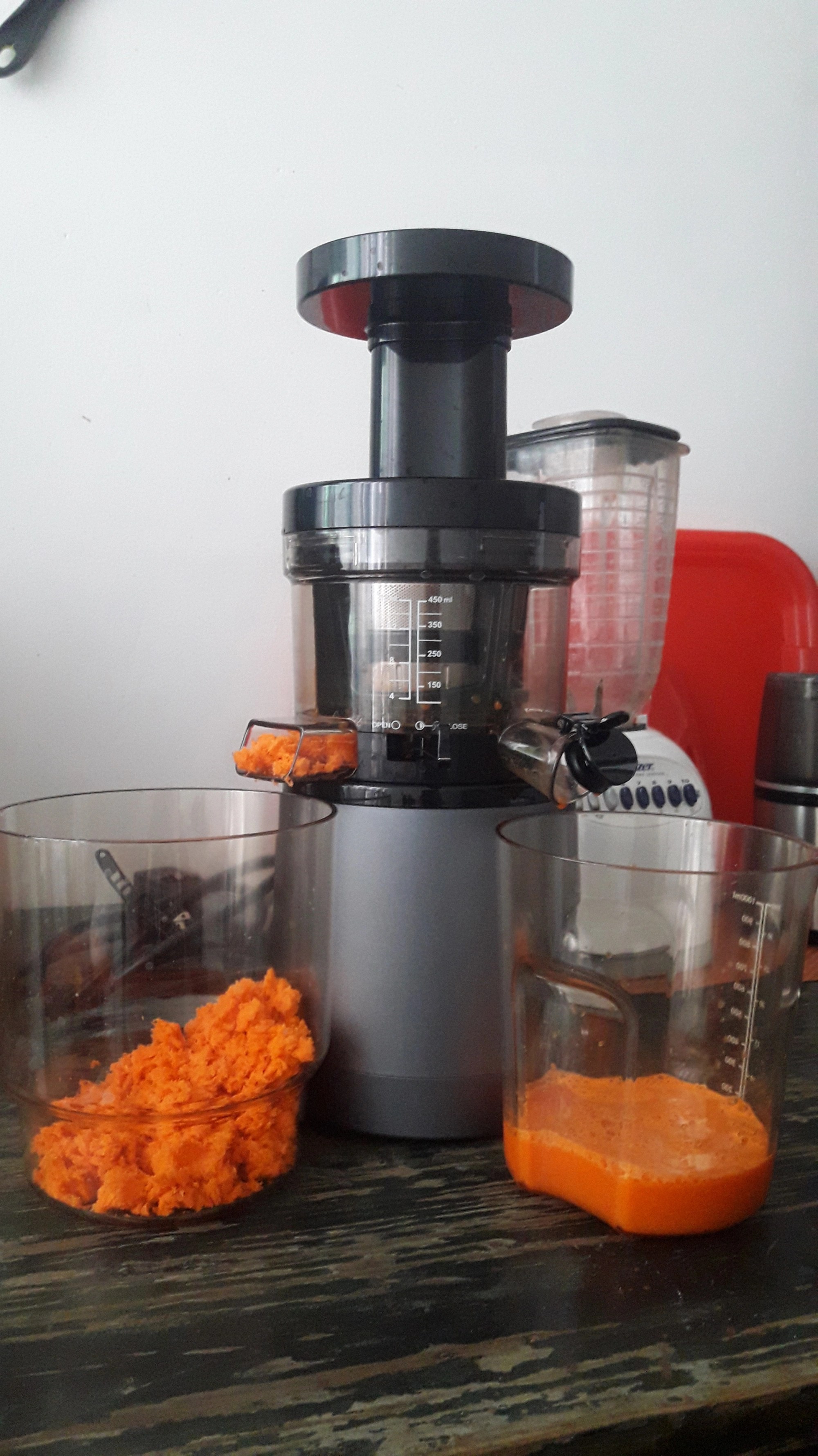
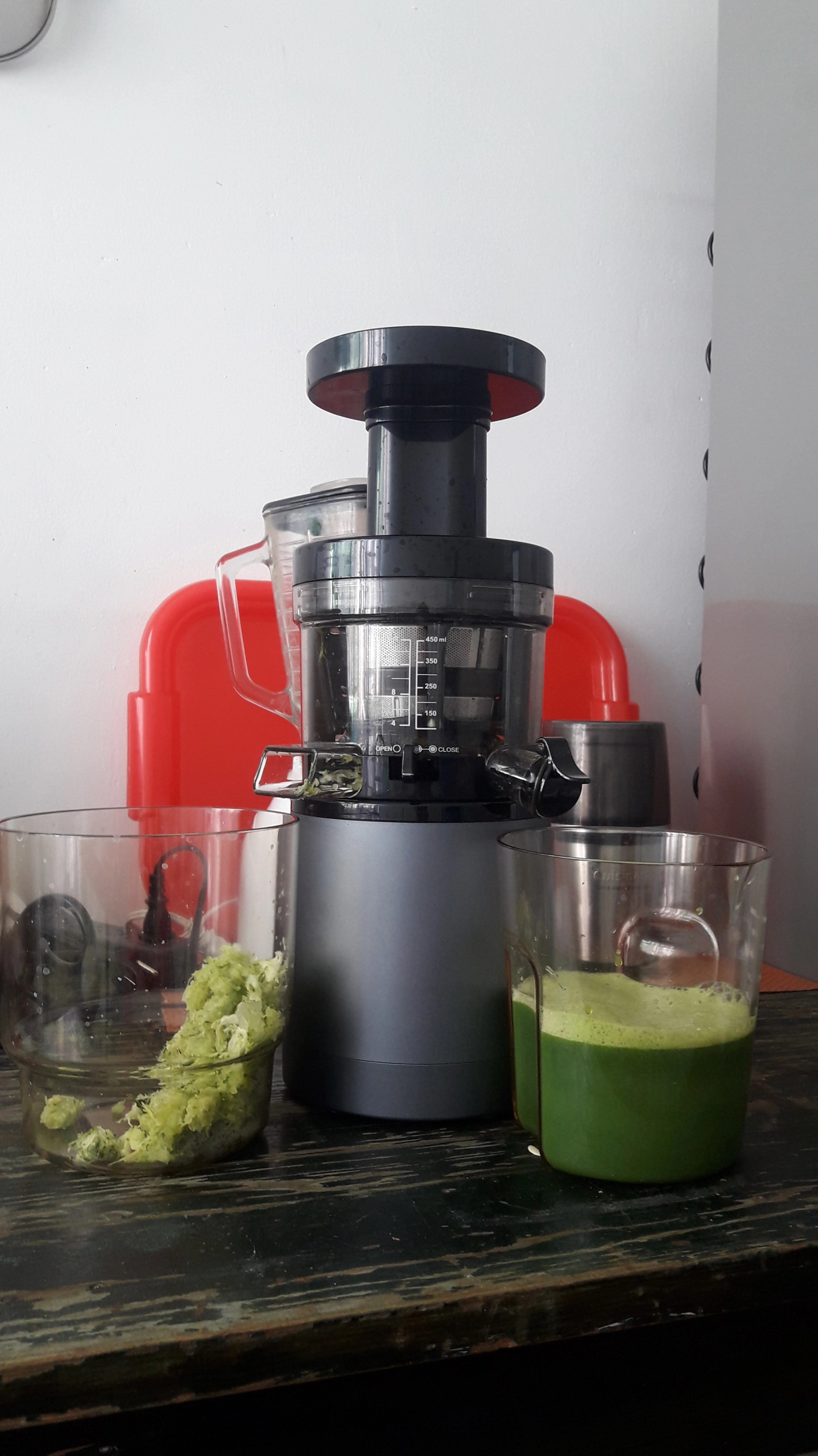
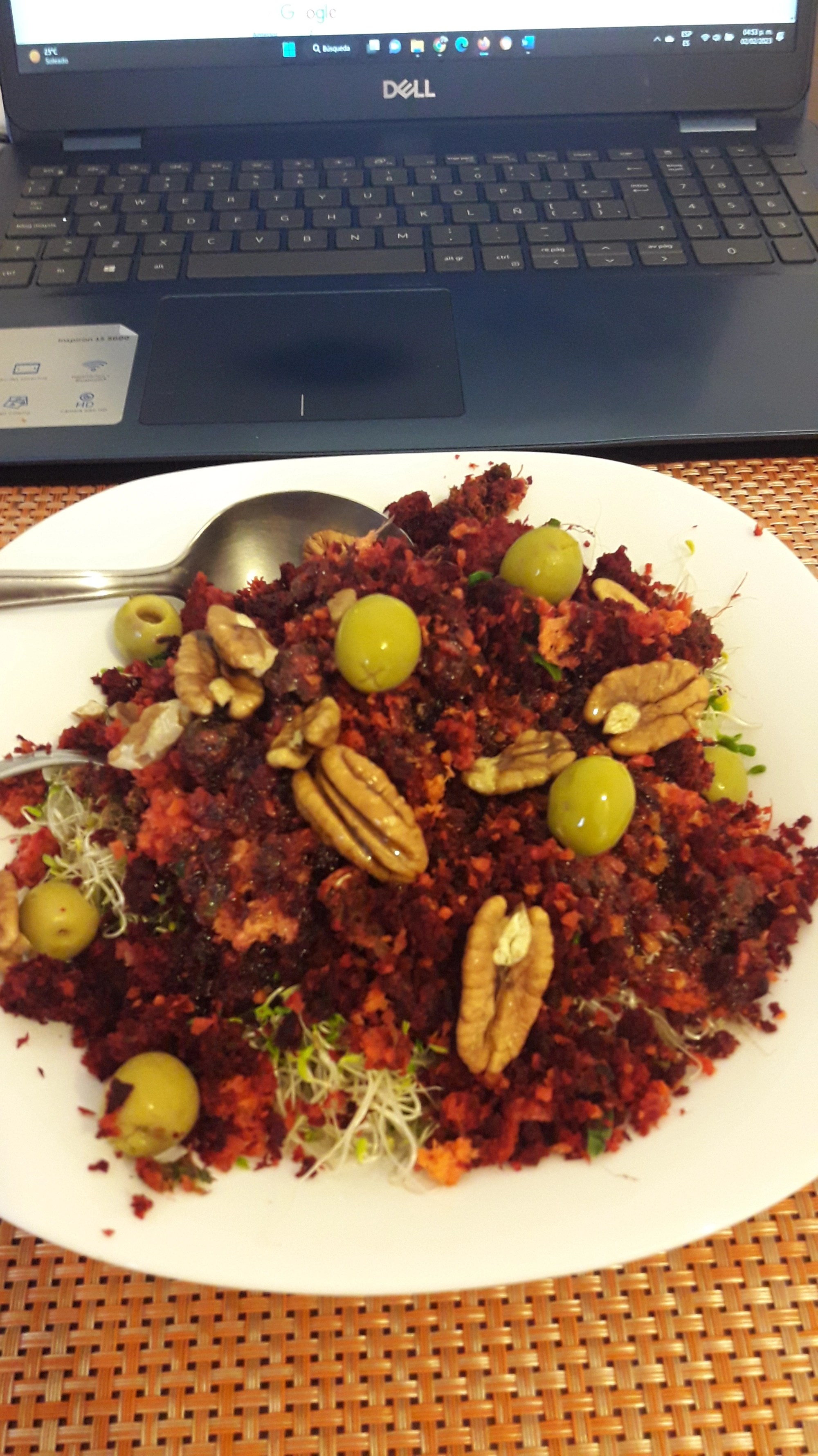
I have made juices of different types, always without fruit except lemon (although you can add fruit). I love the carrot one (I never imagined that you could extract so much liquid from carrots, they are a ton of fiber!), the one with beets (great for anemia and for blood) and the green ones too, very fresh. I always add a piece of fresh ginger. And, a trick, if you are going to eat the leftover bagasse later, do not put the lemon whole but already squeezed, because the white skin that the lemon has, when it comes out as bagasse from the extractor, it is very very bitter. I have a lot of fun preparing the vegetables, cutting them, putting them in the juicer and seeing how the juice comes out, and then the bagasse comes out on the other side. If there is a rush in the morning, you can prepare and cut everything at night and just make the juice the next day. Or you can even prepare the juice up to 72 hours in advance and store it in the refrigerator; it does not lose its properties during that time when extracted by cold pressure (better if stored in a glass container with a lid and in the dark). I prefer to do it and take it at the moment. I eat the bagasse later at night as a salad adding other things to it, it is very delicious. You can make different sweet and savory recipes with bagasse. In my opinion, the simplest and simplest thing is to eat it as a salad or with egg in a vegetable omelet. I haven't tried it yet, but with Hurom you can make vegetable milk very easily, and the bagasse is perfect to use as nut flour.
Here I show examples of my first juices and leftovers' salad with Hurom:
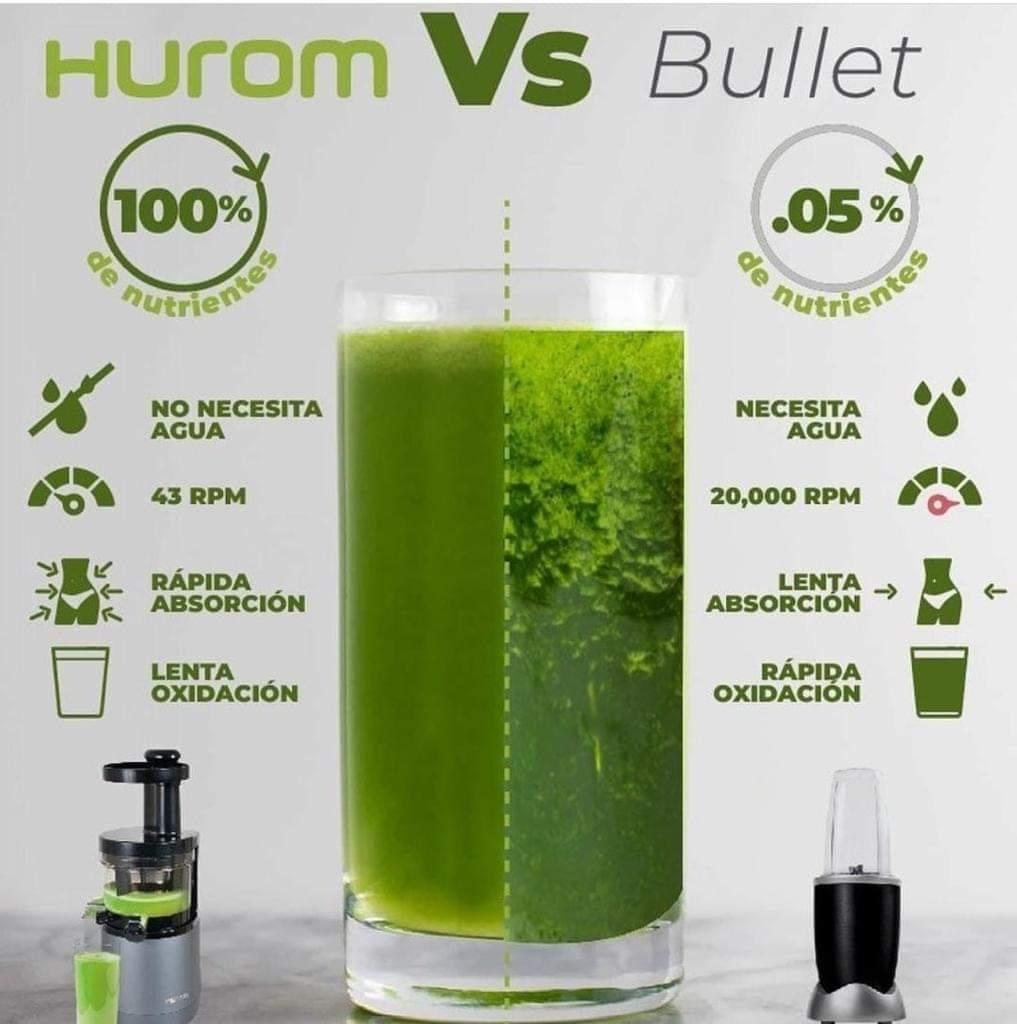
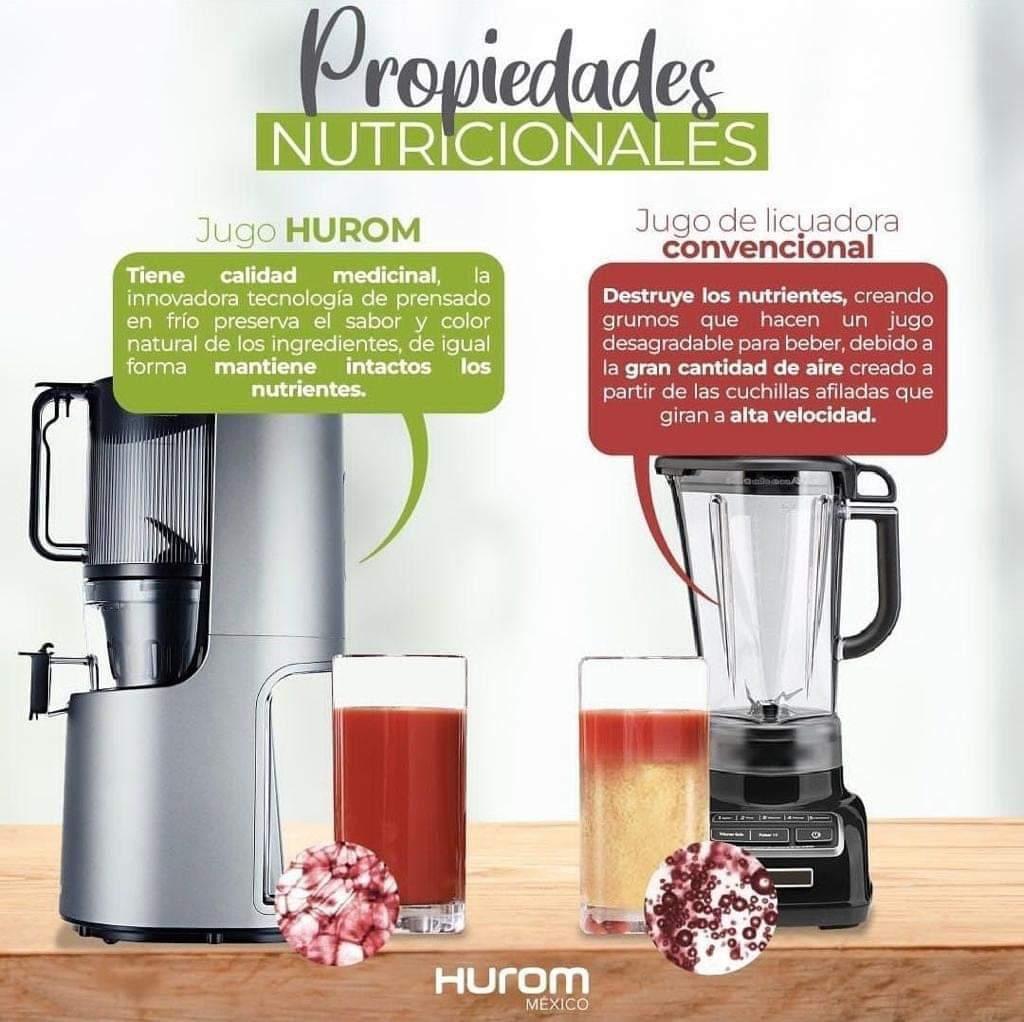
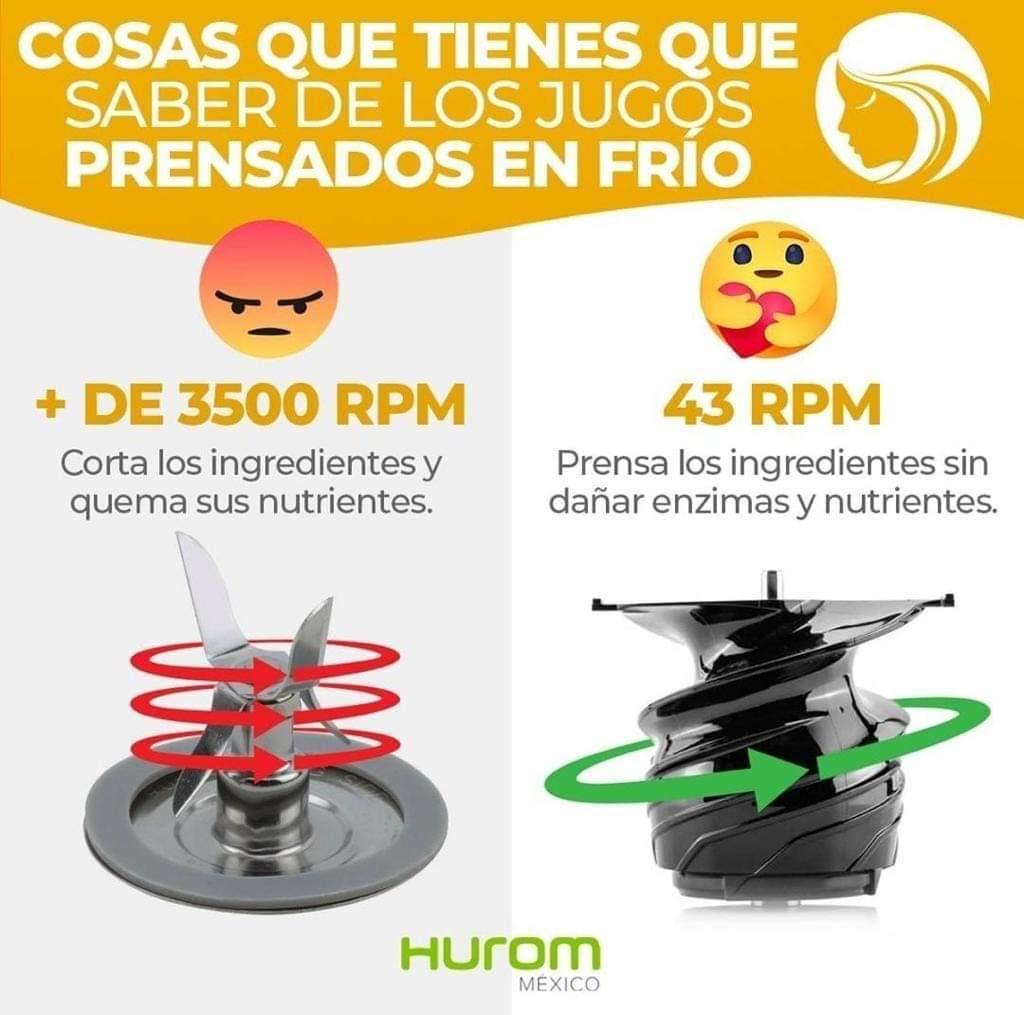
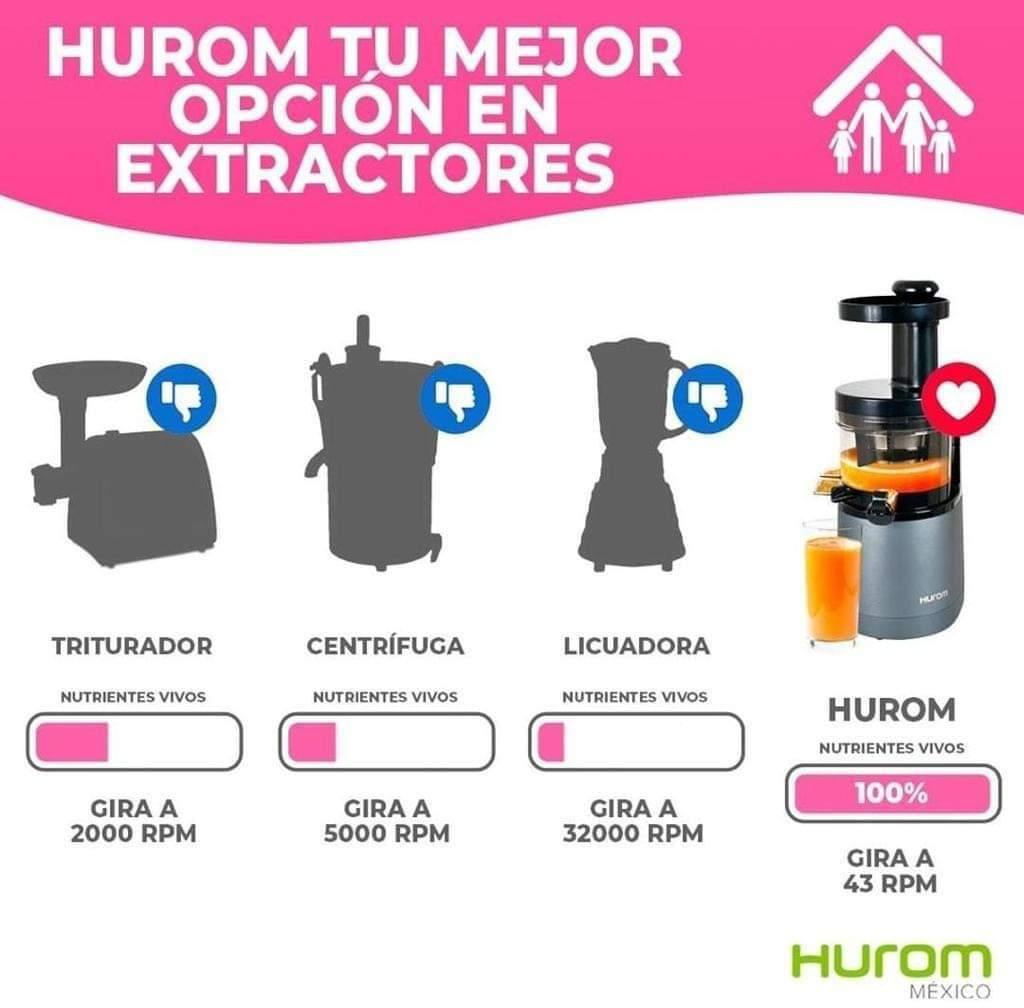
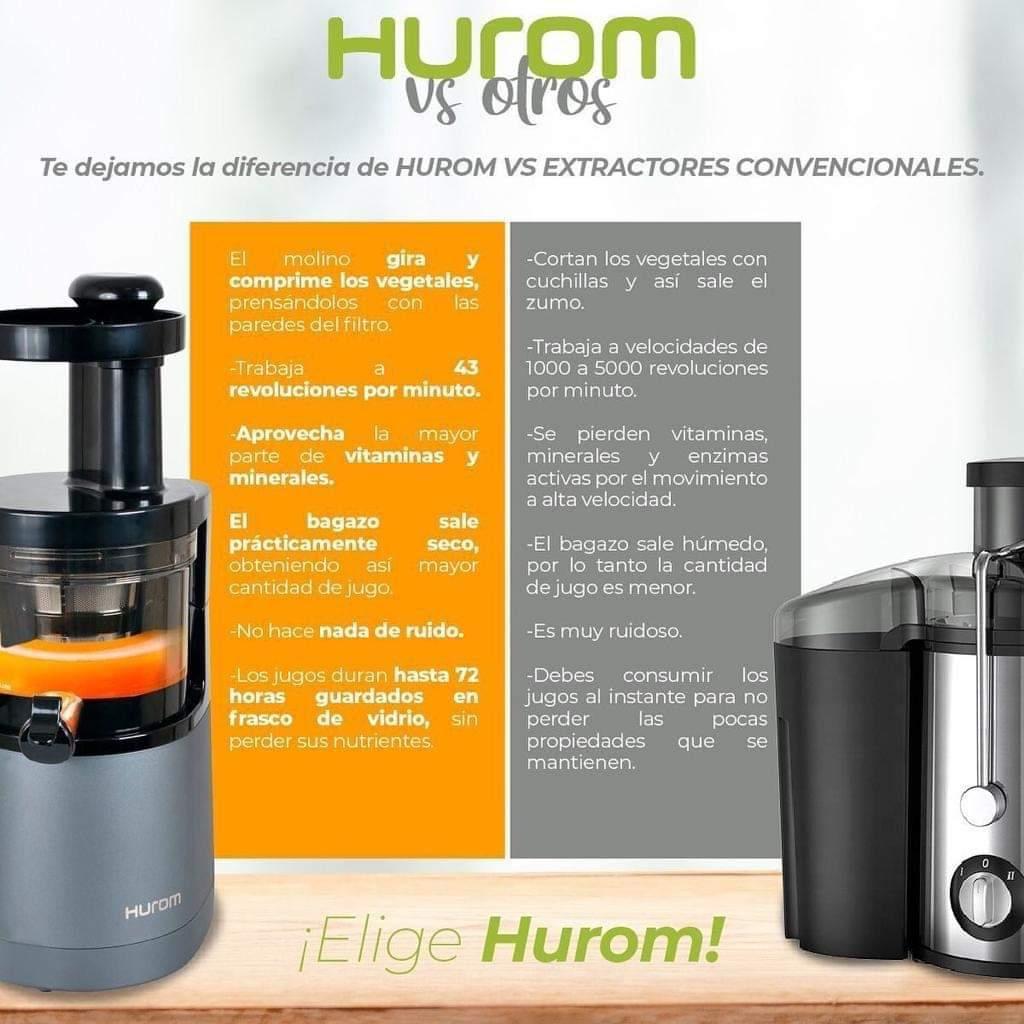
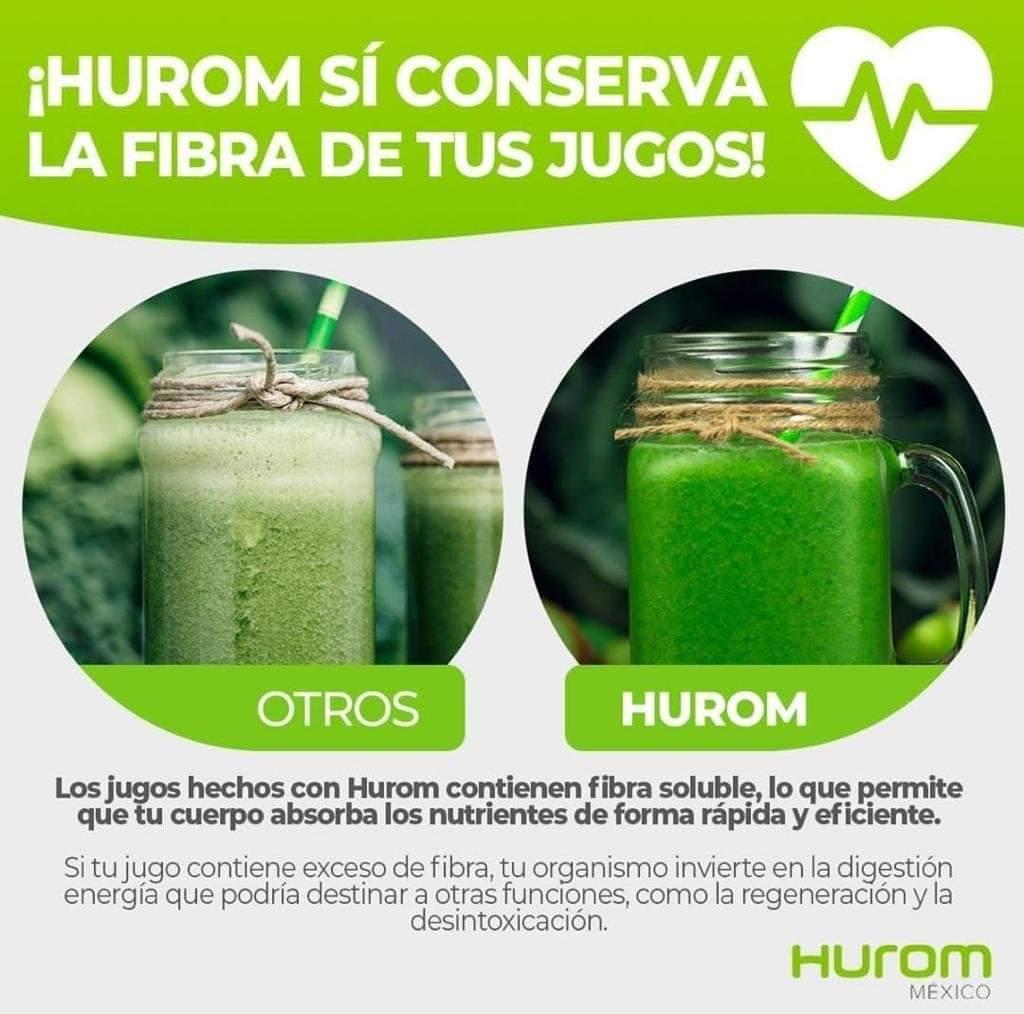
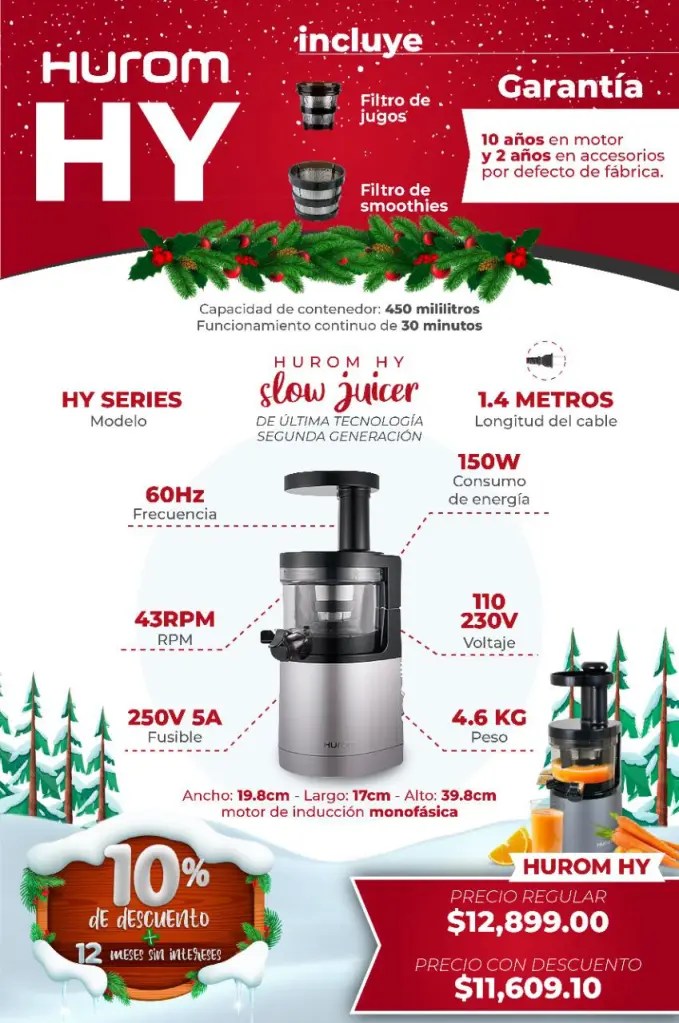
Regarding the juice/smoothie differences, the advantages of juices and why Hurom, I couldn't explain it better than these images:
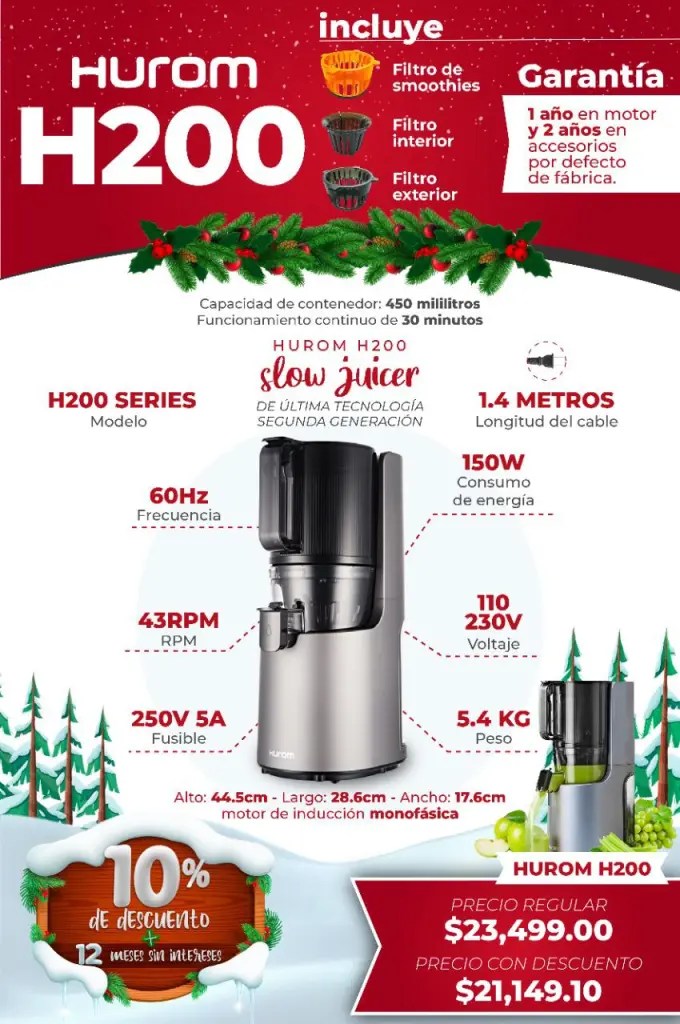
Since now at Christmas we tend to eat less healthily, a juice extractor works perfect to compensate, or to get seriously healthy in January haha. I use it daily, in fact when traveling I have missed my morning juice. I have tried to do the same but with a smoothie, and when you wake up it is harder to drink, plus the insoluble fiber falls heavier (the cold-pressed smoothie has soluble fiber but not insoluble, that is what goes to waste). Being on an empty stomach and not carrying insoluble fiber, that fruit and vegetable water, with all its vitamins and minerals, immediately reaches the bloodstream. I think it's a really good way to make sure kids take their vitamins (they can drink juices as early as 1 year old). A few days ago they contacted me from Hurom México in case I wanted to be a collaborator promoting their extractors, and since it is a product that I do believe in (I would have bought it 6 years ago, hahaha) I said yes. The domestic model that I have is HY, there is another model with more capacity which is the H200. I see this one more for large families and businesses, it has more capacity, works for 4 hours and you barely have to chop the ingredients.
By entering my code maria2223 when purchasing the extractor on its official website https://hurom.com.mx/ (go to “do you have a coupon?” and put it in “coupon code”) Hurom Mexico gives you a gift. This month of December is a lunchbox. Additionally, for Christmas, they have the following offers:
Updating this entry about three months later, I confirm that I love my Hurom (I haven't stopped making my juices since I bought it). Here I put my ambassador link for the Wellzen México store (who distributes the Hurom brand in Mexico) and the QR code. By entering the store with my ambassador link or the QR code, in addition to your Hurom you can buy other very interesting products. Every month there are different promotions for Hurom and by entering the link, in addition to the Hurom promotions you have additional gifts and a lower cost for shipping the product: https://www.wellzen.com/#maria2223
PS: So that you believe me even more on the subject of juice, know that the famous Tony Robbins, in his book Power Without Limits, says: “It would be a good idea to control that your diet is made up of 70% foods rich in water. That is, fresh fruit or vegetables, or freshly squeezed juices of one or the other” (p.214). Water is very necessary for the body, but even better than plain water is the water contained in fruits and vegetables, and we already know that cooking vegetables loses some vitamins and enzymes. Tony also says, “Do you want to know what the best purchase you can make is? Buy yourself a blender! [refers to a juicer, the Spanish translation is not precise, I read it in English] Do you have a car? Sell the car and buy a blender, which will take you much further. Do it right now! The juice is taken on an empty stomach, just like the fruit itself, and is digested so quickly that just fifteen or twenty minutes later you can have a normal meal” (p.222).
If you have any questions about Hurom extractors, you can write to me on the blog or privately and I will be happy to answer you.
It's been a long, long time since I wrote on the blog, but here I am again to tell interesting and useful things. This is my latest discovery and, although it is silly, it has me excited, because it had not occurred to me before.
I have been using solid shampoo for a long time now, because it is more ecological, practical for traveling, and because in theory it is cheaper, since you are not paying for a container with water and some product (as you do with liquid shampoo). You pay only for the raw material, which is the shampoo. I say that in theory it is cheaper because the problem I had was that when the tablet was already quite worn out, it was difficult for me to apply it, not enough foam came out, it fell off...
I researched online and saw recipes where they cut the remaining soap (or shampoo in this case) into small pieces, dilute it in hot water and create a liquid shampoo. There are also videos where they create a new soap with soap flakes. I tried the first idea and it didn't work, the pieces didn't dissolve well. Furthermore, if you do that it would be for a single application, since you are mixing the product with water and you are not adding any preservative, as there is in commercial liquid shampoos. I didn't try creating a new pill, but for that you have to have enough leftover pieces.
The fact is that the other day I found a video where a woman said that what they did to take advantage of the bar of soap (in this case for the body) was to wrap it in one of those cloth sponges. And then I had the idea! I remembered other videos where they explained that with an old stocking you could squeeze nuts to make a vegetable drink. And it occurred to me that by putting the solid shampoo in a stocking I could "squeeze" it as much as possible. No sooner said than done! I cut up an old sock, put the pieces of solid shampoo in and tied a knot. When I washed my hair it worked perfectly, not a bit of shampoo escaped, when mixed with water and rubbed on the head the product came out well, so I could use every last flake. Then the stocking is left to dry and that's it, when the stocking is worn out it can be washed as normal and start again. I put a photo of my stocking with shampoo, already used. I hope it helps you! 🙂
t’s been a long time since I wrote on the blog. But I’m back, and I have news!! Something I already talked about in previous posts: Belonephobia; Belonephobia: solved!!
Well, more or less it was already solved, but I think now it’s even more so. So, for all those who suffer with the idea of having blood tests, we already have a solution!!! As I have told in other posts, this is a more or less hereditary problem, which I have suffered from since childhood and which has caused me quite a lot of trauma, due to fainting (sometimes including seizures) when I had to have blood tests (fasting+nerves of going to the health center at those hours of the morning when it’s cold+people who know you and watch+staying until the end waiting for the nurse to have the time to lay you down on the stretcher…). As I already said, I investigated what solutions there could be, because getting blood tests is something more or less mandatory that we should do at least once a year, like going to the dentist or the gynecologist. Here I have been very irresponsible, I have been up to 5 years without doing tests out of fear. And well, no matter how scared one is, better safe than sorry, it is necessary to have check-ups because that way if we have something it can be corrected in time. And they can also detect a deficiency, for example nutritional, and thus we can correct it. This is not like being afraid of snakes or the plane, you can more or less live with it without trying to solve it (although, how sad must be to be afraid of the plane and not able to travel…).
Two years ago I told you that I had found several companies that are designing devices that extract blood from the upper part of the arm, like leeches (with microneedles). But they still don’t market it completely, I suppose that one day they will. I also told that two years ago I had a rhinoplasty, and it went wonderfully. As for any surgery, I had to take blood tests, and also after the operation I was all night with an intravenous inserted (the first time in my case). I also told you that the surgeon gave me a tranquilizer to take on the day of the operation. I’ve tried that before for blood draws, and I think it helps a lot. My opinion is that it makes you feel like you’re a bit drunk, groggy and happy. I’ve never taken tranquilizers for anything other than that, and I’m not in favour of drugs, but I think it’s justified if you have a major phobia. For the rhinoplasty, I also applied Emla anesthetic cream to my forearm (both arms, in case the nurse preferred one arm or the other). I applied it about 45 minutes before the extraction, covering the area with cling film (that plastic one) so that the skin absorbed the cream well. The truth is that I didn’t even notice the extraction or the IV. When the IV was removed, it didn’t hurt at all.
Well, the news now is that a week ago I had a blood test and the nurse came home. I think this is also something that people with a phobia can do and it would remove a large part of the conditioning factors that make us nervous. For example, the health center/hospital itself kind of makes me nervous, the smell makes me nauseous. Then, having to go there very early in the morning (on an empty stomach and in the cold if it’s winter), nerves, seeing people leave holding their arms, being left until the end…If the nurse goes to your home, you avoid all that. I paid 40 euros, and well, yes, it’s annoying when you could do it for free, but if you do tests once a year, it’s not a fortune either. In addition, since you are paying for that service, the nurse surely treats you better (I think I already told you that the time I fainted in the health center of my town, the nurse had made fun of me, she had called me “soul of a pitcher “and he squeezed me in the extraction area making me pass out when I was already half dizzy, he humiliated me and treated me awfully). This time I did not take any tranquilizer. The nurse arrived, I was lying on my bed with my legs up against the wall (something you can’t do in the health center) and then I lay there calmly, I got up very slowly and ate a banana sitting on the bed. She had extracted a big amount of blood and I didn’t notice it, I didn’t get dizzy at any time (I think the trick for this is to lie down for a while afterwards and then get up little by little, first sitting down, then standing up). Like the day of the rhinoplasty, I had put Emla cream on the extraction site. And about the extraction site, I THINK THIS IS THE KEY: NOT ON THE INSIDE OF THE ELBOW, NO, NO AND NO. I DON’T KNOW HOW TO EMPHASIZE IT ENOUGH.
I had always suspected that this was the key, and it already seemed to me when they drew my blood and put the IV in my forearm during my rhinoplasty. But since I had also taken a tranquilizer and had put on the Emla, I didn’t know whether to attribute it only to that. This time I didn’t take a tranquilizer, so that factor can already be ruled out. My theory is that the inside of the elbow is not a good place, even though most nurses say it is. It is convenient for them because it is very easy to puncture there, the vein is very clear there to see. But guess what, when they put the tourniquet on you, the veins swell, and the one on your forearm is perfectly visible then, too. There it hurts much less, to say the least, also being a place that is not the hinge of the arm (as the inside of the elbow is) because, as happens with the hinge of a door, we are not constantly moving it ( as it happens with the inside of the elbow), so there is no bruising or pain. It’s just pure logic. The two times I’ve had blood extracted out of there, and they also put the IVthere, I have had absolutely no pain or bruises.
So, in summary, friends with belonephobia, this is what you can do:
*Take a tranquilizer the day of the extraction (expendable).
*Hire a nurse to come to your home (it’s worth it).
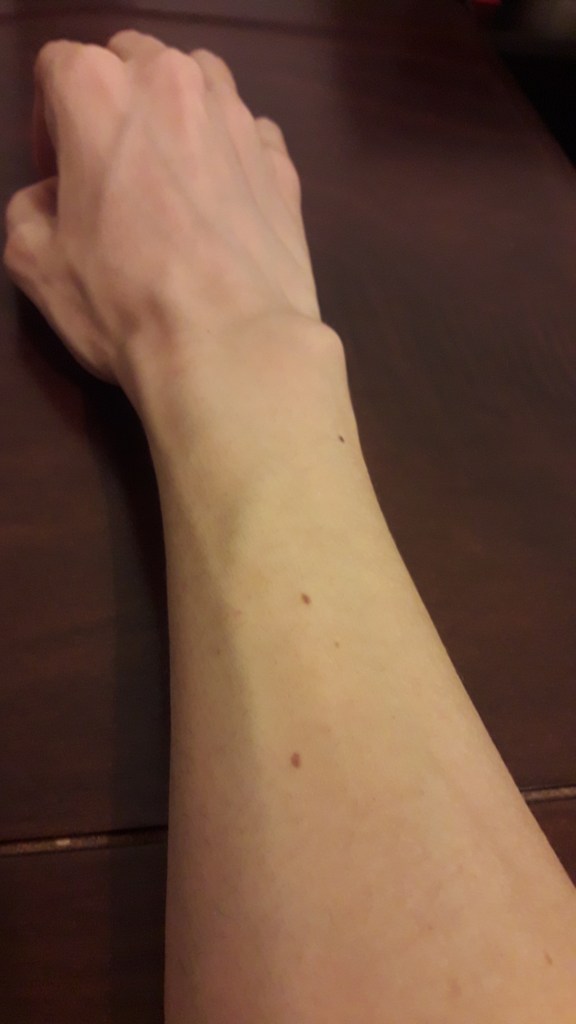
*Put Emla anesthetic cream in the extraction area (the non-dominant arm is better, but you can also put it in both arms in case the nurse gets picky when looking at the veins). *ASK FOR THE BLOOD TO BE EXTRACTED FROM THE FOREARM, NOT FROM THE INSIDE OF THE ELBOW. I am attaching a photo so you can see the exact place I am referring to:
The place where I had my blood drawn is on the left of the second mole.
Hopefully this helps you as much as it helped me, don’t be cowed by bad past experiences or idiotic nurses (stand up for your rights!). And remember that it is important to have annual check-ups.
By the way, some women also experience dizziness after their Pap test. It has a certain logic, after all, they also “extract” something from you. It has happened to me not to get dizzy the first time, to get dizzy the second time, and not the third time. And I think the key was in the time. The times I didn’t get dizzy was in the afternoon and I had eaten before. Go always having eaten and at a time when your blood pressure is not low (preferably go in the afternoon or if it is in the morning, never fasting). In my opinion, the Pap doesn’t hurt or anything, but it’s better that you lie down for a while and get up slowly afterwards, staying seated for a while before getting up to get dressed.
In this month’s post I am going to talk about some tips that are quite useful for traveling, I am referring especially to long trips. In the current moment, traveling seems a thing of the past, but sooner or later we will return to normality.
Due to my job I have traveled many times on long flights (transoceanic), flights of at least 10 hours. The longest lasted 14 hours! So, I have some experience and I have seen what is best for travel, from my personal experience. I am going to offer a list of recommendations, especially suitable for long flights, although they could be used for other types of trips, I hope they serve you!:
1. Comfortable clothes. I am always surprised by the photos of celebrities arriving at the airport super divine, with jeans, heels and makeup. I suppose those are occupational hazards. But for those who are not or aspire to look like celebrities, the best thing in the case of long flights is to wear comfortable clothes: leggings, sports shoes, sweatshirts. Clothes with which you can sleep in the most similar way to how you would in your pajamas. Footwear that you can put on and take off easily. And don’t wear a bra. If you have big boobs you can wear a comfortable sport bra. I don’t wear any bra when traveling. In a previous post I already talked about the lymphatic system and the convenience of not wearing a bra, but on a long flight this is even more necessary. When I have flown in the summer and I was wearing a T-shirt at the airport because of the heat, and I felt that I could not go without a bra because it was going to be too evident, what I did was to take it off in the bathroom of the plane and put it in my handbag or backpack. On airplanes it is never excessively hot, rather it is cold because there is usually ventilation going on, so you will be able to put on a sweater, even if it is thin, and not feel that people will realize you are not wearing a bra. Although, as I mentioned in my previous post, wearing a bra or not, noticeable, or not, shouldn’t be a problem or cause for embarrassment. Also, even if it is summer/hot, I think it is always better to wear more than less clothes when flying. On airplanes, I repeat, it is usually cold. Although they give you blankets, you can get cold, and anyway the excessive clothes that you wear can always be removed. For this reason, I never get on a plane wearing sandals (unless I have thick socks in my bag to put on later) or with not enough clothes, I always wear at least one sweatshirt just in case. And I also wear a neck scarf because the cold of the plane can cause sore throat.
2. Travel pillow. Although they also give a mini pillow on the plane (in the case of Iberia) it is better to take a travel pillow for the neck. You can end up with a terrible torticollis if you fall asleep with poor neck posture.
3. Glasses. If you wear contact lenses, do not take them to travel. You can take them off when boarding the plane or going directly to the airport with glasses. On airplanes your skin and mucous membranes get very dry, even if you do not fall asleep it would be very bad to fly for many hours with your contact lenses on.
4. Big bottle of water. Continuing with the above, on the plane you get very dry on the outside and on the inside. It is advisable to drink plenty of water during the flight. At meals time (on a transoceanic flight there are usually 2 meals and a snack) they offer you a glass of water, but it is advisable to drink much more. And it is better not to drink wine, coffee, or anything like that, just water. Since I cannot carry liquids, I always buy a bottle of water as big as possible (1 or 2 liters) in a store inside the airport.
5. Ear plugs, eye mask, headphones. Again, they usually offer them to you on the plane, but just in case. The earplugs can help you sleep well, the mask protect you from the light, and the headphones are in case you want to listen to your own music, audiobooks or whatever, or if you are uncomfortable with those that are provided on the plane.
6. Toothbrush and toothpaste. After a long trip and several meals, bad breath can occur. At least before landing it is advisable to brush your teeth. Depending on whether you are going to see someone important when you arrive or not, you could also wear some cologne or makeup. I prefer not to wear makeup for long flights, because the skin suffers a lot on those trips. Sometimes I put some aloe vera before landing in order to hydrate. Some underarm wipes can also help you arrive with more dignity (I remind you that I don’t use deodorant).
Hello! Happy 2021! In the first post of this year I’m going to talk about some grooming issues that I think don’t appear very much on the Internet.
The first one are inverted nipples. What?? Yes, there are women (including myself) whose nipples are not erected, or not always. This is called having flat or inverted nipples. In my case, they are usually flat, but with cold or when touched the “tip” comes out. They’re shy, hahaha. For me it is not too much of a problem, quite the opposite, since I do not have that problem of the noticeable nipple when wearing a sports bra or not wearing a bra. Something that, by the way, should not be a problem either, since a nipple is normal, well, what if it is noticeable under the clothes? Men’s package is usually noticeable too. One day I heard a youtuber telling that she had inverted nipples, and that since she wanted to have a baby, she needed to have a surgery there before, in order to be able to breastfeed her baby. When I had rhinoplasty this summer, I mentioned this to the surgeon and he told me that it is just the opposite: if you have inverted nipples and you have surgery done there, you can no longer breastfeed. So, I have doubts about it, if someone has had this problem and has had surgery and then breastfed, please tell me. I read that having flat or inverted nipples may cause problems when breastfeeding, but in my case, since by just touching them they come out I do not think so. What the surgeon told me is that with the surgery to pull the nipple outwards, some “fibers” are cut (those “fibers” cause the nipple go inwards) and that is why afterwards it is no longer possible to breastfeed. Whatever.
Another issue I wanted to discuss is the pubis/labia majora. I think that in a post I already mentioned that I had full intimate hair removal for the first time two years ago, and now I have completely finished the process. There is no going back. I thought a lot about whether I should do it or not, because with electrolysis hair removal the result is definitive. As it was not my priority, I left it until the end, but now after three sessions I am already hairfree there. My doubts were whether I looked or felt strange, and because hair is supposed to have a function there, to protect from friction and against some sexually transmitted diseases.
Well, I did not take my decision for sexual reasons because I am not promiscuous nor did I seek to improve sensations or something like that. I did it, honestly (and I know I’m not the only one who thinks so) because I was sick of seeing pubic hairs (even tough they were mine!) On the bathroom floor, in the sanitary towels, in my pants, on the shower floor… Like the hair on the head, pubic hairs are renewed and fall out, and are long enough to be seen. I don’t go naked at home, so I could not understand how I could see pubic hair on the bathroom floor, just due to drying off after showering. The fact is that I was very disgusted. And those hairs were quite dark, curly and long, gross. Another reason for me was the odor/hygiene issue. Although hair is not synonymous with dirt, well, some remains keep there when you urinate or have your period. Finally, I had a stain on my groin that I thought was from when I had laser there many years ago. I thought it was a burn and that’s why I had that brown stain. But one day it started to itch, and then I started to wonder if it was a fungus. And yes, it turns out that I had a fungus in my groin for several years and had not found out. With a cream it was removed, but I did not stop thinking about how a fungus could have come out there. Because of my lifestyle it was not possible that it was due to something contagious. Then I realized: fungi come out because of the humidity. What could have caused humidity there? Well, when I shower, I usually dress immediately, and my public hair was still half damp when I put my panties on. That’s why the fungus started. I searched on the Internet and saw that other people had also suffered this problem, and they recommended drying public hair with cold air with the hairdryer, or intimate epilation. For the reasons stated above, I preferred the second option.
And that is how I decided to have a total intimate epilation. I forgot to mention that, with aging, many women get gray and bald spots there, so that would be one less inconvenience. With intimate hair removal I have included the pubis and the entire intergluteal/perianal area. It feels very clean in the shower when you notice that there is no hair there. It also feels less annoying with the period, and I don’t get any hairs stuck to the glue of the sanitary towel (it used to be a sudden pain when going to the bathroom hahaha) I was worried that I would notice more friction, for example, when riding a bike. But no problem. Since the epilation was with local anesthesia, it was not painful at all, nor did it give me any problems afterwards, the area swells a little and then it goes down.
One last topic that I have learned about is related to the labia majora. I really don’t know how the “intimate area” of other women look like. But it seems that, as with breasts, there are differences, there are women with larger or smaller, darker or lighter labia majora. In the intimate area the skin is darker than in the rest of the body, that is clear. And it seems that some people whiten that area. Some women have their labia majora too big, or one bigger than the other, and it seems to them little aesthetic or it bothers them with tight clothes. I have one labia majora larger than the other and somewhat dark, but it doesn’t give me any comfort problem or anything. In fact, bigger labia majora are supposedly beneficial on the sexual area. Anyway, for those who may be concerned about this, there is also an intervention that “cuts” labia majora (with laser) and makes them look more aesthetic.
Well, you see, I always talk about “never said” issues. In addition to being curious, they seem to me to be issues that must also be discussed, otherwise it happens as it happened to me with my hair problem: it happens to a young or uninformed girl and she thinks that she is abnormal and that it only happens to her to her. All because some issues are not discussed.
In the last post of this strange year 2020 I want to share that I have written a book!! It is not my first book, but it is the first that I did not write for work reasons and that I’m publishing as Mariahelpsyou. It is available in Spanish and English, both in ebook and paper format. For every taste!
The possibility of self-publishing for free with Amazon had caught my attention a long time ago. Knowing the difficulties of gaining a foothold in the publishing world, it seems like a great option for all those who want to publish something that may not sell, or who are not professional writers. Taking advantage of the low social life imposed this year, I took on the task of compiling some of the blog posts into a book, which has the same title as the blog. It is a short book, with eight chapters, with the posts I thought were the most important to include. In the five years that have passed since I started writing the blog I discovered new things and I had to update several posts. So, in the book I wanted to include all that information together. For example, how I progressed with electrolysis hair removal, belonephobia, skin care, in dyeing my gray hair, in oral care…
The book is aimed especially at teenage girls and girls in their twenties. Every time I wrote a blog post, I mentally relived my past dealing with different beauty / health issues, and each time I thought: “If someone had told me this at the time.” I remembered how I felt so lonely and hopeless with certain problems, which apparently only happened to me because nobody around was talking about them, and that despite my many attempts seemed to have no solution. Some of them (like acne or gingivitis) may seem more common and not as serious. Others, like hirsutism or belonephobia, have really embittered much of my life. That is why the book is aimed at young girls who may living a similar situation. Although it has taken many years, I have found a solution to all these problems. And it has not been thanks to the many specialist doctors, or dentists, or hairdressers, or any so-called “professionals”, but only with my persistence and research on the Internet, losing a lot of time and money along the way. Whoever seeks finds (even if it is later than sooner). Although the book is aimed at young girls, of course anyone can benefit from reading it, at least one chapter, be it a man or a woman of any age.
And well, what better date to launch a book than before Christmas! I do not expect to earn lot of money with this, it would be enough for me to know that the knowledge I share arrived and helped someone who needed it.
Merry Christmas!!
*Where to buy the book:
As an Amazon associate I earn from qualifying purchases.
In February 2018 I wrote a post talking about what it means to be myopic (glasses, contact lenses, Lasik surgery…). Obviously, myopia and its incredible increase in the world population has a lot to do with the modern office/screen/smartphone lifestyle. In July 2018 I wrote a post explaining Jake Steiner’s anti-myopia method (which you can follow on YouTube and his website endmyopia.org). With only a few months applying this method (to the best of my possibilities) I already had a decrease of 0.25 in my myopia.
I think there is a lot of ignorance and conformity regarding myopia. Nobody stops to reflect on whether it is normal for their eyesight to worsen year after year, even when they are young, or whether it is normal to be prescribed more and more diopters each time they visit the optician, with the consequent change of glasses and financial outlay. Which by the way is an abuse, glasses are simply lens with an anti-reflective coat, and the profit that the opticians get for selling them, with respect to the cost of production, is insulting. Most 400 and 500 euros glasses should not cost more than 50, what people pay for is an enormous increase in the price of a few simple lenses and the brand of the frame. Glasses, more than an instrument to see better, seem to be traded as if they were luxury items, such as brand bags. I no longer buy glasses at an optical store but online with Zenni Optical.
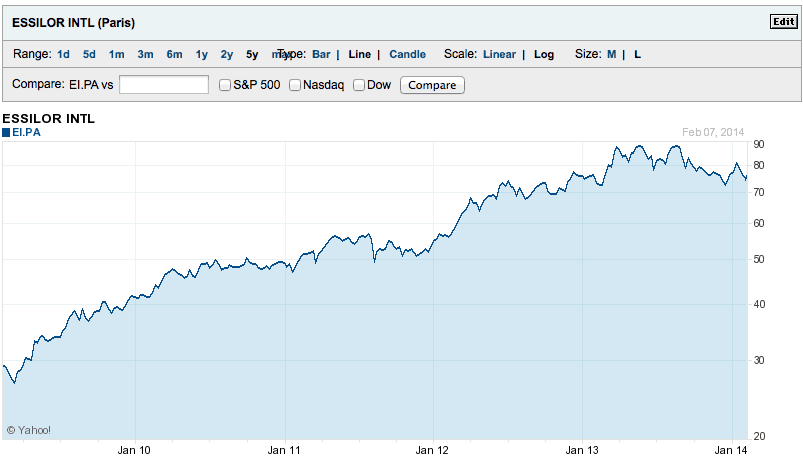
Essilor is a company listed on the French stock market, dedicated to manufacturing lenses. You can see how lucrative the business is.
People also do not stop to think that it is not the same to look far as to look closely, that the correction for myopia is to see well from a distance (ex: driving) but it is not so necessary to see well up close (in fact, it makes vision worse and worse). I have learned all this by following Jake’s videos and website, and now I can confirm it from my own experience. I have also discarded the idea of Lasik surgery. I know that it is a blessing for the quality of life of people with high myopia and that many have done well, but the truth is that what this operation does is giving you a result like wearing contact lenses permanently, in the sense that you see well, yes, but your eyeball is still elongated and your risk on the retina remains the same. The idea of curing myopia is not only to see well again, but also that the elongation of the eyeball changes very slowly and the risk of retinal problems is reduced.
For several years I had been going to work all day in front of the computer, in rooms with heating/air conditioning and with contact lenses, and that is terrorism for your eyes. When you are using the computer/smartphone you blink less and the eye dries, and it dries even more with contact lenses. Heating and air conditioning also dry out the environment, so you should always have a humidifier or a container full of water in the room.
Contact lenses give a better field of vision than glasses and are perfect for the street, going downstairs and playing sports, and for when you really need to see very well from a distance. But to be at home, to work closely, to read, to sew, to perform my dear electric hair removal…no (for that, good magnifying glasses are best). Myopia glasses are for myopia, not for seeing up close. What I started doing almost 3 years ago is to use glasses with a lower prescription than what I use in contact lenses (around one diopter less). And to wear those glasses for close up activities and to be at home. Since this summer I had a “nose job” and wearing glasses is not allowed for a while, I “jumped into the pool” and stopped wearing any type of correction at home. And it was hard, because it is not that I have a little myopia. Today I have a prescription of 4 and 4.5 (when I wrote my first post about myopia, I was 4.75 and 5.25, so you can see that I have improved 0.75 in each eye, in a little less than 3 years). My glasses to be at home and work closely were in 3.25, and I went from that to nothing. I’ve been like this for 5 months now, and I’ve gotten used to it, incredible. I wouldn’t have believed it if someone had told me, because for years the first thing I did when I got out of bed was to put on my glasses. I don’t wear glasses at home or to work. It was quite hard at first, my head ached from the effort, but I got used to it. I get a little closer to the computer screen, but by zooming I have solved it quite well. This may seem silly but what a difference! When looking at the internet, click on the three vertical points in the upper right part of the browser, and then zoom to the maximum that allows you to read the page well. Before I used to read everything at the default size, which is tiny, and of course I had to get very close to the screen. If you spend a lot of time surfing from one page to another, it can be uncomfortable to keep an eye on the zoom, but it is not my case. Also, to write in Word, you can enlarge the screen at the bottom right (I have it at 212%).
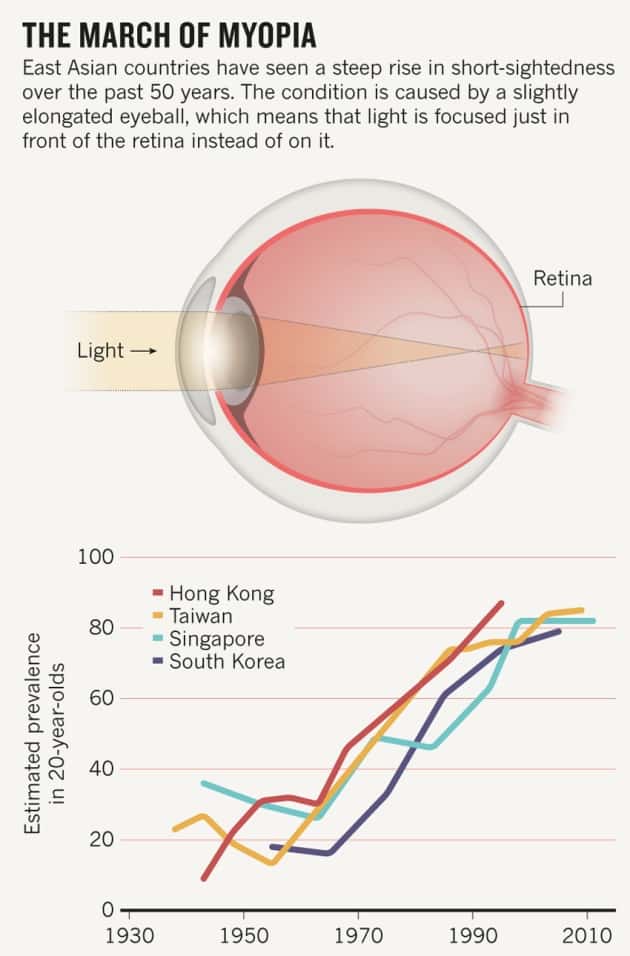
There will be people who think that myopia is not a problem beyond the aesthetic issue and the discomfort of walking around with glasses/contact lenses. But you have to be careful when myopia goes beyond 6 or 8 diopters. In that case, it is already what is called high myopia and there is a risk of retinal detachment and even blindness. It’s not a joke. Only a small percentage of the population has myopia in a hereditary/natural way, in most people it is due to the habits acquired over the years and the increasing correction that they wear all day. It is like type 1 and 2 diabetes, the second is acquired and can be corrected. But correcting it takes years and effort to change habits, just as it took me years to start from 0.25 and “just to study and watch TV” to be at 5 diopters and feel disabled without my glasses. You just have to see that the generation of current grandparents, for the most part, never wore glasses to see from afar, but only the correction to see closely when getting old (that is a natural problem, of aging). Asian populations, due to their physiognomy (elongated eyes) have a much higher risk of developing high myopia. Look at this figures, they are outrageous:
Image taken from Jake Steiner’s webpage: Brutal increase in myopia in Asian populations, hand in hand with development and modern lifestyle.
Returning to high myopia, the myopic eye is longer than the non-myopic eye, and that makes the retina thinner and therefore more prone to detachment. In fact, high myopic pregnant women are sometimes even recommended cesarean section instead of natural delivery because of the risk of retinal detachment. For people with high myopia, “violent” activities such as parachuting, roller coasters… are also discouraged due to the risk of retinal detachment.
Since I wrote the first posts about myopia (February and July 2018) to today (November 2020) I have incorporated many new habits to my way of managing myopia. And I have reduced it by 0.75 in each eye, not more because my lifestyle/work inevitably involves working closely, but enough to realize that increasing or decreasing myopia is like gaining/losing weight: a matter of habits. That is why I am going to leave here a list of things that I have learned should be done to improve eyesight. Almost everything I have learned is from Jake Steiner’s videos/web. I hope it’s useful!
1. Begin to wear only glasses (not contact lenses) for office/close-up work: glasses at least 1 diopter less than your current prescription. Glasses should have a clear frame, be as light as possible and with large enough lenses.
2. If possible, try not to wear even glasses for office/close-up work. This is easier when your diopters are low, although I have done it with quite a few but because I am currently working remotely, I understand that in an office it is more complicated.
3. Wear contact lenses outdoors (they provide a broader field of vision) and with total correction for activities such as driving. Indoors, try to have natural light. Try to do fewer close-up activities at night, and if you do them, always use good lighting (don’t look at the computer/smartphone in the dark and with the brightness at the highest).
4. Buy cheap glasses, it can be done online or even in optical stores if they have modest models. The idea with the Jake Steiner method is that diopters are gradually reduced, perhaps 0.25 every 6 months or 1 year. That implies changing glasses once or twice per year.
5. Enlarge the Internet pages, Word … to see them as large as possible when you are working. If possible, use large monitors, the problem with this is that they can induce looking up and to prevent dry eye it is better to look slightly down. This is because looking up opens the eye more and looking down your eyelid covers the eye more, which therefore dries less.
6. Use applications to have breaks when using the computer (with protectyourvision.org every 20 minutes an alarm sounds, so that you look 20 meters away and blink for 20 seconds). Control the brightness of the screens (at night you should reduce it). I recommend the Flux application, which adjusts the brightness level according to the time of day, making the screen more yellow at night (to avoid blue light at that time, which also causes insomnia).
7. Control the humidity level in the room so that the environment is not too dry, do not wear contact lenses indoors. Outdoors, too much sun, wind or pollution also damages dry eye, wearing sunglasses can help.
8. Try to be outside at least 1 hour a day, for example, walking, to look into the distance. Let it be daytime, of course. This, so simple, is difficult for me to accomplish. If you are accompanied, you can do the same as with glasses: even if you wear contact lenses, wear them with a slightly less prescription than prescribed to make a little more effort when looking into the distance. Or if you have low myopia you can even go without graduation, as long as you are accompanied or it is not necessary to see perfectly well.
9. I love reading. And that adds close-up viewing time to what I already have to invest for work. The solution is audiobooks. In addition, this way you can kill two birds with one stone: you can take the opportunity to listen to your audiobook while you walk or are outside and look into the distance. There are many books available in audiobook on Audible. YouTube videos can also be converted to an mp3 version to listen to. The Voice Aloud Reader application reads pdfs aloud, you can select at what speed, mark where you have stopped… I use this application to listen to books that I have in pdf from my smartphone, while I exercise, do chores at home, while I’m waiting in a line…And it’s totally free.
10. Visit the ophthalmologist once a year. It is not enough to go to the optical store. Many opticians are skeptical about the idea that myopia can be improved (obviously it does not suit them for their business) and it may be that in the checkup, if they already know your prescription, they will not tell you that your prescription has dropped. To fix that, you can change your optical store each year and “lie” to them about your current prescription when they have your vision checked. I would not worry too much about this question if you are not a person who drives or performs risky activities that require perfect vision from a distance. The ophthalmologist is going to tell you what your real prescription is. In addition, he looks at the back of your eye to check that your retina is fine, and this is very important. If the ophthalmologist detects micro-tears in the retina, it can be fixed with a laser intervention and prevent a bigger problem.
In this month’s post I am going to talk about impurities and blackheads. After talking about anal pimples or blackheads (by the way, it is the most widely read post on the blog, but no one dares to comment on it, lol) I had to talk about the most common blackheads, those on the nose. So, in this post I’m not going to talk about acne, but about impurities, blackheads, oil that accumulates in the pores.
This type of problem occurs in the T zone of the face (forehead, nose, chin), chest and back. In my case, the problem is mainly in the nose (my nose is very greasy, although the rest of the face is not) and the cleavage.
Let’s start with the nose. In my case, the pores on my nose are too large, I don’t have many blackheads, it’s more an accumulation of oil in the pores. What I advise for this are two things. On the one hand, a pore sucker can be used. On the other hand, you can do a weekly pores cleaning: after a long and hot shower (that is, when I wash my hair) the pores are open due to steam, so when I get out of the shower it is the ideal time to do the cleaning. With two pieces of toilet paper, I gently squeeze all over the nose and all the grease comes out. Then I hydrate all my face with aloe vera. Since I shower at night, if my nose gets red, there is no problem because the next day it has disappeared (in any case it should not be very red, you do not have to be rough). Having large pores or not is something rather genetic, there is not much that can be done about it (of course, you can cover your pores with makeup, what I mean is you cannot minimize your pores). However, cleaning your pores can help to avoid bigger pores or the accumulation of grease that leads to blackheads. Oily pores become larger, and clean pores may appear somewhat finer.
In the case of the cleavage, my problem was that I used have small pimples. Now I don’t get any. What I did was trying to apply the same cleansing method as on the face, and after the shower, weekly, passing the pore sucker over the area (gently). And, in honor of the title of the blog (things that not many say) I am going to give one important tip: in the area of the cleavage I had some hair, after removing it with electrolysis, pimples in the area disappeared. I think hairless skin is less prone to blemishes and pimples (in the areas that are prone to it).
Until next post!!
*To buy the products I speak about (I only recommend products that I’ve tested):
As an Amazon Associate I earn from qualifying purchases



 en.secretsbeautyandhealth.blog