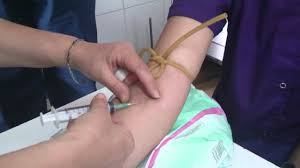
Fear of blood tests? Here is the solution!!

t’s been a long time since I wrote on the blog. But I’m back, and I have news!! Something I already talked about in previous posts: Belonephobia; Belonephobia: solved!!


Well, more or less it was already solved, but I think now it’s even more so. So, for all those who suffer with the idea of ​​having blood tests, we already have a solution!!! As I have told in other posts, this is a more or less hereditary problem, which I have suffered from since childhood and which has caused me quite a lot of trauma, due to fainting (sometimes including seizures) when I had to have blood tests (fasting+nerves of going to the health center at those hours of the morning when it’s cold+people who know you and watch+staying until the end waiting for the nurse to have the time to lay you down on the stretcher…). As I already said, I investigated what solutions there could be, because getting blood tests is something more or less mandatory that we should do at least once a year, like going to the dentist or the gynecologist. Here I have been very irresponsible, I have been up to 5 years without doing tests out of fear. And well, no matter how scared one is, better safe than sorry, it is necessary to have check-ups because that way if we have something it can be corrected in time. And they can also detect a deficiency, for example nutritional, and thus we can correct it. This is not like being afraid of snakes or the plane, you can more or less live with it without trying to solve it (although, how sad must be to be afraid of the plane and not able to travel…).


Two years ago I told you that I had found several companies that are designing devices that extract blood from the upper part of the arm, like leeches (with microneedles). But they still don’t market it completely, I suppose that one day they will. I also told that two years ago I had a rhinoplasty, and it went wonderfully. As for any surgery, I had to take blood tests, and also after the operation I was all night with an intravenous inserted (the first time in my case). I also told you that the surgeon gave me a tranquilizer to take on the day of the operation. I’ve tried that before for blood draws, and I think it helps a lot. My opinion is that it makes you feel like you’re a bit drunk, groggy and happy. I’ve never taken tranquilizers for anything other than that, and I’m not in favour of drugs, but I think it’s justified if you have a major phobia. For the rhinoplasty, I also applied Emla anesthetic cream to my forearm (both arms, in case the nurse preferred one arm or the other). I applied it about 45 minutes before the extraction, covering the area with cling film (that plastic one) so that the skin absorbed the cream well. The truth is that I didn’t even notice the extraction or the IV. When the IV was removed, it didn’t hurt at all.


Well, the news now is that a week ago I had a blood test and the nurse came home. I think this is also something that people with a phobia can do and it would remove a large part of the conditioning factors that make us nervous. For example, the health center/hospital itself kind of makes me nervous, the smell makes me nauseous. Then, having to go there very early in the morning (on an empty stomach and in the cold if it’s winter), nerves, seeing people leave holding their arms, being left until the end…If the nurse goes to your home, you avoid all that. I paid 40 euros, and well, yes, it’s annoying when you could do it for free, but if you do tests once a year, it’s not a fortune either. In addition, since you are paying for that service, the nurse surely treats you better (I think I already told you that the time I fainted in the health center of my town, the nurse had made fun of me, she had called me “soul of a pitcher “and he squeezed me in the extraction area making me pass out when I was already half dizzy, he humiliated me and treated me awfully). This time I did not take any tranquilizer. The nurse arrived, I was lying on my bed with my legs up against the wall (something you can’t do in the health center) and then I lay there calmly, I got up very slowly and ate a banana sitting on the bed. She had extracted a big amount of blood and I didn’t notice it, I didn’t get dizzy at any time (I think the trick for this is to lie down for a while afterwards and then get up little by little, first sitting down, then standing up). Like the day of the rhinoplasty, I had put Emla cream on the extraction site. And about the extraction site, I THINK THIS IS THE KEY: NOT ON THE INSIDE OF THE ELBOW, NO, NO AND NO. I DON’T KNOW HOW TO EMPHASIZE IT ENOUGH.


I had always suspected that this was the key, and it already seemed to me when they drew my blood and put the IV in my forearm during my rhinoplasty. But since I had also taken a tranquilizer and had put on the Emla, I didn’t know whether to attribute it only to that. This time I didn’t take a tranquilizer, so that factor can already be ruled out. My theory is that the inside of the elbow is not a good place, even though most nurses say it is. It is convenient for them because it is very easy to puncture there, the vein is very clear there to see. But guess what, when they put the tourniquet on you, the veins swell, and the one on your forearm is perfectly visible then, too. There it hurts much less, to say the least, also being a place that is not the hinge of the arm (as the inside of the elbow is) because, as happens with the hinge of a door, we are not constantly moving it ( as it happens with the inside of the elbow), so there is no bruising or pain. It’s just pure logic. The two times I’ve had blood extracted out of there, and they also put the IVthere, I have had absolutely no pain or bruises.


So, in summary, friends with belonephobia, this is what you can do:


*Take a tranquilizer the day of the extraction (expendable).

*Hire a nurse to come to your home (it’s worth it).

*Put Emla anesthetic cream in the extraction area (the non-dominant arm is better, but you can also put it in both arms in case the nurse gets picky when looking at the veins).
*ASK FOR THE BLOOD TO BE EXTRACTED FROM THE FOREARM, NOT FROM THE INSIDE OF THE ELBOW.
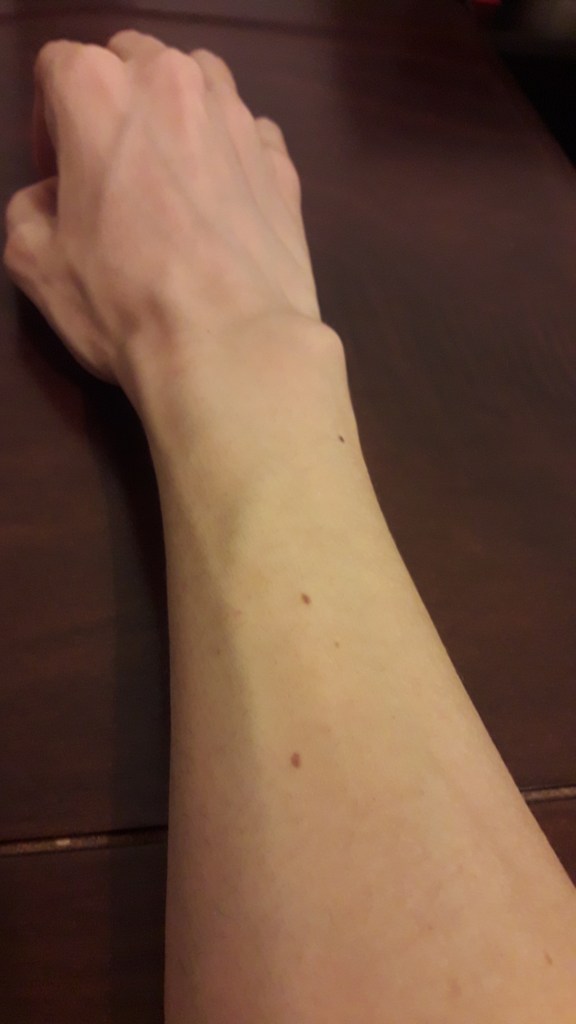
I am attaching a photo so you can see the exact place I am referring to:

The place where I had my blood drawn is on the left of the second mole.

Hopefully this helps you as much as it helped me, don’t be cowed by bad past experiences or idiotic nurses (stand up for your rights!). And remember that it is important to have annual check-ups.


By the way, some women also experience dizziness after their Pap test. It has a certain logic, after all, they also “extract” something from you. It has happened to me not to get dizzy the first time, to get dizzy the second time, and not the third time. And I think the key was in the time. The times I didn’t get dizzy was in the afternoon and I had eaten before. Go always having eaten and at a time when your blood pressure is not low (preferably go in the afternoon or if it is in the morning, never fasting). In my opinion, the Pap doesn’t hurt or anything, but it’s better that you lie down for a while and get up slowly afterwards, staying seated for a while before getting up to get dressed.


Until the next post!

Travel Tips

Hello everyone!!

In this month’s post I am going to talk about some tips that are quite useful for traveling, I am referring especially to long trips. In the current moment, traveling seems a thing of the past, but sooner or later we will return to normality.

Due to my job I have traveled many times on long flights (transoceanic), flights of at least 10 hours. The longest lasted 14 hours! So, I have some experience and I have seen what is best for travel, from my personal experience. I am going to offer a list of recommendations, especially suitable for long flights, although they could be used for other types of trips, I hope they serve you!:

1. Comfortable clothes. I am always surprised by the photos of celebrities arriving at the airport super divine, with jeans, heels and makeup. I suppose those are occupational hazards. But for those who are not or aspire to look like celebrities, the best thing in the case of long flights is to wear comfortable clothes: leggings, sports shoes, sweatshirts. Clothes with which you can sleep in the most similar way to how you would in your pajamas. Footwear that you can put on and take off easily. And don’t wear a bra. If you have big boobs you can wear a comfortable sport bra. I don’t wear any bra when traveling. In a previous post I already talked about the lymphatic system and the convenience of not wearing a bra, but on a long flight this is even more necessary. When I have flown in the summer and I was wearing a T-shirt at the airport because of the heat, and I felt that I could not go without a bra because it was going to be too evident, what I did was to take it off in the bathroom of the plane and put it in my handbag or backpack. On airplanes it is never excessively hot, rather it is cold because there is usually ventilation going on, so you will be able to put on a sweater, even if it is thin, and not feel that people will realize you are not wearing a bra. Although, as I mentioned in my previous post, wearing a bra or not, noticeable, or not, shouldn’t be a problem or cause for embarrassment. Also, even if it is summer/hot, I think it is always better to wear more than less clothes when flying. On airplanes, I repeat, it is usually cold. Although they give you blankets, you can get cold, and anyway the excessive clothes that you wear can always be removed. For this reason, I never get on a plane wearing sandals (unless I have thick socks in my bag to put on later) or with not enough clothes, I always wear at least one sweatshirt just in case. And I also wear a neck scarf because the cold of the plane can cause sore throat.

2. Travel pillow. Although they also give a mini pillow on the plane (in the case of Iberia) it is better to take a travel pillow for the neck. You can end up with a terrible torticollis if you fall asleep with poor neck posture.

3. Glasses. If you wear contact lenses, do not take them to travel. You can take them off when boarding the plane or going directly to the airport with glasses. On airplanes your skin and mucous membranes get very dry, even if you do not fall asleep it would be very bad to fly for many hours with your contact lenses on.

4. Big bottle of water. Continuing with the above, on the plane you get very dry on the outside and on the inside. It is advisable to drink plenty of water during the flight. At meals time (on a transoceanic flight there are usually 2 meals and a snack) they offer you a glass of water, but it is advisable to drink much more. And it is better not to drink wine, coffee, or anything like that, just water. Since I cannot carry liquids, I always buy a bottle of water as big as possible (1 or 2 liters) in a store inside the airport.

5. Ear plugs, eye mask, headphones. Again, they usually offer them to you on the plane, but just in case. The earplugs can help you sleep well, the mask protect you from the light, and the headphones are in case you want to listen to your own music, audiobooks or whatever, or if you are uncomfortable with those that are provided on the plane.

6. Toothbrush and toothpaste. After a long trip and several meals, bad breath can occur. At least before landing it is advisable to brush your teeth. Depending on whether you are going to see someone important when you arrive or not, you could also wear some cologne or makeup. I prefer not to wear makeup for long flights, because the skin suffers a lot on those trips. Sometimes I put some aloe vera before landing in order to hydrate. Some underarm wipes can also help you arrive with more dignity (I remind you that I don’t use deodorant).

I hope it helps you! Until next post!

I wrote a book!!

In the last post of this strange year 2020 I want to share that I have written a book!! It is not my first book, but it is the first that I did not write for work reasons and that I’m publishing as Mariahelpsyou. It is available in Spanish and English, both in ebook and paper format. For every taste!

The possibility of self-publishing for free with Amazon had caught my attention a long time ago. Knowing the difficulties of gaining a foothold in the publishing world, it seems like a great option for all those who want to publish something that may not sell, or who are not professional writers. Taking advantage of the low social life imposed this year, I took on the task of compiling some of the blog posts into a book, which has the same title as the blog. It is a short book, with eight chapters, with the posts I thought were the most important to include. In the five years that have passed since I started writing the blog I discovered new things and I had to update several posts. So, in the book I wanted to include all that information together. For example, how I progressed with electrolysis hair removal, belonephobia, skin care, in dyeing my gray hair, in oral care…

The book is aimed especially at teenage girls and girls in their twenties. Every time I wrote a blog post, I mentally relived my past dealing with different beauty / health issues, and each time I thought: “If someone had told me this at the time.” I remembered how I felt so lonely and hopeless with certain problems, which apparently only happened to me because nobody around was talking about them, and that despite my many attempts seemed to have no solution. Some of them (like acne or gingivitis) may seem more common and not as serious. Others, like hirsutism or belonephobia, have really embittered much of my life. That is why the book is aimed at young girls who may living a similar situation. Although it has taken many years, I have found a solution to all these problems. And it has not been thanks to the many specialist doctors, or dentists, or hairdressers, or any so-called “professionals”, but only with my persistence and research on the Internet, losing a lot of time and money along the way. Whoever seeks finds (even if it is later than sooner). Although the book is aimed at young girls, of course anyone can benefit from reading it, at least one chapter, be it a man or a woman of any age.

And well, what better date to launch a book than before Christmas! I do not expect to earn lot of money with this, it would be enough for me to know that the knowledge I share arrived and helped someone who needed it.

Merry Christmas!!

*Where to buy the book:

As an Amazon associate I earn from qualifying purchases.

*Book in English: https://amzn.to/3fNCJxK

*Book in Spanish: https://amzn.to/33tbuUd

Belonephobia: solved!!

Hello everyone!!

In a previous post, I talked about the belonephobia that I have suffered since I was a child, a problem that has caused me to pass out after having blood tests, even going so far as to have convulsions. This problem is not “a child’s thing” as many think/scoff, since it is suffered by more than 20% of the ADULT population, leading to avoiding medical check-ups and generally lasting for life. Or not: I am not sure that I have completely “overcome” this problem (regretting it, I do not think I will ever become a blood donor) but I have found one, rather several, solutions, and recently I was able to verify that they work in rhinoplasty (that would be the subject of another post), for which, as is done in all operations, I had a blood test and an intraveous (which stayed there from before the operation until the next day). It should be noted that I had never had surgery with total anesthesia, nor had I been hospitalized or with an IV on my arm. All this added to my already known fear of blood tests, which were done on the same day of the surgery in the morning (the surgery was in the afternoon). The whole process, from the blood test to the surgery to the post-surgery, went well, at no time did I panic, nor did I get dizzy, nor did I pass out or anything. And that has been a SUPER ACHIEVEMENT for me, perhaps one of the greatest achievements of my life.

Once the context is explained, I will explain point by point the things I did to face the operation (the last thing I worried about was how my nose would look, hahaha). I cannot say for sure which of the things worked more or less, phobias have a great psychological component and, in the case of belonephobia, they have physical consequences (dizziness, fainting …), so it is difficult to know which factor can work for whom. I have been researching what could be done for a long time and I am sure that some things will be a novelty.

1. Psychological preparation: knowing what happens in belonephobia and how to avoid it. A characteristic feature of belonephobia compared to other phobias is fainting, the so-called vasovagal syncope. This occurs because the nervousness itself causes blood pressure to rise and then fall suddenly at the time of the blood draw, leading to what is fainting itself. In fact, the fear of needles is not so much a fear of needles or blood itself, but a fear of pain and especially of fainting. That is why I love and do electrolysis hair removal to myself, an activity that in some way involved the use of “needles”, and at the same time I have belonephobia. Belonephobia and fainting are usually a family issue, something that is inherited. The technique that is recommended to avoid vasovagal syncope is “applied tension”, a technique that consists of tightening the muscles of the legs, trunk and arms (not in the extraction arm) at the time the extraction is taking place, so that the maintenance of high blood pressure is artificially caused, avoiding fainting. The book where I learned it is called Overcoming Medical Phobias (available electronically). In this book they also talk about gradual exposure, a psychological technique that is used for other phobias as well. A phobia is an extreme fear. Fear has an evolutionary reason: to save us from danger, either by fleeing or fighting. In the case of belonephobia, the fear of fainting, or of the pain of extraction, causes blood pressure to rise and then fall rapidly. Gradual exposure tries to reduce or eliminate that fear. In my case, what I did was watching videos of blood draws and IV insertions. At first I got a little dizzy and had to lie down quickly on the bed, but after repeating it I improved. Also, watching the videos helped me to normalize the situation. The videos I watched were these:

Aprende extracción de sangre

Aprende extracción de sangre con palomita

Aprende a canalizar vía intravenosa

2. Having breakfast. The fact that most blood tests require fasting does not help, since many people have lower blood pressure in the morning and that , added fasting (possible hypoglycemia) and nervousness…I want to emphasize (and it is something that is seldom said) that NOT ALL BLOOD TESTS REQUIRE FASTING. In fact, I had my pre-surgery blood test after having a good breakfast, and that helped. Then I did the 6 hours of fasting(without drinking water) that must be done before surgery. In general, fasting before blood tests is required so that the resulting values are not altered, and especially to test glucose levels. But, for example, a hormonal analysis may not need to be done on an empty stomach. Neither pre-surgery blood tests, which I suppose will evaluate clotting. Glucose, I think, can be assessed with a fingertip test, which could avoid the fasting and requirement for common blood tests in people who have a hard time, by doing the glucose test with a fingertip stick.

3. Take a tranquilizer. On one of the occasions when I passed out with convulsions after a blood test, the nurse suggested that in the future I should take a tranquilizer before taking blood tests, since it would not affect the results. It worked a couple of times, then I forgot to do it or I didn’t have it (these pills require a prescription). On previous occasions, what I took was Diazepam (I don’t remember how many grams): one the night before to sleep well and another the same day before going to have my blood test. On this occasion, the surgeon himself had given me a tranquilizer (they generally do it with all patients, even if they do not have belonephobia, because being calm helps the surgery go better). It was called Lexatin and it was 3 mg. I could have taken it the night before, but I preferred to take it in the morning with breakfast, since I had surgery in the afternoon and I was afraid it would be too many hours for the effect to last if I took it the night before. When I took Diazepam, perhaps because I was taking two, the feeling was similar to being drunk, not euphoric but kind of groggy and happy, and a bit clumsy. But this time I didn’t feel any of those things, I was just calm, but more normal than with Diazepam. I recommend reading the instructions carefully to see how long the tranquilizer takes to have its maximum effect and for how many hours it lasts, and thus calculate when to take it.

4. The usual recommendations. I don’t want to miss common recommendations that are also very valid, such as asking to be laid down on a stretcher (specially to avoid hitting yourself in the event of fainting) and getting up slowly after the extraction. Also think about other things, be distracted, do not look… If you have to do the blood test on an empty stomach, have a chocolate to eat immediately after the extraction.

5. Try other extraction sites. The inside of the elbow is the most common place for extraction, because there is a thick vein that looks good and in theory it hurts little because it is quite protruding. But this is not always the case for everyone. I already had my suspicions that my problem with blood draws could have to do with the collection site, and I have practically confirmed that it is true. Surely you are familiar with the story that if you squeeze a person in I do not know what points of the neck they will faint immediately. Well, I have the impression that something similar happens to me with the inside of the elbow. And I am quite convinced because once I fainted after having my blood pressure taken, since the doctor had squeezed the inside part of my elbow with the auscultation device. One of the readers of this blog told me that blood tests can also be done by extracting blood from other places, such as the back of the hand. Looking on the Internet, I saw that young children often have their blood drawn with a “butterfly”, which is like a butterfly with a finer needle that draws blood from finer veins (like those on the back of the hand). Then that blood goes through a tube into the sample tube. When I watched the extraction videos, I was much less impressed to see extractions from the back of the hand than from the inside of the elbow. On the surgery day I told the nurse that I had to lie down, that I tend to dizziness (you always have to tell them this) and that I wanted them to extract my blood with a butterflywinglet from the back of the hand. She was somewhat reluctant; I suppose because for them the usual practice is much easier and faster. But she agreed and proceeded to do so. It did not hurt at all more than the inside of the elbow (I had asked in many nursing places on the Internet and they always told me that the back of the hand hurts more). But unfortunately, something happened, the tube broke and she had to start again. In spite of all this, I was still calm (I had taken the tranquilizer), trying to stress my legs and trunk and not looking at what she was doing. Then she told me that it was better to do it on the inside of the elbow, but I insisted saying no. And what she did was to perform the extraction in the part of the forearm that is near the wrist, towards the inside side. This is the place where they later put the intravenous line, but on the other arm. And it is a place that doesn’t hurt at all. This second extraction attempt was also made with a butterfly and she asked me to open and close my hand, because as the veins are thinner and the extraction was performed with a fine needle and a small tube, it takes longer for the blood to come out and fill the tube. But since it wasn’t painful at all, I wasn’t looking and I was calm, I was able to do it. So, the inside part of the forearm has been quite a discovery as an extraction site. Also, always on the inside of the elbow, and this time on the back of my hand (unsuccessful attempt) I had a bruise, while on the inside of the forearm, both where they extracted my blood and where they put the intravenous line, there was not bruise. My theory with this is that it is better to puncture in a place that does not move, that is not a joint. Both the inside of the elbow and the back of the hand (where there is also the problem that there are many tendons) are places of great mobility, it is very difficult to stop moving the arm or hand. However, the forearm is like a stick, like a log, I mean that it does not move, it is not a joint. That is why it does not bruise or hurt or make it difficult to keep the intravenous line in place.

6. Use Emla anesthetic cream. Emla lidocaine cream is an old acquaintance to me. I started using it for laser hair removal and then for electrolysis hair removal. It would have been very difficult to epilate my mustache with electrolysis without it. It is also used for tattoos. This cream got a bad name because some people who went overboard with its use and had a bad adverse reaction. But for that to happen to you, you have to use a whole bottle (30 gr) or more. In fact, for injections there is an Emla in a tiny version to use only at the puncture site. I had already tried using Emla on a blood draw, but I did not work very well because I did not leave it long enough and did not put plastic on it. For it to work well and fully anesthetize the skin, it must be left between an hour and an hour and a half and be covered with a plastic wrap. Once it is removed, the full effect lasts about 10-20 minutes at most, in my experience. Then it goes away. That is why it is necessary to calculate very well when to apply the cream (although the instructions say that it can be left up to 5 hours, I do not think it is very effective that way), in order to achieve a good occlusive effect with the plastic and remove it just before the extraction. This time I had done it right, putting cream all over the back of the hand, wrist and lower forearm and covering it until I had my blood test done. And later, knowing at what time the surgery would take place, I did the same an hour and a half in advance, on the other hand and forearm. I have read that Emla can somewhat change the color of the skin and make it difficult for the veins to be seen, but it was not my case.

7. Buzzy: vibration against pain. More than a year ago (I had postponed this surgery several times) I bought a device that I saw on the Internet. It is designed for children so that injections, extractions and so on do not hurt. Basically, it is a vibrator in the shape of a bee that is placed 10 cm from the place of the puncture and it is assumed that with the vibrations it prevents the sending of the pain signal. It comes with some “wings” that should be put in the freezer, since cold plus the vibrations are supposed to produce the anesthetic effect. The problem with cold is that it can cause veins to hide and make extractions difficult. On this occasion, I took the device to the hospital, but I forgot to use it for the extraction, and I didn’t take it with me either when they put me the intravenous line before the surgery. I did use it when my intravenous line was removed the next day. I was very scared about it because I had heard that it hurts a lot to remove it, and it was not like that (at least in the forearm I think it is not like that). I tried to put the buzzy in the forearm but the nurse was so quick to get the intravenous line out that I didn’t have the time. This is the gadget page: https://buzzyhelps.com/

8. Promising innovations. What I have explained so far, in combination, helped me go through surgery in such a calm way that I still can’t believe it. But during the research I did, I found super interesting innovations, which unfortunately are not yet available (or not in Spain) but which hopefully will be soon. They seem wonderful, not only for people with belonephobia but also for children and in general for everyone.

The first big innovation are devices for drawing blood from capillaries in the upper arm. As I explained before, I think for some reason vein extraction hurts more than capillary extraction, but it is also faster. I found up to three companies (two American and one European) that are developing devices that draw blood from capillaries in the upper arm, with virtually no pain. I contacted all of them, and either the device was not available (in the case of the Swiss one) or only in the United States or it was only sold to healthcare personnel. Anyway, sooner or later there will be access to this device and the fear of blood tests will be a thing of the past. Here you have the links of the three companies:

Tasso.inc

Seventh Sense Biosystems

Loop Medical

I discovered the other innovation a couple of days before my surgery. It is a kind of syringe called Jtip that injects lidocaine without puncturing, expelling the lidocaine with pressure on the skin. When I saw it I was amazed because I did not imagine that such a technique existed, injecting without puncturing through a pressure device. The effect that is achieved is the same as that of the Emla: to sleep the area so that the extractions or the placements of intravenous lines do not hurt. The big difference is that the effect is immediate: the lidocaine expelled in this way takes just 1 minute to take effect and sleep the area for about 20 minutes, compared to the minimum of an hour that you have to wait with Emla. Therefore, it would be especially suitable in emergency situations, when it is necessary to puncture quickly. If it is something programmed like what I had, you can allow yourself to put the Emla on and wait for it to take effect. In addition, the possible problem that the veins are less visible after having the Emla cream on for a long time is eliminated. Like Emla, I think this gadget could have a very good application for electrolysis hair removal. I leave here the link of the company: J-Tip. Needle-Free Injection System

I am very grateful for having found a solution to this problem that I had been enduring since I was a child. Just like when I discovered electrolysis hair removal, it has been a great achievement for me and I want to share it with everyone. Therefore, even if you do not have this problem, I encourage you to share this information with those who do or who have small children. To those who have never had this problem, it may seem silly, just as it happens to me when someone is afraid of flying or spiders, but you have to know how to put yourself in the other’s place and above all not to make fun of these type of problems, because those who suffer them have a really bad time. 

Until next post!!

*To buy the products I speak about (I only recommend products that I’ve tested):

As an Amazon Associate I earn from qualifying purchases

*From the United States:

·Lidocaine pain relief cream: https://amzn.to/2FPFelh

·Buzzy: https://amzn.to/2ZTLvDF

*From Mexico:

·Emla: https://amzn.to/2EfCUUc

·Buzzy: https://www.buzzy.com.mx/

*From Spain:

·Crema anestésica Emla (de venta en farmacias, sin receta): https://www.sin-receta.com/medicamentos/comprar-emla-crema-sin-receta/

·Buzzy: https://amzn.to/2RUnzMh
A small summary

Hello everyone!!

This month’s post is going to be a compilation of everything I’ve been writing about on the blog, since I started with three posts in 2015, until I decided to take it more seriously and write a monthly post as part of my goals for the year in 2017.

When I started the blog I wanted to share things that I had discovered by myself, especially through the Internet and from my own experience and that of others, over the years. They were doubts, questions that do not appear so much in beauty magazines and on blogs and YouTube channels, or that in the case of appearing I considered they had wrong or incomplete answers (such as taking the pill if you have acne or resorting to laser if you have hair on your face…). I really wanted to address problems and solutions that I thought were not being publicized enough.

In 2015 I explained how the irrigator (in its eco-friendly and cheap version, the Italian So-Wash) is the secret weapon that dentists do not want you to discover, along with the coconut oil + bicarbonate toothpaste. A toothpaste that also works as a deodorant. I also published the most visited and consulted entry of the entire blog, the one that talks about electrolysis hair removal. A post that I updated later showing the progress of my “do it yourself” results in this regard.

In 2017, I started talking about my experience with hirsutism and acne, I defended Roacutan and Ovusitol against the contraceptive pill and I talked about some simple and cheap measures like aloe vera, castile soap (Dr. Bronners), the importance of changing face towels and the pillowcase (better if it is made of silk) often. I have also talked about the importance of nutrition (the now fashionable smoothies) for the skin and the little-known mineral makeup.

Also in 2017 I dared to confess the existence of tonsil stones and anal blackheads, in the most eschatological blog post. I spoke again about hair, but this time about hair on the head: I was interested in henna as an alternative to dyes and allergies, but I was worried that it would not cover gray hair well.

I also talked about health issues, such as period pain, and how I try to control them by always keeping omeprazole and ibuprofen close at hand, in my emergency bag. Or the problem of belonephobia, so poorly treated by most health professionals and which causes serious trauma to many people. I still hadn’t found a definitive solution to this issue, but reading the book Overcoming Medical Phobias gave me some hope. Trying psychological treatments (hypnosis, neurolinguistic programming) gradual exposure (with images, videos…) and using the applied tension of the muscles could be the key. In my case, I also think that choosing a different site from which to draw the blood (perhaps the hand and not the inside of the elbow) could have an influence. I’ve been working on this for the past few months, and I’ve gone from feeling a bit dizzy just reading or watching videos about it, to being able to tolerate it (at least from a distance). I also think that the time of day influences, since for example I have the lowest blood pressure and I am weaker in the morning, which is precisely when the blood extraction procedure is done (and on an empty stomach). A reader advised me to use Buzzy and I have it ready to try in the future. What I’d really like to try though is the Seventh Sense Biosystems TAP. I keep writing them to see how to acquire it but it seems that at the moment only certain laboratories have it (I have also written to them and they do not respond). I hope it is only a matter of time, because it gives me the impression that there may be the solution. Other alternatives are the use of Vacutainer or butterfly needles for extractions. I had considered these alternatives, so I would also like to try. Anyway, hopefully in the future I can write a post explaining how I finally solved the issue. It would be my personal big hit on these issues, along with the discovery of electrolysis :))

In the blog I have also shared my personal manias, such as my rejection to long nails (which does not mean that I do not take care of my hands), my rejection of feet, of absurd fashion stupidities like ripped pants, my horror of intestinal parasites and of noise. And I have defended the use of the forgotten bidet, protection from the sun but not with creams, internal and external hydration and attention to the lymphatic system.

Some posts include novel therapies, such as the natural solution to myopia (including much cheaper glasses), a problem that I had previously discussed. In this regard, I recently read a piece of news about some drops to solve myopia developed by a university in Israel … I’ll be watching too. Hopefully ending myopia without surgery will my third hit :))

*To buy the products I speak about (I only recommend products that I’ve tested):

As an Amazon Associate I earn from qualifying purchases

*From the United States:

·Buzzy: https://amzn.to/2ZTLvDF

*From Mexico:

·Buzzy: https://www.buzzy.com.mx/

*From Spain:

·Buzzy: https://amzn.to/2RUnzMh
The (disgusting) world of feet

Hello!!

In this month’s post I am going to expose my thoughts and opinions about things that have to do with feet, those great forgotten parts of our body during the winter and that much to my chagrin I am forced to see/endure in summer.

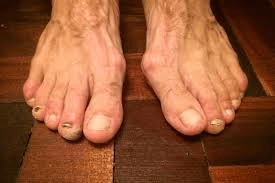
Feet in general disgusts me. I know it’s just another part of the body, but the ass is too, and people don’t show it around. Exaggerations aside, I really have a low tolerance for seeing feet, especially big, hairy men’s feet. Not to mention feet with fungus, long nails, etc…disgusting!!

As an exception, I love baby feet, and well-groomed women’s feet with painted nails, ok, I can stand that. But now it seems that it is fashionable to go barefoot, as it is very hipster, very naturist and I don’t know what else, and what it seems to me is dirty. You go with your feet picking up all the dirt from the floor. For example, I have become fond of watching a YouTube channel about cleaning called Clean my Space, in which the girl is very funny, explains very useful things and you can see that she is groomed, with her makeup and hair done for her videos. But she always goes around barefoot! I can’t understand it, let’s see, if you go out in a video mopping to explain how to clean wooden floors, how is it possible that you go barefoot while doing it? Your house will be very clean, but surely your feet won’t… I wrote asking but she never answered. Another thing is to go barefoot with socks on, that may be more tolerable, especially if you are in a room with a carpet or so. But, and above all, being in the kitchen or in the bathroom barefoot, even with socks, seems disgusting to me (in addition, we must add the greater danger of electrocution if one goes barefoot, because you lose insulation from the floor that sleepers provide).

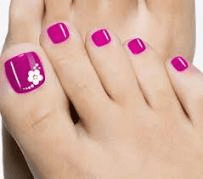
Cute
Acceptable
Disgusting

I had a French teacher who once spoke about this topic, and he said that it was something cultural that happens to us Spaniards. That once he was in a summer course where the teacher came barefoot and that no one was bothered except a Spaniard who began to look disgusted. This teacher said that feet do not have to be disgusting, that they do not smell “unless they are sick”…well, I refer back to the comparison with the ass. Yes, obviously, on the beach you go barefoot, that’s normal. And now there are some theories that talk about getting barefoot on the grass so that the soles of your feet (which according to reflexology reflect all the points of the body) come in contact with the vibrations of the earth or something like that, something related to negative and positive ions. That could be accepted too, fresh grass can be nice to walk on barefoot. But I also heard about a trend that advocates always going barefoot, summer or winter, and I also heard that argument saying that not going barefoot is like always wearing gloves, but on your feet. Well, I seldom leave my feet in the air, not even to sleep, and nothing has happened to me (nor to the appearance of my feet either: in fact, this way, no corns or calluses appear).

Anyway, I am referring above all to social situations/outside of nature such as meetings, classes, or even inside the house, where I do not see acceptable that people go barefoot. Not to mention if I’m eating, I don’t eat if I have to be watching feet at the same time (I refer for the third time to the comparison with the ass). Sure, in summer, with the heat, I can’t forbid people to wear sandals or flip-flops (I like them to), but people should at least they have the consideration of leaving their feet on the ground and not putting them on the table or raised to eye level. No need to say when they start to touch them, arggg Just like people who bite their fingernails (arggg again). I have never understood why those things are more socially accepted than burping or farting (while these two are much more physiologically justifiable). There are people who even spit their nail out after biting their fingernails, without any regard.

Anyway, to my joy, summer season is over and I won’t have to see more feet until next year yuhuuuuuuuu !!!

The emergency bag

In this post I am going to talk about the emergency bag to carry in your bag. One day, on a YouTube channel, I saw a tip that I found very useful, and yet it had never occurred to me: to have an emergency bag to pass from one bag to another. The girl explained that this way you save time preparing what you are going to take every time you change your bag, and you avoid forgetting important things. You simply change the emergency bag from one place to another. I don’t normally use it, but I always carry it with me, in case I end up sleeping out of home or have an emergency.

Here I am going to share what my emergency bag contains (each one can adapt it to their needs, of course):

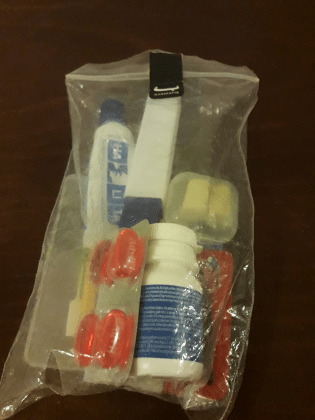
* Omeprazole and ibuprofen pills. If you read my post about the period, you know the problems I have, so I always carry some pills with me.

* A panty liner. For the same reason. I do not wear a sanitary towel because it is more bulky, and if my period comes suddenly, it does not start from the first moment like an open tap. When the date approaches, I add some sanitary towels to my bag, and I always have them on my worktable’s drawer too.

* A pair of hair ties and four hairpins. There must be a parallel universe of hairpins and hair ties, but it has happened to me to need them and not have them… so never again.

* A couple of plasters. Very useful especially in the summer period, when ballet flats or sandals can cause unexpected rubbing.

* A travel toothbrush, a small travel toothpaste and an interdental brush. I usually put the kind of pastes given away on airplanes or when buying toothbrushes. I already explained which toothpaste I use (coconut oil + bicarbonate), but since this is only “just in case”, I those small toothspastes I have at home.

* A box with earplugs. Usually I cannot sleep without my earplugs, and I wear them in case I sleep out of home.

My emergency bag. You can also use a less tacky toiletry bag :)))

And if you have the misfortune of being short-sighted like me, you can also carry another bag with a case of contact lenses and a small bottle with liquid (the very very small ones that come in little cases, or carry the little case the case directly). This also in case we sleep out of home or a contact lens suddenly starts bothering us. This should be in a separate bag, just in case liquid is spilled. By the way, I already published a post about vision, but soon I will publish a post about how to reverse myopia (yes, it is possible !!!).

Well, apart from this, I carry a lipstick for my lips, but not in the emergency bag because I do use it regularly (Dr. Burt’s Bees brand, don’t use petroleum derivatives). Many would add a mirror, but I don’t because mirrors are everywhere and you can use your phone’s camera.

I hope you find it useful!

Regards!!

*To buy the products I speak about (I only recommend products that I’ve tested):

As an Amazon Associate I earn from qualifying purchases

*From the United States:

*From Mexico:

*From Spain: Bálsamo labial Burt’s Bees: https://amzn.to/2FT5QBO

The bra and the lympathic system

Hello everyone!!

In this post I am going to talk about the bra and its relationship with the lymphatic system. And why it is good NOT to wear a bra. Feminist arguments about not wearing bras or makeup, about how bras and heels are instruments of the “oppressive patriarchy” (I love saying this, hahaha), are quite right, whether you support feminists or not (debate in which I will not enter and that seems absurd to me, obviously you must support feminism).

Well, focusing on bras. Depending on one’s breast size, a bra is more or less necessary. As I have small boobs, I really wear it more for aesthetic reasons (for clothes to fit well) than out of necessity. In fact, the 3 things I always do when I get home are: take off my shoes, take off my contact lenses, and take off my oppressive bra (hahaha). I understand that a girl with big boobs has more need to wear it, also to fight against the force of gravity (which will end up winning the battle anyway).

There are different types of bras: with wire, without wire, with padding, without padding … A bra without underwire or padding is much more comfortable, but those of us who have little boobs need that extra help to look good with cleavage, with certain shirts…It is also true that we have a pre-established image of the shape boobs should have (the round one of the bra cup) that is not the true one, because if we were not wearing a bra, at least in my case, the shape would be more or less pointed. But I still don’t dare to not wearing bra when I’m wearing only a shirt. The good thing is that in winter, when you wear a lot of clothes, you can really go without it.

I have even taken off my bra while at work because I felt it bothered me. It was something I hadn’t thought about much, but online I found that there is a reason for this: wearing tight things hinders the circulation of the lymphatic system. Lymph flows through the body and wearing tight clothing and bras makes it difficult for it to flow well. In addition, there have been studies that relate whether or not to wear a bra with the presence of nodules on the chest, which is not a joke. I am going to attach here the information from Rawvana’s video about the bra and from Elsa Pataky’s post in which she talks about how to take care of the lymphatic system (with dry massages and lymphatic drainage):

¿Por qué detox?

To finish, my recommendations are: do not wear a bra at home or to sleep, opt more for sports or bralette types and use the uncomfortable-padded-wire only for social occasions that require it: to show off, to suffer? Rarely.

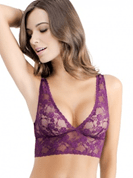
Bralettes are more comfortable than traditional bras, and some of them can be weared as tops

Until next time!!

*To buy the products I speak about (I only recommend products that I’ve tested):

As an Amazon Associate I earn from qualifying purchases

*From the United States:

 *From Mexico:

*From Spain:

Being myope

Hi there!

Hello!!

I am going to dedicate this post to the subject of sight, from my point of view (worth the redundancy!). Rather, it will be an essay with my experience and reflections on the topic of myopia, glasses, contact lenses and Lasik surgery.

It is clear that the percentage of people who use glasses/contact lenses has increased a lot in recent years, and I am sure it has to do with the lifestyle of working with the computer, smartphones … despite all the advantages that this gives us. Despite all good things (to me, the Internet is one of the best inventions of history) it had to have some disadvantages, and I think that it does not affect sight it in a positive sense. Our eyes are prepared to look into the distance, as when we lived in nature, but today we are all the time with our eyes fixed on very close and small objects. Decades ago, only older people wore glasses, for tired eyesight. Today almost everyone has a fault in their eyesight. Although luckily glasses are no longer awful but a fashion accessory, and contact lenses give us a lot of comfort. Some recommendations for day to day are: take short breaks from the computer and look into the distance, install a yellow light filter for the computer (this also helps to prevent blue light from keeping us awake at night) and lower the brightness of electronic devices. Also take advantage of natural light whenever possible to illuminate your space.

I had good eyesight until adolescence, when, like so many others, after a visit to the optical shop I went out with glasses “just to study and watch TV.” I had little myopia, less than 1 diopter in each eye. Over time, myopia increased, to the point that one day I did not recognize my mother when she was walking in the opposite direction down the street. She thought it was too sad and she told me to either put on my glasses for the street or put on contact lenses.

Obviously no way I was going to go with glasses on the street, I had enough with my teenage insecurities at that time (acne, orthodontics …) to wear glasses. I didn’t want to be Ugly Betty! I know that now with all the hipster fashion and such it is very well seen to wear glasses, but I do not look pretty with them, to be honest. Also, in the case of myopia, glasses make eyes look smaller, and for one thing that I like about my face …

Luckily I had no problem learning how to wear contact lenses. Luckily, because one day we tried to get my brother (who has not had vision problems) to put on those colored lenses, in blue, to see how he would look with blue eyes, and there was no way. It was impossible for him to allow a foreign object to come into contact with his eyes.

Well, and so the years went by and unfortunately myopia increased … the constant use of screens (computer, now smartphone …) didn’t help very much. The fact is that today (32 years old) I have 4.75 in one eye and 5.25 in another, and when I get the annual check-up at the optical shop I start to tremble with fear that my diopters have risen again.

What I do is wearing contact lenses when I’m out and glasses at home. I actually have older glasses with a lower prescription than what I now use for contact lenses, and I use them to be at home (at home I don’t need to see well from afar). I have the newest glasses with the graduation that corresponds to me for “just in case”: in case I have a problem with contact lenses and I can’t put them on for the street, for when I travel and I plan to fall asleep … But I don’t like wearing glasses outside. Not only for aesthetics reasons, but also because I don’t see them as practical as contact lenses: it is not practical if you practice sports, or if you go to the beach (tip: wear diving goggles if you bathe with contact lenses), or if it is winter and your glasses fog up when entering indoors, even worse if it rains … Wow, I see a lot of drawbacks. Besides, I already have considerable myopia, if I wear glasses I have to lower my head like a fool to be able to go down the stairs properly, for example. With glasses you do not have the same panoramic vision as with contact lenses.

Luckily over the years contact lenses have improved a lot, and for example the ones I have now are made of silicone hydrogel and you can wear them for many hours without discomfort (I wear them all working day, until I get home). By the way, they are much cheaper if you buy them online (same brand). What I do is always carry a small refillable bottle with a little liquid and a case of contact lenses in my bag, in case something happens (it starts to bother you and you have to take it off, you stay to sleep at someone’s home…). Anyway, bad vision is a handicap, for example when traveling, having to carry the glasses, the contact lenses, the case of contact lenses, that “wait,-I-go-to-the-bathroom-to-take off/put-on-my-contact lenses” at the airport or bus station … a pain.

And yes, I already looked for surgery, but it turns out that I had not gone to a review for the previous two years (mea culpa! You should check your vision once a year) and my graduation had gone up a lot. I was advised against having surgery, mostly because if you haven’t had a stable prescription for at least two years, you may have surgery and have to keep wearing glasses/ contact lenses afterwards. In addition, in the case of women the issue of pregnancy is added. It is proven that many women’s myopia is affected during pregnancy (more for the worse than for the better). But my optician told me about a case in which a girl’s graduation dropped a lot after pregnancy, that’s luck! I also kind of believe in conspiracy theories on this topic: if there was a definitive solution for vision problems, what would eye doctors live on? And if Lasik surgery is effective, why almost no eye doctor operates himself? What’s more, why do they wear glasses? Is not a bit contradictory?

There is information on the Internet that says that the eyes, like the brain or the heart, are basically “muscles”, so they must be used so that they do not atrophy, and train them in the appropriate way. This would make perfect sense to explain the prevalence of myopia today. You just have to Google “myopia cure exercises” and you will find gurus, magic solutions and opinions of all tastes. I am quite skeptical that there may be a natural way to cure myopia (hopefully though). But the truth is that since I started investigating things on my own and not trusting so much what is taken for granted or the medical/pharmaceutical discourse (I recognize its importance but my personal experience makes me trust their opinion very little),  many myths and assumptions have fallen for me (such as the use of deodorant or toothpaste; and of course the myth that acne problems, and especially hair, are solved with pills).

Continuing with the theme of having surgery, what I have thought is to wait until I am in my 40s, at an age when I already know that I will not have more children. If I have been like this for 15 years, I don’t mind another 10. And as  technology in this is improving, it will surely be better in a few years: the first myopia laser operations “eroded” the cornea, now the technique used is a”flap” of opening and closing (according to my profane knowledge). And it turns out that when I did the tests they also told me that I have a “thin” cornea in terms of thickness, meaning that I am “operable” but they would not advise me to operate twice.

And yes, the issue of glasses and contact lenses is an expense and a nuisance, but if I am not going to amortize the money from the surgery, it does not compensate me either. On the other hand, taking into account my fondness for electric hair removal, it turns out that it is an activity in which you have to see well up close (although you can use magnifying glasses), and it turns out that precisely those nearsighted people see very well up close. Anyway…

I would like people who read this post and have something to contribute to tell me about their experience. Above all, I would like to know about the people who have had surgery (honestly please, I know that nobody likes to admit that they made a mistake or threw their money away), if they have returned to have some diopters (even if it is little, I know that this happens ). And, for the “moles” who have been mothers, whether they have had surgery or not, how this has affected their myopia: if it went up or down. It is something that I ask whenever I have the opportunity but here perhaps I could gather more information. And of course, if someone has had results with miraculous gymnastics for their eyes.

 Greetings!!

UPDATE!!: read my post Antimyopia method 

Belonephobia

In this post I will discuss a very important topic for me and about which I have not found too much information on the Internet (apart from the fact that many people do not take it not seriously). It is belonephobia or needle phobia.

There are many phobias, and those who do not suffer any sometimes laugh at those who do. Phobia to spiders, mice, heights, enclosed spaces, crowds … I have a friend who once ran down an alley because we were in a crowded street and was overwhelmed, and she always wanted to be next to the door in pubs because she was claustrophobic. I know another who can’t stand seeing mice, even on television. Snakes make me feel very disgusting, but it’s not a phobia. Another person I know is afraid of flying and has never been on a plane (she says that she will die anyway, even if she doesn’t travel. I feel sorry for her because traveling is one of the best things that exist).

The main problem with belonephobia is that it interferes with important issues (medical check-ups) and that between 50 and 70% of people who suffer from it faint. Those who have passed out know that it is not pleasant, especially the moments before (when you start to feel bad and the most important thing is to lie down so as not to fall on the ground) and after (due to changes in blood pressure, you pass from feeling very hot to very cold and it takes some time to recover). The time that passes while you are unconscious is exactly like sleeping, the only difference is that when you wake up you are stunned because everyone is watching you, telling you “calm, quiet”, and it takes you a while to remember that you have passed out and you can start talking. It is really very distressing, at least for me, it seems the closest thing I’ve experienced to die or having an accident. Not to mention the anguish of people around you, the shame/ridicule you feel later …

Precisely because of this, people who have suffered fainting have a horrible fear of fainting, and that makes us avoid as much as possible what causes us to faint. Unless you have a health problem, very low blood pressure, a heat stroke or have not eaten for many hours, it is rare for a person to get dizzy and faint all of the sudden. In my case, all the times I’ve passed out have had to do with minor accidents, my period (as I related in the previous post) and, what I’m going to deal with today, belonephobia.

Belonephobia would be the fear of needles, of being punctured, and of blood. It has different grades. For example, in my case I am not afraid of dentists, when I had dental interventions (many years ago, now as I told in other post, I have no problem with interventions in my mouth) I saw huge needles, I have watched as the blood splashed the dentist’s glasses…and nothing, no problems. [Well, just one thing: once my heart accelerated a lot, and I was surprised because I was very calm and the dentist has never scared me, so they explained to me that local anesthesia has adrenaline and may cause that effect]. And paradoxically I have a whole experience with electric hair removal, which, although it is not puncturing, consists of introducing needles into a follicle, and I do it myself. In addition, in sessions of electrical hair removal I had local anesthesia punctured and I have not had problems either. Nor do I have problems getting a vaccine.

What is my problem then? Blood drawing. It is a Chinese torture to me. Or having a needle inserted (like anesthesia or an I.V.), although I still haven’t faced that. It’s so unpleasant when they put the tourniquet, they puncture you… There have been times that I have gotten along, especially if they do it fast (and I lie down and not looking, of course). Then I take a piece of chocolate and lie down for a while, get up and leave. But other times (especially when two tubes have been drawn) I have fainted. And I live in fear of the day that they I might need a surgery, or that I want to be a mother and my fainting problems can affect the baby, not to mention the moment of giving birth …

I talked to a doctor and told him that, perhaps, instead of the question of the extraction itself (which is not so bad, but I will never be a blood donor), the problem is the place of the extraction. They draw blood from the inside of the elbow, and for me that place is like my Achilles tendon or Samson’s hair, once I got dizzy because they pressed me with the round thing that they put on the inside of your elbow when measuring your body pressure. Maybe if they took it from somewhere else … The inside of the wrist seems even worse, but I think that in the forearm, the upper part, it wouldn’t be that painful. The doctor told me that the nurses search for places where they can see the vein, but I think there are other less painful places where they can see the vein too. I find it inhuman to be condemned to faint because a nurse doesn’t want to bother to take my blood from another site. The fact that blood is drawn in a fasting and in the morning does not help. In the morning I am at my worst moment, very low energy, and if I’m fasting even more. Although on this I learned that it is only necessary to go on an empty stomach if you are going to look at cholesterol, sugar and those things, for other types of analysis (blood count, hormonal) it would not affect being fasting or not. Nor does it help to go to the health center and see how people get in and out holding their arm, having to wait until the end to go have the procedure whilst lying (if you want your blood drawn this way you have to wait until the end) and that people look at you or the nurse laughs at you… well, for me it is a horrible experience. I also saw that there is a service of nurses who can go and do the extraction at home, the next time I have to do analysis I will try to do so, for me it would be money well spent.

Once I fainted watching a surgery on TV and another time because some friends were talking about a surgery, but happily all these issues can be avoided: the biggest problem for me is the necessity of having blood drawn for health check-ups. I also don’t know what will happen the day I have to take care of someone at the hospital (because I can’t see someone with the needle stuck in his arm, I’ve only gone to hospitals to see newborn babies). I have to admit, I don’t want to even think about it. I think that’s why I take care of my health so much …

The two possible solutions that I have found on the Internet, although for the moment I have not applied them, are hypnosis and “applied tension”. From hypnosis I heard a blogger (who I follow for cooking issues) who said she always fainted with the issue of needles, so when she decided to become a mother she underwent a few sessions and overcome it. It sounds too good to me, and I wrote to her personally, but she didn’t give me more information. In addition, she was from Chile, and what I would like is to find someone who knows about it in Spain. Another proposal I found was the one that appears in the book Overcoming Medical Phobias, by Martin M. Antony and Mark A. Watling (I found it online). In the book, the authors talk about applying “applied tension” to prevent vasovagal syndrome, which is what makes people faint from belonephobia. In the book they explain what biological and experience factors affect having belonephobia or vasovagal syndrome (it is quite hereditary), what happens when one passes out, what is the vasovagal syndrome and how it could be solved. Apart from the “applied tension”, they propose a gradual exposure to films or images of what is feared, until it is overcome, with “caregivers” who monitor if you pass out. I really already have enough problems and I’m busy enough to spend my free time watching videos that can make me pass out. So, I always postpone the attempt. The other proposal, given in Chapter 6, is “applied tension.” They explain it as follows.

To function, the brain needs a constant flow of oxygen-rich blood. Since the brain is above the head, when we stand, gravity tends to withdraw blood from the brain [hence when we get dizzy it is better to lie down and lift our legs]. Therefore, the blood needs enough pressure to reach the brain (just as in a house the water needs the pressure to get through the pipes to the floors above). The blood pressure is maintained by the muscles of the blood vessel walls, and by the rhythm and potency with which the heart beats.

When the muscles in the walls of the blood vessels contract, they narrow the diameter of the blood vessels, causing an increase in blood pressure. If those muscles relax, the blood vessels increase in diameter, resulting in a drop of blood pressure.

Blood pressure is also affected by the rhythm at which the heart beats. If the heart beats slowly, blood pressure drops. If the heart beats fast, blood pressure increases.

In summary: relaxed blood vessels and slow beating heart result in reduced blood pressure. That results in blood going to the legs (where gravity carries it) and less blood available to the brain, which deprives it of oxygen. A brain without oxygen cannot be alert and fainting occurs.

Then there is the nervous system. It includes all the nerves, organs and muscles of the body. It tells the heart how fast to beat and tells the muscles in the walls of the blood vessels how relaxed they should be. The nerve that is involved in fainting related to fear is the vagal nerve. When the vagal nerve is activated, it causes the heart to beat more slowly and the muscles in the blood vessels to relax. And that results in fainting. The vagal nerve can be activated by extreme reactions of fear, anxiety or pain, and is activated more easily in some people (those who faint) than in others.

The key to avoiding fainting would be to beat the vagal nerve by contracting the muscles in the walls of the blood vessels to avoid lowering blood pressure. People have no control over those muscles, but we have control over those of the body. Tensioning the muscles of the body (arms, legs, torso, feet, hands, neck) could help prevent fainting, as these muscles apply an external force to the blood vessels, and that way the blood pressure is increased. This is what is called “applied tension.” What they propose is to do exercises to tighten the muscles for 10 to 16 seconds and relax 30 seconds. Repeat 4 times. Make series 5 times a day, for a week. And then see if it works “in situ”, that is, during exposure exercises or in front of the needle.

I do not understand very well the concept of “tensing the muscles”, they say that it is “contracting the muscles”. Then, when blood is going to be drawn, just before, you apply the “applied tension” (but not at the moment, because it can make it difficult for the nurse to introduce the needle). I see it a bit complicated, but I understand the process. The idea is that there will come a time when you have overcome the phobia and you will not have to do anything anymore. The book is very good, I recommend it.

As I said, there are varying degrees of belonephobia and I am glad that I have not issues with dentists, that I can get vaccines… but it is something that I have to solve, and I do not know how. Above all I worry because one day I would like to be a mom. If you read me, nurses or people who have had the same problem and have overcome it, or are in the process, I would be very grateful if you could write me with advice. By the way, check this innovations for blood drawing, I’m looking forward to them to be available for the general public: https://www.tassoinc.com/press-releases/2019/3/5/tasso-raises-61m-to-bring-self-collection-of-blood-samples-into-pharma-trials

Foto
Images like this can make me feel dizzy

That’s all for today’s post, I hope it helps!

Regards!!