Hi there!!
It’s been a long time since I’ve written regularly on the blog, but whenever I have something important to share, I remember to post it here. Today, I want to talk about how important it is — for women who are thinking about having children — to get a 3D ultrasound.
I don’t have any medical training, so I’ll explain it as I understand it.
The routine ultrasounds done during gynecological visits are usually two-dimensional (2D), and they’re enough to check that everything looks fine. But 3D ultrasounds can reveal things that 2D ones can’t. I know this because it happened to me. A few months ago, I went through fertility tests, and since those do include a 3D ultrasound, they discovered I had an abnormal uterine shape — a Y-shaped uterus with thickened lateral walls. I’d been going to the gynecologist my whole life and had always been told everything was normal. But I’d never had a 3D ultrasound before.
An abnormally shaped uterus is something you’re born with and often doesn’t show symptoms (although, given my history of painful periods, I’m not sure if that’s related — they told me that link isn’t very clear). The problem is that if you’re thinking about having children, an abnormal uterine shape significantly increases the chances of complications: miscarriage, premature birth… Of course, it’s all about probabilities — nothing may happen — but you’re at a higher risk than someone with a typical uterus. Also, although again the connection isn’t certain, it might make it harder to conceive (check out the video at the end of this post).
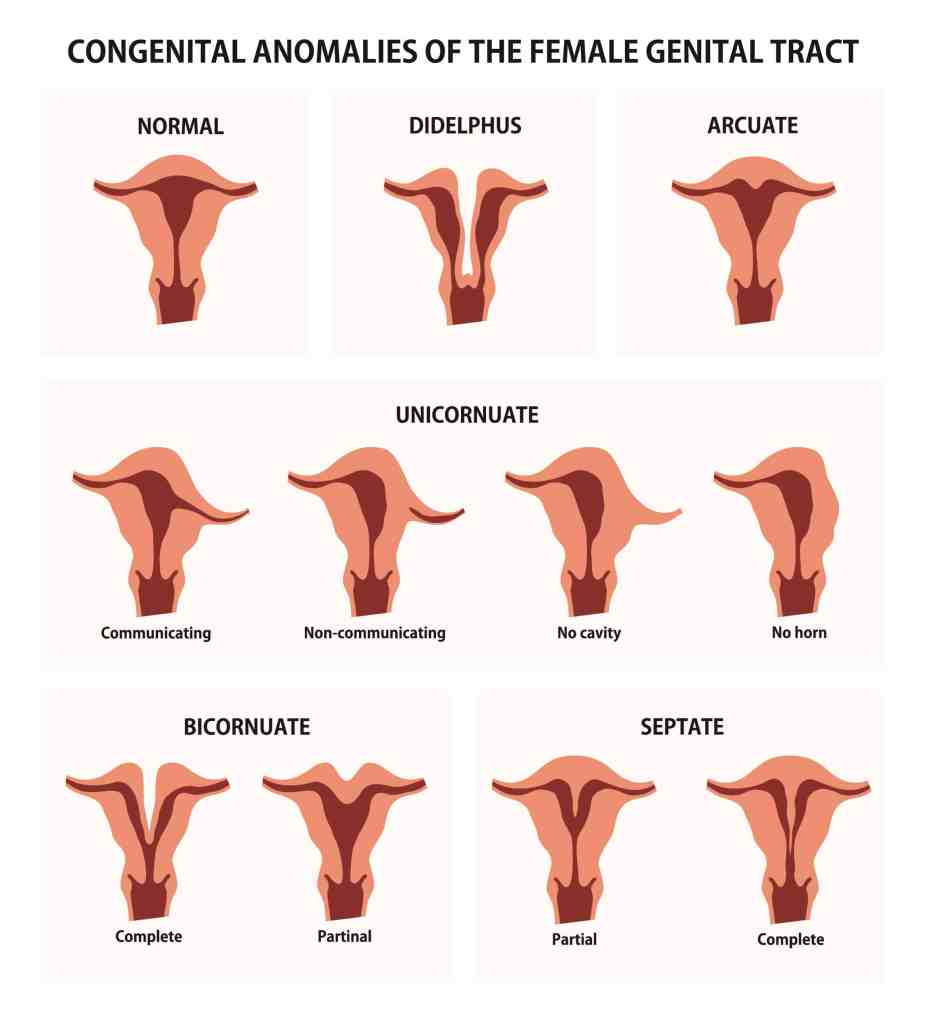
Yesterday I had the surgery, and I’m very happy — everything went well and I haven’t had any pain. I had the operation in the morning and was already home by the afternoon. It was a metroplasty. Everyone treated me so well, and I’m very grateful — the Spanish public healthcare system is truly a luxury. Even though it’s overwhelmed and there are administrative issues, it has excellent professionals, and I haven’t seen a system like this anywhere else in the world.
Now I have to wait three months for everything to heal properly, and then we can start trying for a baby.
When they told me I had an abnormally shaped uterus, at first I didn’t want to get surgery — I was scared. But then I thought about it more, did some research online, and came to the conclusion that it’s better to be safe than sorry. The video I’m sharing below really struck me: it’s about a woman who spent 8 years trying to conceive, going through treatments, and only succeeded after she was diagnosed with a uterine malformation and had surgery. Apparently, in all those years, she never had a 3D ultrasound. I guess she was going through private healthcare due to her age, because in the public system, at least when it comes to fertility issues, they do perform 3D ultrasounds — and they would have spotted it there.
Sending strength to all!!:))

 en.secretsbeautyandhealth.blog