This is not the typical blog about makeup, hairstyles or fashion. Here I will speak, from my personal experience, of issues related to beauty and health that are not that known. I share my wisdom with the hope that it will help you to avoid complexes, annoyances and money.
It’s been a long time since I’ve written regularly on the blog, but whenever I have something important to share, I remember to post it here. Today, I want to talk about how important it is — for women who are thinking about having children — to get a 3D ultrasound.
I don’t have any medical training, so I’ll explain it as I understand it.
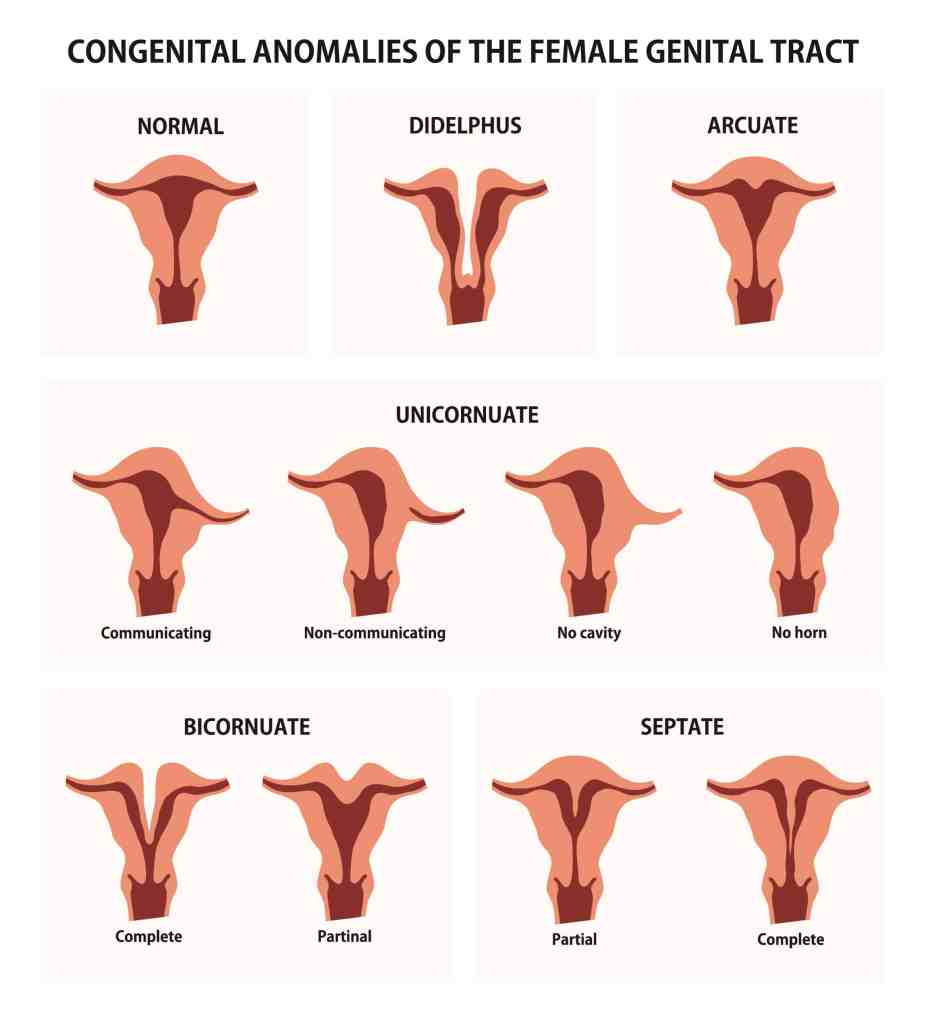
The routine ultrasounds done during gynecological visits are usually two-dimensional (2D), and they’re enough to check that everything looks fine. But 3D ultrasounds can reveal things that 2D ones can’t. I know this because it happened to me. A few months ago, I went through fertility tests, and since those do include a 3D ultrasound, they discovered I had an abnormal uterine shape — a Y-shaped uterus with thickened lateral walls. I’d been going to the gynecologist my whole life and had always been told everything was normal. But I’d never had a 3D ultrasound before.
An abnormally shaped uterus is something you’re born with and often doesn’t show symptoms (although, given my history of painful periods, I’m not sure if that’s related — they told me that link isn’t very clear). The problem is that if you’re thinking about having children, an abnormal uterine shape significantly increases the chances of complications: miscarriage, premature birth… Of course, it’s all about probabilities — nothing may happen — but you’re at a higher risk than someone with a typical uterus. Also, although again the connection isn’t certain, it might make it harder to conceive (check out the video at the end of this post).
TYPES OF UTERINE MALFORMATION (MINE WAS PARTIAL SEPTATE)
Yesterday I had the surgery, and I’m very happy — everything went well and I haven’t had any pain. I had the operation in the morning and was already home by the afternoon. It was a metroplasty. Everyone treated me so well, and I’m very grateful — the Spanish public healthcare system is truly a luxury. Even though it’s overwhelmed and there are administrative issues, it has excellent professionals, and I haven’t seen a system like this anywhere else in the world.
Now I have to wait three months for everything to heal properly, and then we can start trying for a baby.
When they told me I had an abnormally shaped uterus, at first I didn’t want to get surgery — I was scared. But then I thought about it more, did some research online, and came to the conclusion that it’s better to be safe than sorry. The video I’m sharing below really struck me: it’s about a woman who spent 8 years trying to conceive, going through treatments, and only succeeded after she was diagnosed with a uterine malformation and had surgery. Apparently, in all those years, she never had a 3D ultrasound. I guess she was going through private healthcare due to her age, because in the public system, at least when it comes to fertility issues, they do perform 3D ultrasounds — and they would have spotted it there.
Hello! Happy 2021! In the first post of this year I’m going to talk about some grooming issues that I think don’t appear very much on the Internet.
The first one are inverted nipples. What?? Yes, there are women (including myself) whose nipples are not erected, or not always. This is called having flat or inverted nipples. In my case, they are usually flat, but with cold or when touched the “tip” comes out. They’re shy, hahaha. For me it is not too much of a problem, quite the opposite, since I do not have that problem of the noticeable nipple when wearing a sports bra or not wearing a bra. Something that, by the way, should not be a problem either, since a nipple is normal, well, what if it is noticeable under the clothes? Men’s package is usually noticeable too. One day I heard a youtuber telling that she had inverted nipples, and that since she wanted to have a baby, she needed to have a surgery there before, in order to be able to breastfeed her baby. When I had rhinoplasty this summer, I mentioned this to the surgeon and he told me that it is just the opposite: if you have inverted nipples and you have surgery done there, you can no longer breastfeed. So, I have doubts about it, if someone has had this problem and has had surgery and then breastfed, please tell me. I read that having flat or inverted nipples may cause problems when breastfeeding, but in my case, since by just touching them they come out I do not think so. What the surgeon told me is that with the surgery to pull the nipple outwards, some “fibers” are cut (those “fibers” cause the nipple go inwards) and that is why afterwards it is no longer possible to breastfeed. Whatever.
Another issue I wanted to discuss is the pubis/labia majora. I think that in a post I already mentioned that I had full intimate hair removal for the first time two years ago, and now I have completely finished the process. There is no going back. I thought a lot about whether I should do it or not, because with electrolysis hair removal the result is definitive. As it was not my priority, I left it until the end, but now after three sessions I am already hairfree there. My doubts were whether I looked or felt strange, and because hair is supposed to have a function there, to protect from friction and against some sexually transmitted diseases.
Well, I did not take my decision for sexual reasons because I am not promiscuous nor did I seek to improve sensations or something like that. I did it, honestly (and I know I’m not the only one who thinks so) because I was sick of seeing pubic hairs (even tough they were mine!) On the bathroom floor, in the sanitary towels, in my pants, on the shower floor… Like the hair on the head, pubic hairs are renewed and fall out, and are long enough to be seen. I don’t go naked at home, so I could not understand how I could see pubic hair on the bathroom floor, just due to drying off after showering. The fact is that I was very disgusted. And those hairs were quite dark, curly and long, gross. Another reason for me was the odor/hygiene issue. Although hair is not synonymous with dirt, well, some remains keep there when you urinate or have your period. Finally, I had a stain on my groin that I thought was from when I had laser there many years ago. I thought it was a burn and that’s why I had that brown stain. But one day it started to itch, and then I started to wonder if it was a fungus. And yes, it turns out that I had a fungus in my groin for several years and had not found out. With a cream it was removed, but I did not stop thinking about how a fungus could have come out there. Because of my lifestyle it was not possible that it was due to something contagious. Then I realized: fungi come out because of the humidity. What could have caused humidity there? Well, when I shower, I usually dress immediately, and my public hair was still half damp when I put my panties on. That’s why the fungus started. I searched on the Internet and saw that other people had also suffered this problem, and they recommended drying public hair with cold air with the hairdryer, or intimate epilation. For the reasons stated above, I preferred the second option.
And that is how I decided to have a total intimate epilation. I forgot to mention that, with aging, many women get gray and bald spots there, so that would be one less inconvenience. With intimate hair removal I have included the pubis and the entire intergluteal/perianal area. It feels very clean in the shower when you notice that there is no hair there. It also feels less annoying with the period, and I don’t get any hairs stuck to the glue of the sanitary towel (it used to be a sudden pain when going to the bathroom hahaha) I was worried that I would notice more friction, for example, when riding a bike. But no problem. Since the epilation was with local anesthesia, it was not painful at all, nor did it give me any problems afterwards, the area swells a little and then it goes down.
One last topic that I have learned about is related to the labia majora. I really don’t know how the “intimate area” of other women look like. But it seems that, as with breasts, there are differences, there are women with larger or smaller, darker or lighter labia majora. In the intimate area the skin is darker than in the rest of the body, that is clear. And it seems that some people whiten that area. Some women have their labia majora too big, or one bigger than the other, and it seems to them little aesthetic or it bothers them with tight clothes. I have one labia majora larger than the other and somewhat dark, but it doesn’t give me any comfort problem or anything. In fact, bigger labia majora are supposedly beneficial on the sexual area. Anyway, for those who may be concerned about this, there is also an intervention that “cuts” labia majora (with laser) and makes them look more aesthetic.
Well, you see, I always talk about “never said” issues. In addition to being curious, they seem to me to be issues that must also be discussed, otherwise it happens as it happened to me with my hair problem: it happens to a young or uninformed girl and she thinks that she is abnormal and that it only happens to her to her. All because some issues are not discussed.
In the last post of this strange year 2020 I want to share that I have written a book!! It is not my first book, but it is the first that I did not write for work reasons and that I’m publishing as Mariahelpsyou. It is available in Spanish and English, both in ebook and paper format. For every taste!
The possibility of self-publishing for free with Amazon had caught my attention a long time ago. Knowing the difficulties of gaining a foothold in the publishing world, it seems like a great option for all those who want to publish something that may not sell, or who are not professional writers. Taking advantage of the low social life imposed this year, I took on the task of compiling some of the blog posts into a book, which has the same title as the blog. It is a short book, with eight chapters, with the posts I thought were the most important to include. In the five years that have passed since I started writing the blog I discovered new things and I had to update several posts. So, in the book I wanted to include all that information together. For example, how I progressed with electrolysis hair removal, belonephobia, skin care, in dyeing my gray hair, in oral care…
The book is aimed especially at teenage girls and girls in their twenties. Every time I wrote a blog post, I mentally relived my past dealing with different beauty / health issues, and each time I thought: “If someone had told me this at the time.” I remembered how I felt so lonely and hopeless with certain problems, which apparently only happened to me because nobody around was talking about them, and that despite my many attempts seemed to have no solution. Some of them (like acne or gingivitis) may seem more common and not as serious. Others, like hirsutism or belonephobia, have really embittered much of my life. That is why the book is aimed at young girls who may living a similar situation. Although it has taken many years, I have found a solution to all these problems. And it has not been thanks to the many specialist doctors, or dentists, or hairdressers, or any so-called “professionals”, but only with my persistence and research on the Internet, losing a lot of time and money along the way. Whoever seeks finds (even if it is later than sooner). Although the book is aimed at young girls, of course anyone can benefit from reading it, at least one chapter, be it a man or a woman of any age.
And well, what better date to launch a book than before Christmas! I do not expect to earn lot of money with this, it would be enough for me to know that the knowledge I share arrived and helped someone who needed it.
Merry Christmas!!
*Where to buy the book:
As an Amazon associate I earn from qualifying purchases.
In this post I am going to tell you how I have managed to control my period pain (also called dysmenorrhea). In a previous post I talked about how it always comes to annoy me in the best moments and how I got rid of pain for a few years with contraceptives, but how when I left them the same pain and the problem of managing it returned.
Although ibuprofen (some people use other anti-inflammatories) is the best solution to menstrual pain, I also had to deal, for a while, with the fact that it was too strong for my stomach. Many times, the pains started in the morning, when I got up, and I couldn’t eat anything. Then I would take the ibuprofen with an empty stomach, and that’s not good, several times I even vomited. I solved this by always taking an omeprazole (stomach protector) before taking ibuprofen. I recently read that ibuprofen works faster on an empty stomach, but if you take it on an empty stomach it is very strong and can cause ulcers more likely than if you have eaten. So, in short, what I did was to start taking omeprazole always before taking ibuprofen, whether I had eaten before or not (although it is more necessary if you have not eaten before).
However, the big problem was still that the ibuprofen was taking too long to work. At least half an hour and even until 3 hours is the time that I have been lying in bed, writhing like a lizard with my contractions, until finally it took effect. And what if all this happens when you’re not at home. Aside from the comfort, one of the reasons I moved to live next my job, literally five minutes away, was in case I had to rush home at the slightest sign of pain (and I had to do it twice).
As always, I continued investigating but could not find a better solution than ibuprofen with omeprazole beforehand and the electric blanket while spending the moment in bed. Something that I did not do either, but I had my reasons, is to take a dose of, for example 600 mg every 6-8 hours since period stains began. And I did not do it because what I found is that when, for work reasons, I took ibuprofen as a preventive measure (without any pain yet), the period took much longer to come. Once I spent up to 5 days taking ibuprofen for nothing because I had stained a bit, and I tried that method until my period finally started. Normally, from the time I start to stain until my period finally starts, it takes a day or a day and a half, not five. And taking into account the cardiovascular risk of ibuprofen, and that when I am on my period I reach the maximum recommended dose (1200 mg) or even exceed it, I did not want to unnecessarily add more. So I did not adopt that method, but may be for someone it works well. I am not sure what relationship may exist between taking ibuprofen in a preventive way and the delay in the period once the process has already started, but I suppose that since it is an anti-inflammatory, if you have some “obstruction” there, not having that kind of initial contractions due to ibuprofen causes the whole process to take longer.
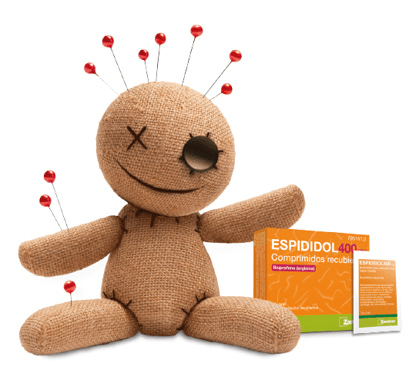
Anyway, what I discovered this summer, by pure chance while watching YouTube, is that there is ibuprofen with arginine, a component that makes it act much faster than taken alone. Just what I needed! According to the advertising and the leaflet, ibuprofen alone takes half an hour to work (many times longer for me), while ibuprofen with arginine takes only a minute!! This month I almost wanted to have my period to check if this was true, hahaha
I bought ibuprofen + arginine in 400 mg sachets. And it has worked! Finally I have not squirmed like a lizard for at least half an hour in bed. I took a 400 mg sachet and waited 10 minutes, and as it kept bothering me I took another one, and in another 10 minutes it was over. The other times (I took the medicine 3 times, after 6-8 hours the effect wears off) I already took two sachets directly. I usually took between ibuprofen 800mg-1200mg at once, but this time I didn’t go over 800mg. Another important point is that the medicine in a powder format, diluted in water, also accelerates the effect, and is less harsh on the stomach than pills. Also, although it is not my case, there are people who cannot swallow the capsules. The disadvantage of sachets is that being around it is more difficult to take them, because you have to find a glass and a teaspoon. And they taste really bad! This month I did not take the omeprazole before the ibuprofen because I forgot it, but it did not hurt my stomach. Regardless, I will continue taking omeprazole before taking the medicine.
Ibuprofen with arginine is available in both sachets and capsules. Since the effect is faster in sachets, I recommend them more, although it can be good to have capsules on hand if one does not have access to a glass and a spoon. In Spain there are several brands that sell ibuprofen with arginine, and all have the same list of ingredients, among which is aspartame. I didn’t like this because aspartame is a sweetener that has been found to be a carcinogen. But since I could not find any brand that does not use it (they are supposed to put it to remove the bad taste of arginine, but even so it tastes really bad), I’ll use this medicine anyway. Hopefully with time this ingredient will be removed (I already wrote to the company to ask for it).
I hope this will help those who suffer from period pain every month, I am very happy with this product that I found by chance!
*To buy the products I speak about (I only recommend products that I’ve tested):
As an Amazon Associate I earn from qualifying purchases
This month’s post is going to be a compilation of everything I’ve been writing about on the blog, since I started with three posts in 2015, until I decided to take it more seriously and write a monthly post as part of my goals for the year in 2017.
When I started the blog I wanted to share things that I had discovered by myself, especially through the Internet and from my own experience and that of others, over the years. They were doubts, questions that do not appear so much in beauty magazines and on blogs and YouTube channels, or that in the case of appearing I considered they had wrong or incomplete answers (such as taking the pill if you have acne or resorting to laser if you have hair on your face…). I really wanted to address problems and solutions that I thought were not being publicized enough.
In 2015 I explained how the irrigator (in its eco-friendly and cheap version, the Italian So-Wash) is the secret weapon that dentists do not want you to discover, along with the coconut oil + bicarbonate toothpaste. A toothpaste that also works as a deodorant. I also published the most visited and consulted entry of the entire blog, the one that talks about electrolysis hair removal. A post that I updated later showing the progress of my “do it yourself” results in this regard.
In 2017, I started talking about my experience with hirsutism and acne, I defended Roacutan and Ovusitol against the contraceptive pill and I talked about some simple and cheap measures like aloe vera, castile soap (Dr. Bronners), the importance of changing face towels and the pillowcase (better if it is made of silk) often. I have also talked about the importance of nutrition (the now fashionable smoothies) for the skin and the little-known mineral makeup.
I also talked about health issues, such as period pain, and how I try to control them by always keeping omeprazole and ibuprofen close at hand, in my emergency bag. Or the problem of belonephobia, so poorly treated by most health professionals and which causes serious trauma to many people. I still hadn’t found a definitive solution to this issue, but reading the book Overcoming Medical Phobias gave me some hope. Trying psychological treatments (hypnosis, neurolinguistic programming) gradual exposure (with images, videos…) and using the applied tension of the muscles could be the key. In my case, I also think that choosing a different site from which to draw the blood (perhaps the hand and not the inside of the elbow) could have an influence. I’ve been working on this for the past few months, and I’ve gone from feeling a bit dizzy just reading or watching videos about it, to being able to tolerate it (at least from a distance). I also think that the time of day influences, since for example I have the lowest blood pressure and I am weaker in the morning, which is precisely when the blood extraction procedure is done (and on an empty stomach). A reader advised me to use Buzzy and I have it ready to try in the future. What I’d really like to try though is the Seventh Sense Biosystems TAP. I keep writing them to see how to acquire it but it seems that at the moment only certain laboratories have it (I have also written to them and they do not respond). I hope it is only a matter of time, because it gives me the impression that there may be the solution. Other alternatives are the use of Vacutainer or butterfly needles for extractions. I had considered these alternatives, so I would also like to try. Anyway, hopefully in the future I can write a post explaining how I finally solved the issue. It would be my personal big hit on these issues, along with the discovery of electrolysis :))
Some posts include novel therapies, such as the natural solution to myopia (including much cheaper glasses), a problem that I had previously discussed. In this regard, I recently read a piece of news about some drops to solve myopia developed by a university in Israel … I’ll be watching too. Hopefully ending myopia without surgery will my third hit :))
*To buy the products I speak about (I only recommend products that I’ve tested):
As an Amazon Associate I earn from qualifying purchases

 en.secretsbeautyandhealth.blog