This is not the typical blog about makeup, hairstyles or fashion. Here I will speak, from my personal experience, of issues related to beauty and health that are not that known. I share my wisdom with the hope that it will help you to avoid complexes, annoyances and money.
Author: mariahelpsyou
This is not the typical blog about makeup, hairstyles and fashion. From my personal experience, I will talk about issues related to beauty and health which are not that known. I share my wisdom with the hope that it will help you to avoid complexes, annoyances and money.
In this October post I want to talk about how absurd fashion sometimes seems to me. And first of all I want to say that it seems perfect to me that one wants to be fashionable, dress well, combine clothes, etc. I like that too. But in fashion, as in everything, better with measure.
For a couple of seasons, it turns out that pants above the navel (I call them maternity pants) and ripped jeans are in fashion. I can accept the maternity ones (although they do not favor me at all and by the first wash they are already loose). Many say that they hold rolls better, that they lengthen the legs …they see all advantages. I do not see those advantages, but I did not like the skinny pants when they started, they seemed totally unsightly, and then, I have worn them. So even though I don’t like them, I accept maternity pants.
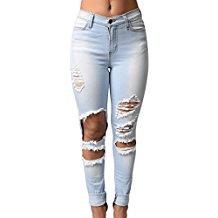
What I can’t stand is the ripped pants trend. Beyond the taste of each one, which obviously must be respected, it seems to me a total SCAM and a joke that people (or better said: fashion-victims, who are a good part of the female population) have accepted this scam with pleasure. Or by imposition, because last season it was really difficult for me to find low-cost jeans that were not ripped jeans. Why does it look like a scam to me?
You are paying a defective product.
You are paying a broken product.
No matter how well you combine them, you’re wearing hobo pants.
Even worse, now they are selling patches for you to stick on your ripped jeans. Come on, they sell broken pants and they also sell you the patches so that you can put them on. I could better make my clothes myself and give the money directly to the cashier, without taking anything in return.
Excessive nonsense at its finest
Literally, that saying that if it becomes fashionable to wear a vase on your head people would wear it has become a reality. Inditex and other textile companies, do it please, I would laugh! Well, I’m sure that Amancio Ortega and other businessmen in the sector are laughing at the money generated by selling clothes made of rags at the same price as normal clothes. Those who would need to laugh a little are the poor Third World exploited people who weave all those clothes (although I suspect ripped jeans are just reused jeans) for the fashion-victims and compulsive consumers of “fast-fashion”, who “swallow” with everything they heard is a trend. Here is the link to a documentary that I recommend watching: The True Cost.
Hello everyone !!! And welcome to this post-summer post in which I am going to talk about the bidet, that great unknown in much of the world.
According to Wikipedia (thanks, oh, great oracle) the word bidet comes from the French “bidet”, which would mean “little horse”, alluding to the posture used during its use. Well, I don’t know in France, but in French-speaking Belgium it is not very popular. And neither in the United States, Mexico (they who consider themselves so clean compared to Europeans, I don’t know why we have a reputation out there that we don’t shower) and the rest of Latin America (except Argentina, where the water from the bidet also comes out vertically). I have been to all these places and I have not found a bidet in hotels/hostels or in private homes. Wow, their presence is not something common as in Spain.
But the fact is that even in Spain the debate about what the bidet is for has reached my ears: that if it is useless, that if nobody uses it … Well, here I am to explain the two main uses of the bidet and why they are necessary in the bathroom.
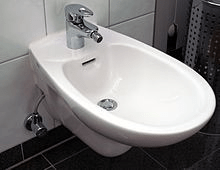
A common Spanish bidet
Use # 1. Wash your ass and genitals (here following the eschatological line from months ago). In Spain a very uncomfortable question is to ask acquaintances if they use the bidet after going to the bathroom. Surprisingly, some consider the affirmative answer as obvious as if I had asked them if they wash their hands after using the bathroom (and I know that many do not, but nobody recognizes that), while others do not. Well, if you get shit stained on your arm, would you just wipe the shit with a toilet paper? Or would you rather wash your arm with soap and water? That is the use of the bidet. Very useful also for women when we are in our days. Add, also, that in some cultures (Arabic …) they do wash with water every time they go to the bathroom, but in a more rustic way (luckily we have the bidet).
Use # 2. Clean your feet. In summer, one can return from a walk “in the fresh air” at night, or in the morning after partying, and if we have worn sandals, feet are usually dirty. Are you going to go to bed like this? Are you going to shower at midnight just to wipe your feet? Here is the usefulness of the bidet.
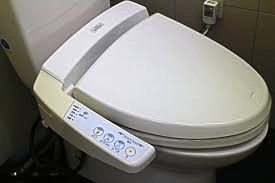
And well, for use # 1, where there is no bidet purchase available, at least people can install a supersonic toilet, one of those from the Japanese, which not only have a bidet included but also they warm the chair in winter and make noise so that nothing is heard at the time of the “plof”.
Japanese super equipped toilet (I don’t see it useful to wash your feet)
*To buy the products I speak about (I only recommend products that I’ve tested):
As an Amazon Associate I earn from qualifying purchases
I will dedicate this month’s post to the king star and how to protect ourselves from him. We all know the dangers of sunbathing, both aesthetically (wrinkles, premature aging) and health (melanoma).
When I was a teenager (a few years ago) people were crazy about getting tanned. Luckily, it seems that this has changed and now being pale does not look so bad, many people even think it is beautiful (including myself), as is the case in Asian cultures. Although I am very pale and it does not bother me at all, it is true that in occassions like weddings etc, certain dresses dont look well if one is very pale. But self tanners, tanning showers (with sugar cane, etc.) and makeup have been invented for that, so it doesn’t seem like a reason to sunbathe or go to the rays.
In Winter I dont worry about the sun, because I do not spend much time outdoors, and ten minutes per day seem good to me (we already know that vitamin D comes from the sun and is necessary). But when spring-summer comes, I do start to be careful.
Be careful with the sun!
Unlike the advice of pharmacists and marketing from the cosmetic industry in general, I do not use sunscreen daily. It seems an unnecessary expense that has been promoted for commercial purposes disguising it as prevention. And they include unnecessary skin chemicals. For a person who goes from home to work, or to shopping, I think it is enough to try to walk in the shade, wear sunglasses and a hat or an umbrella/parasol. Also, I dont like the texture of the sunscreens, their ingredients, I don’t like wearing it at all. But obviously if I am going to be on the beach I do wear it (although I will be under the parasol most of the time, except if I walk or bathe). In that case, I use cheaper sunscreens (although always with high SPF) in the body and of higher quality (Avène type) for the face, which are also non-greasy and non-comedogenic. Even so, whenever I put a blocker on my face I get some pimples afterwards.
Well, in general I dont worry at all about being tanned, except in the case that I have mentioned. In addition, I have already seen that those girls in their 30s who have sunbathed a lot have more wrinkles, sunspots and in general they look older. Not to mention the appearance of moles, which I hate and have a tendency have, so one more reason to avoid sunbathing. And returning to vitamin D, 10 minutes a day is enough, so I don’t think it is an argument to defend sunbathing.
*To buy the products I speak about (I only recommend products that I’ve tested):
As an Amazon Associate I earn from qualifying purchases
I want to start by saying that I am against long nails. I know many love to long nails: they even put on false nails because they think it’s super feminine and pretty. To me, it seems quite the opposite: unhygienic and shabby. To all of them, I will apply the famous saying “I respect your view but I don’t share it”. Obviously, long toenails do not seem nice to anyone (I hope …) but to me, long fingernails are as disgusting as long toenails. Do you how much crap accumulates under nails? Short nails are the most hygienic option. Yes, I know that there are nail brushes, specific devices for cleaning them and the pen cap, but even that way it is disgusting to me. If I see someone with long fingernails handling food I have to look the other way… Normally those with long nails also paint them, so “you can’t see the shit.” I can only stand French manicure or painted but short nails. To me, those nails with designs with drawings and so on are really tacky. Toenails look better painted (but always short!), especially in summer when people wear sandals.
Device to clean your nails 1
Device to clean your nails 2
The products to remove nail polish are obviously quite toxic. I do not usually paint my fingernails because I’m too lazy for that, but in summer I do paint my toenails. You should always ventilate the room very well when you use these products. Now there are some organic and biodegradable nail painting, but they are only in specialized stores and are quite expensive.
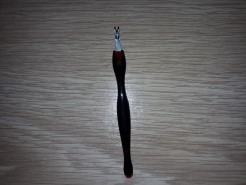
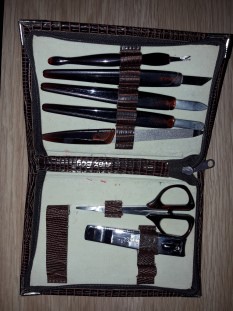
Moving on to something else: cutting your nails. The best time is after a long shower, because they are soft and it is simpler (besides it is less disgusting). Also, after a long shower, they tend to be cleaner. As I always have them short, I don’t have the problem of cleaning them. You have to cut them in a square shape to avoid ingrown toenails. I don’t use nail file either. An apparatus I recently discovered is this one:
It turns out that it serves to remove cuticules. It is like a mini-blade that you pass by and I use it to remove the spare skin (I use it especially for the little toe). Ah, something that goes without saying: after each use, you should clean very well, with soap and water, the gadgets you use to cut and clean the nails (for the nail clipper, as it is more difficult to clean, use a cotton stick).
My manicure kit
Anyway, I see no sense in removing hand cuticles, because they are a protection between the nail and finger. I only had a manicure once (it was a gift) and I ended up with bleeding and wounded nails because the lady insisted on removing my cuticles. She said that this is how the nail is better painted, but I’ve seen the nail is painted the same way whether you remove them or not.
Finally, nail-health relationship. It is assumed that nails, like hair or skin, reflect the state of health in general. So, brittle nails would reflect poor health, and hard nails good health. The white spots that sometimes appear are not a lack of calcium as it is believed but are due to some small blow.
*To buy the products I speak about (I only recommend products that I’ve tested):
As an Amazon Associate I earn from qualifying purchases
In this post I will discuss a very important topic for me and about which I have not found too much information on the Internet (apart from the fact that many people do not take it not seriously). It is belonephobia or needle phobia.
There are many phobias, and those who do not suffer any sometimes laugh at those who do. Phobia to spiders, mice, heights, enclosed spaces, crowds … I have a friend who once ran down an alley because we were in a crowded street and was overwhelmed, and she always wanted to be next to the door in pubs because she was claustrophobic. I know another who can’t stand seeing mice, even on television. Snakes make me feel very disgusting, but it’s not a phobia. Another person I know is afraid of flying and has never been on a plane (she says that she will die anyway, even if she doesn’t travel. I feel sorry for her because traveling is one of the best things that exist).
The main problem with belonephobia is that it interferes with important issues (medical check-ups) and that between 50 and 70% of people who suffer from it faint. Those who have passed out know that it is not pleasant, especially the moments before (when you start to feel bad and the most important thing is to lie down so as not to fall on the ground) and after (due to changes in blood pressure, you pass from feeling very hot to very cold and it takes some time to recover). The time that passes while you are unconscious is exactly like sleeping, the only difference is that when you wake up you are stunned because everyone is watching you, telling you “calm, quiet”, and it takes you a while to remember that you have passed out and you can start talking. It is really very distressing, at least for me, it seems the closest thing I’ve experienced to die or having an accident. Not to mention the anguish of people around you, the shame/ridicule you feel later …
Precisely because of this, people who have suffered fainting have a horrible fear of fainting, and that makes us avoid as much as possible what causes us to faint. Unless you have a health problem, very low blood pressure, a heat stroke or have not eaten for many hours, it is rare for a person to get dizzy and faint all of the sudden. In my case, all the times I’ve passed out have had to do with minor accidents, my period (as I related in the previous post) and, what I’m going to deal with today, belonephobia.
Belonephobia would be the fear of needles, of being punctured, and of blood. It has different grades. For example, in my case I am not afraid of dentists, when I had dental interventions (many years ago, now as I told in other post, I have no problem with interventions in my mouth) I saw huge needles, I have watched as the blood splashed the dentist’s glasses…and nothing, no problems. [Well, just one thing: once my heart accelerated a lot, and I was surprised because I was very calm and the dentist has never scared me, so they explained to me that local anesthesia has adrenaline and may cause that effect]. And paradoxically I have a whole experience with electric hair removal, which, although it is not puncturing, consists of introducing needles into a follicle, and I do it myself. In addition, in sessions of electrical hair removal I had local anesthesia punctured and I have not had problems either. Nor do I have problems getting a vaccine.
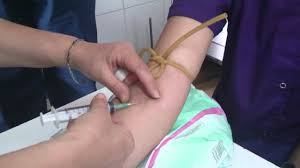
What is my problem then? Blood drawing. It is a Chinese torture to me. Or having a needle inserted (like anesthesia or an I.V.), although I still haven’t faced that. It’s so unpleasant when they put the tourniquet, they puncture you… There have been times that I have gotten along, especially if they do it fast (and I lie down and not looking, of course). Then I take a piece of chocolate and lie down for a while, get up and leave. But other times (especially when two tubes have been drawn) I have fainted. And I live in fear of the day that they I might need a surgery, or that I want to be a mother and my fainting problems can affect the baby, not to mention the moment of giving birth …
I talked to a doctor and told him that, perhaps, instead of the question of the extraction itself (which is not so bad, but I will never be a blood donor), the problem is the place of the extraction. They draw blood from the inside of the elbow, and for me that place is like my Achilles tendon or Samson’s hair, once I got dizzy because they pressed me with the round thing that they put on the inside of your elbow when measuring your body pressure. Maybe if they took it from somewhere else … The inside of the wrist seems even worse, but I think that in the forearm, the upper part, it wouldn’t be that painful. The doctor told me that the nurses search for places where they can see the vein, but I think there are other less painful places where they can see the vein too. I find it inhuman to be condemned to faint because a nurse doesn’t want to bother to take my blood from another site. The fact that blood is drawn in a fasting and in the morning does not help. In the morning I am at my worst moment, very low energy, and if I’m fasting even more. Although on this I learned that it is only necessary to go on an empty stomach if you are going to look at cholesterol, sugar and those things, for other types of analysis (blood count, hormonal) it would not affect being fasting or not. Nor does it help to go to the health center and see how people get in and out holding their arm, having to wait until the end to go have the procedure whilst lying (if you want your blood drawn this way you have to wait until the end) and that people look at you or the nurse laughs at you… well, for me it is a horrible experience. I also saw that there is a service of nurses who can go and do the extraction at home, the next time I have to do analysis I will try to do so, for me it would be money well spent.
Once I fainted watching a surgery on TV and another time because some friends were talking about a surgery, but happily all these issues can be avoided: the biggest problem for me is the necessity of having blood drawn for health check-ups. I also don’t know what will happen the day I have to take care of someone at the hospital (because I can’t see someone with the needle stuck in his arm, I’ve only gone to hospitals to see newborn babies). I have to admit, I don’t want to even think about it. I think that’s why I take care of my health so much …
The two possible solutions that I have found on the Internet, although for the moment I have not applied them, are hypnosis and “applied tension”. From hypnosis I heard a blogger (who I follow for cooking issues) who said she always fainted with the issue of needles, so when she decided to become a mother she underwent a few sessions and overcome it. It sounds too good to me, and I wrote to her personally, but she didn’t give me more information. In addition, she was from Chile, and what I would like is to find someone who knows about it in Spain. Another proposal I found was the one that appears in the book Overcoming Medical Phobias, by Martin M. Antony and Mark A. Watling (I found it online). In the book, the authors talk about applying “applied tension” to prevent vasovagal syndrome, which is what makes people faint from belonephobia. In the book they explain what biological and experience factors affect having belonephobia or vasovagal syndrome (it is quite hereditary), what happens when one passes out, what is the vasovagal syndrome and how it could be solved. Apart from the “applied tension”, they propose a gradual exposure to films or images of what is feared, until it is overcome, with “caregivers” who monitor if you pass out. I really already have enough problems and I’m busy enough to spend my free time watching videos that can make me pass out. So, I always postpone the attempt. The other proposal, given in Chapter 6, is “applied tension.” They explain it as follows.
To function, the brain needs a constant flow of oxygen-rich blood. Since the brain is above the head, when we stand, gravity tends to withdraw blood from the brain [hence when we get dizzy it is better to lie down and lift our legs]. Therefore, the blood needs enough pressure to reach the brain (just as in a house the water needs the pressure to get through the pipes to the floors above). The blood pressure is maintained by the muscles of the blood vessel walls, and by the rhythm and potency with which the heart beats.
When the muscles in the walls of the blood vessels contract, they narrow the diameter of the blood vessels, causing an increase in blood pressure. If those muscles relax, the blood vessels increase in diameter, resulting in a drop of blood pressure.
Blood pressure is also affected by the rhythm at which the heart beats. If the heart beats slowly, blood pressure drops. If the heart beats fast, blood pressure increases.
In summary: relaxed blood vessels and slow beating heart result in reduced blood pressure. That results in blood going to the legs (where gravity carries it) and less blood available to the brain, which deprives it of oxygen. A brain without oxygen cannot be alert and fainting occurs.
Then there is the nervous system. It includes all the nerves, organs and muscles of the body. It tells the heart how fast to beat and tells the muscles in the walls of the blood vessels how relaxed they should be. The nerve that is involved in fainting related to fear is the vagal nerve. When the vagal nerve is activated, it causes the heart to beat more slowly and the muscles in the blood vessels to relax. And that results in fainting. The vagal nerve can be activated by extreme reactions of fear, anxiety or pain, and is activated more easily in some people (those who faint) than in others.
The key to avoiding fainting would be to beat the vagal nerve by contracting the muscles in the walls of the blood vessels to avoid lowering blood pressure. People have no control over those muscles, but we have control over those of the body. Tensioning the muscles of the body (arms, legs, torso, feet, hands, neck) could help prevent fainting, as these muscles apply an external force to the blood vessels, and that way the blood pressure is increased. This is what is called “applied tension.” What they propose is to do exercises to tighten the muscles for 10 to 16 seconds and relax 30 seconds. Repeat 4 times. Make series 5 times a day, for a week. And then see if it works “in situ”, that is, during exposure exercises or in front of the needle.
I do not understand very well the concept of “tensing the muscles”, they say that it is “contracting the muscles”. Then, when blood is going to be drawn, just before, you apply the “applied tension” (but not at the moment, because it can make it difficult for the nurse to introduce the needle). I see it a bit complicated, but I understand the process. The idea is that there will come a time when you have overcome the phobia and you will not have to do anything anymore. The book is very good, I recommend it.
As I said, there are varying degrees of belonephobia and I am glad that I have not issues with dentists, that I can get vaccines… but it is something that I have to solve, and I do not know how. Above all I worry because one day I would like to be a mom. If you read me, nurses or people who have had the same problem and have overcome it, or are in the process, I would be very grateful if you could write me with advice. By the way, check this innovations for blood drawing, I’m looking forward to them to be available for the general public: https://www.tassoinc.com/press-releases/2019/3/5/tasso-raises-61m-to-bring-self-collection-of-blood-samples-into-pharma-trials
This month’s post is dedicated to the period or menstruation. It is a subject that I would like to address from my experience, in case it can serve others who go through the same thing and if the people who read it can provide some valuable insights.
I had my first period quite late, when I was 14 years but only three months before turning 15. So I was quite excited, since it was the last of my friends and I was beginning to worry. From my third period I began feeling pain, the famous “menstrual cramps”, and from there the ordeal began (apart from the hair/acne problem that I have already treated in other posts). I have to say that I think my period pain is genetic, since my mother also had menstrual cramps and I remember when I was a child and she stayed in bed one or two days a month. I think it can also be related with the fact that she did not give birth, but had a C-section. Some people say that those who had painful periods and have given birth stop having painful periods, but I’ve seen this is not always the case.
A second issue is “timing”. My periods comes with me to all good times: New Year’s Eve, trips, etc. It comes also on weekends, of course, but I almost prefer this because, as I feel so bad, I can stay at home during the weekend. To give some examples, the first year I had my period it came with me to my high school study trip, in which we spent all day doing water activities. I had never used a tampon because I had hardly had five periods until then. So it was very uncomfortable because I didn’t put it well, it bothered me, it stained everything… At New Year’s Eve I had to stay at home because my period came just that night. It also came with me to a transatlantic flight, and I had previously taken an aspirin for the traveler syndrome (to avoid clots doctors recommend taking aspirin before long hours of travel, and also wearing compression stocks). Since aspirin avoid clots, on that trip I bled like an open tap, great.
You never know when your period is coming?
But the worst part is pain. I have fainted twice. One of them it was at home. It was a weekend (of course). I got up for breakfast and noticed that it was starting to hurt, but I wanted to wait until I finished breakfast to take my ibuprofen. Suddenly it started to hurt a lot and I noticed that I was getting dizzy, and I just had the time to run to my bedroom and throw myself in bed before I passed out. When I woke up my parents were looking at me super worried. The second time it was on the city bus, the one I took to go to work when I lived in Belgium. That day was a working day, and I had an ibuprofen after breakfast, I had some discomfort, but I thought it would disappear in a while, when the ibuprofen I had taken made effect. I got on the bus (maybe the bus rattle made it worse) and I began to feel very bad, I was thinking about arriving at the office and being able to lie down even on the table…and when I woke up the bus was empty and an ambulance had arrived. They put me in the ambulance (first time in my life) and took me to the hospital, I told them that I was fine, that I just needed a little water … but they refused to give me water! Already in the hospital they took me on a stretcher (as in the movies, haha) to a room and there they made me some tests and they pricked me on a finger to draw blood (the issue of fear of needles I will treat in another post, but that day I was so stunned that I didn’t notice that they punctured me). After one hour lying there they told me that I could go home, but that it had to be on my own (on the bus again, I expected them to at least take me home in the ambulance).
During the nine years I took the contraceptive pills I totally forgot about the issue of period pain, and that is another reason why I took them so many years. But when I stopped my pain returned. Luckily my pain crises (one hour or two) have been almost all at home in my bed. Sometimes I think that the time to give birth, the contractions, must be something similar. A problem that I think I have solved is that of ibuprofen damage. Ibuprofen is very hard for the stomach and should not be taken lightly (a friend ended up with an ulcer because she took ibuprofen like chewing gum). But I have test many medicines and for my period pain (a pain that is inflammatory) ibuprofen is what goes best. My problem is that most of the time the crises start when I wake up in the morning (maybe going from horizontal to vertical position?) and with an empty stomach. Also, with the pain, my appetite is totally taken away and I can’t eat anything. So, of course, ibuprofen does even more damage to an empty stomach. I had hydrocutions and vomited (also on an empty stomach), and really wanted to go to the bathroom. And, I am ashamed to say it, but I had to do my thing in a basin next to the bed, because I was so bad that I was afraid to go to the bathroom and pass out there. A doctor told me to take omeprazole before ibuprofen, because it acts as a protective layer on the stomach and then ibuprofen no longer hurts you. Omeprazole can be taken on an empty stomach. This way, when I have morning crises I also take it on an empty stomach. In times of crisis I usually take up to 1200 milligrams of ibuprofen, which I fear is quite a lot. I already know about cardiovascular risk and such, but what else can I do? On top of that, I am half a day groggy and afraid of having an overdose or something. It also used to help having an electric blanket on my stomach during my crises, which last about two hours (although the longest was 4 hours, I thought it never ended). Ah! An important issue is not to drink milk when taking ibuprofen, milk does not go well with medication.
My problems with period pain made me afraid to travel (and my mother was also afraid of me traveling). But I decided that it was not going to affect me, and I have not stopped doing anything for that (although in the days of crisis I had to stay at home). The problem with this is that it is like a Russian roulette, there are times that from when I notice the first cramp until my period starts, five days can pass, and I spend those five days scared and taking ibuprofen because I don’t know when the crisis will start. The truth is that it is a horror. And it seems to me that if I take ibuprofen (to prevent pain in advance), I delay my period more, so during the wait I take more than I should without need.
Another issue in which I am a bit special is that I only like to put on compresses. I think that for those who have period pains it is better not to wear tampons, because it could affect the pain issue. In addition, someone told me: How do you empty a water bottle better, dropping the water, or putting cotton in it to absorb the water? I have only used tampons if strictly necessary. And the menstrual cup, I think it’s a great invention, but I don’t use it, at least as long as I still have period pain.
Well, that’s my experience, you can see how beautiful.
I’m going to dedicate this month’s post to hair, but this time to head hair. Anyway, in the future I may talk more about fuzz and body hair. Let’s start, then.
First, I will explain the type of hair that I have. It is long and wavy, which implies advantages when it comes to varying my style, but not so many if one wants to get out of the shower and let her hair as it is (although that is precisely what I do). I’ve always had a lot of hair (in this case I don’t dislike it so much, lol), in a dark brown color.
When it comes to washing my hair, as I have a lot and it is not greasy, what I do is leave two days in between washes. That is, if I washed it on Monday, I wash it again on Thursday. I can do this for my hair type, although I know that girls with fine or oily hair need to wash it every day or at most with a day in between. But in my case that would be an ordeal, because it takes a lot to dry and I would have to use the dryer everyday (with the consequent damage). Well, even so, a discovery I’ve made recently and that I wanted to share is dry shampoo. It is a spray that you put on your hair when you do not have time or do not want to wash your hair, and what it does is to absorb oil, odors, and give a better appearance to the hair. I would not use dry shampoo on a regular basis, just for some urgency. The reason is that I have looked at the list of ingredients (of several, I have compared) and most of them contain aluminum and I don’t know how many more horrible things. And it is not like the normal shampoo that you put on and rinse, this product can really reach your scalp, and as I explained in the post on deodorants, everything that reaches your skin is absorbed by your body. I could also talk about the environmental damage caused by aerosols, the danger of breathing the components … To sum up, I would recommend dry shampoo just like Perspirex: only for very specific cases, knowing that it is not good and that there are alternatives (like washing your hair, hahaha).
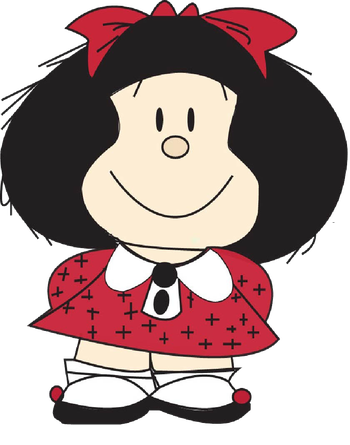
Turning to the topic shampoo/conditioner/hair mask /fixing products. As with skin cosmetics, I have a lot of distrust and I think less is more. For shampoo, it is a whole world and I am not an expert, but I know that the less rare ingredients the better. Also in this case, the issue of ingredients seems less serious than in cosmetics, since they will only be in contact with the skin during the time we wash our hair, and “your hair itself is already dead, no matter what you put on it” (this phrase was told to me by a friend who was studying medicine and it was recorded, hahaha). By the way, it makes me feel quite uncomfortable to think that some people wear natural hair extensions. What is most important for issues like dandruff, itching, etc. is the health of your scalp, that is, of the skin of your head. And for that, I think food and water are we ingest are more important. Of course one cannot control whether the water is softer or harder, it depends on where one is. I have noticed a lot of difference in my hair from one city to another using the same shampoo, and this is due to water. Soft water leaves hair much cleaner and more manageable than hard water (with more lime). Knowing that, what I recommend is to put a filter in the shower (like a Brita jug, but for the shower, hahaha). It is not only good for your hair, but also for your skin, which appears less dry. It is much more useful to invest in a filter (in Spain they cost around thirty euros) than in products like moisturizers and hair masks. In addition, I use tip-to-medium conditioner (here there is no concern for the scalp, so I use Pantene) to control the frizz and because if I don’t use it my hair looks like Mafalda.
On shampoo brands, I would like to have more biodegradable (non-polluting) brands available in supermarkets. As there are not many options, and since I always look for the least bad option, I usually choose baby shampoos (since they are for babies have a more controlled list of ingredients). On fixing products, I understand that for girls with frizzy hair they may be indispensable. I do not use them, or at most I wear some aloe vera (this time the cheap green phosphorite). In addition, I have a slight suspicion that foams and hair gels cause acne (leaving residues on the pillow where you put your face). What I do when I wash my hair (usually at night) is to dry it with the dryer, and the next day I put it in a bun. The second day I can already wear it loose. From time to time I iron it, but honestly, it takes me 40 minutes and every time I am less willing to waste time on something like that. On this, another tip: those who have a lot of hair like me, it’s better to use irons with large squares in order to advance much faster. Regarding curling irons, I have only used mine twice. And it didn’t look so bad when I did it, but I repeat, for these things I don’t have patience.
Finally, the theme of the dyes. Because of my hair color and eyebrows (also black) I never dyed my hair until my gray hair began to bother me (about two years ago). Many people change their hair color for fun, I don’t find any sense in that (sorry, call me bland). But what I can’t do is go with gray hair!! Now it seems fashionable to dye your hair in white, even young girls are seen with white hair… It’s like ripped jeans, people do weird things to be fashionable. If it becomes fashionable to carry a vase on their head they will put it on. The fact is that I began to be traumatized by my gray hair (and did not have so many) and, of course, the first thing I did was to tear them off. MISTAKE!!! I do not think this causes more gray hairs to grow (obviously with time you will have more grey hairs, it is the law of life) but if you tear them off, later you’ll have short white hairs, and that is much worse !! What I had to do with some grey hairs (especially when I had straight hair, which made them more noticeable) is to paint them with mascara! (luckily my hair is black, I’m sorry blondes). I had to wait for them to grow to be dyed. But here I had another problem, and it is that my hair is very thick (that’s why it takes so long to dry) and it seems the dye doesn’t work very well on it. In fact, the 4 or 5 times I’ve dyed my hair, I get the feeling that the dye has not done very much on my hair me. Does this happen to someone else or is it just me??? I tried with Apivita and Herbatint dyes (I wanted without ammonia), a color less than black. A hairdresser told me that without ammonia grey hairs are not covered, but I don’t want to use it … I have not tried henna, but I have heard that it stains, it goes with the washes and then you can’t use dye, so I don’t see it very practical.
As a last tip, I recommend that you buy a tangle teezer brush, it’s amazing!
Hello everyone! This month’s post will definitely be the eschatological post of the blog, because I’m going to talk about two topics that are not very nice and about which not many people talk about. It may happen to you and you do not dare to talk about it (as I said in the first post: everyone talks shamelessly about overweight, but there are many other problems about which people keep silent). It may happen to you and you do not even know it (I have a friend who sometimes coughed the balls of caseum and thought they were pieces of lung, WTF !!!). Or it may happen to someone in your environment. Anyway, let’s go to it.
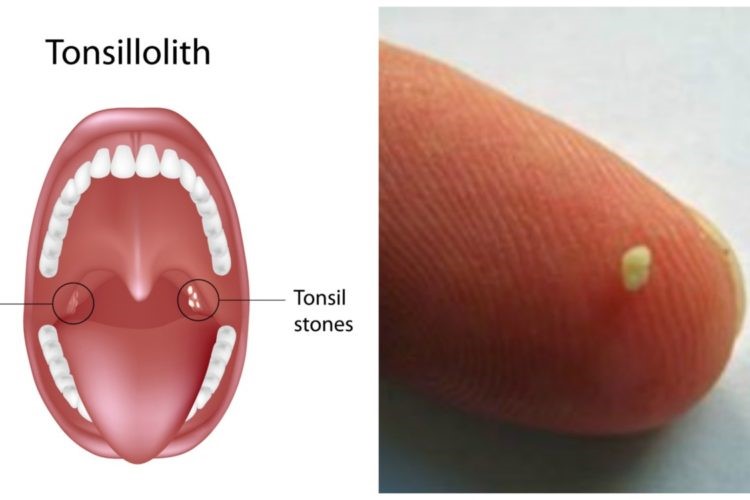
What is caseum? It is the official name of stinky white balls that form in the tonsils. According to information I have collected from doctors + internet (many times I do not know who of both know more or less, because different persons and pages say totally different things), caseum is made up of remains of food, snot and other organic waste. If you often had angina as a child (as in my case) it is more likely that you will have “holes” in your tonsils, which are called “tonsillar crypts”. Where there is a hole, it is easier for the caseum to form. And it can not be avoided because every day we eat, and the mucus from the nose goes down to the throat. What can be avoided is to get sick so often, with a good diet high in vitamin C and good clothes. I have not had tonsillitis for many years.
The problem with caseum is that it accumulates in tonsillar crypts and can cause bad breath. Well, this is a controversial issue, because according to my experience and what I have read in many forums it does not cause bad breath outwards (that is, others do not notice it) but inwards (when the ball gets very big, it goes out alone from the hole and you swallow it, then you notice it). Or maybe it causes bad breath out when the ball is too big and goes out of the crypt.
What can be done and what I do is, every day when I use my beloved oral irrigator, point to the tonsils to “rinse” them and help remove mucus and possible food debris. This helps a lot, although I have not been able to eliminate the fact that I have caseum, it forms much slower and in lesser quantity. Also, once a week, I carefully squeeze them with a cotton swab to see if something comes out. We must be very careful with this, because it is a very delicate area. Once I did it with my finger (after washing my hands well and without long nails, obviously) and I got a wound, it started to bleed … so do it with a cotton swab and very carefully, also be careful not to swallow the cotton swab! :)))
So here is my advice: follow a good hygiene with the irrigator and check weekly. I have consulted with people of confidence and I really do not have bad breath doing this (obviously remember that you can also have bad breath for other reasons, such as cavities or gingivitis, but I already talked about it in another post).
Let’s move on to another, even more disgusting subject. Black holes around the anus. Yes, there are, it is in general accumulated oil, like that of the nose. Many do not know they have them because what is down there is a mystery to them (how many people have never looked at the whole “intimate area” with a mirror?). Apart from that, depending on your hairiness, you cannot see there very well either. Well, I tell you that it is very common to have pimples formed around the anus, in the same way that they form in the nose. It looks as if you have a granulated skin around the anus, sometimes there is a little black dot indicating that it is the head of the pimple. Do not confuse these pimples with fistulas, hemorrhoids and other anal problems that may require medical-surgical intervention. These are simply pimples, which most of the time are not problematic and you do not even notice you have them. I discovered them when I had intimate hair removal with electrolysis (there were not many hairs there, but I did not want to have any for hygiene reasons). Only once I had a quite big pimple very close to the anus and I could notice it when going to the bathroom. So I “cleaned” my skin there, just as I do with black spots on my nose :)))))) When I finished I put some betadine.
My advice is that you take them off only if they bother you, since it is not an aesthetic problem and normally, they are not problematic. If you want to do a “cleaning”, you can do it yourself, with a mirror, a little flexibility and, especially, very clean hands and nails! You can tissue to do the procedure and then put betadine. The same day you do it you may notice some discomfort because it is a very sensitive place.
I hope this post will be helpful, the next month I will post something more pleasant !! :)))
* UPDATE: There is already a laser surgery that removes tonsil crypts without removing the tonsils. For now, few ENT specialists perform this surgery, here is a video about it:
Hello everyone!!!
Since one of my new year’s resolutions is to update the blog monthly, here I go with a new post;)) As it has been a while since I wrote the posts on electrolysis and oral hygiene, I felt that I had to update and expand that information a bit, since I have learned /discovered new things that I want to share.
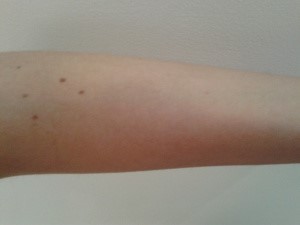
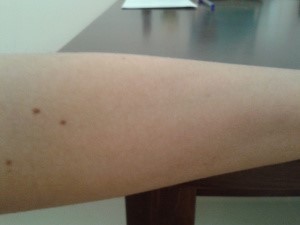
Let’s start with electrolysis. I have visited the lady that I already mentioned twice more (one week at a time) and she epilated those parts of the body that I cannot reach, and those that are more complicated too (back, butt, pubis…). But, as I said to those who wrote to me both on the blog and in private, I still think that buying my Apilus Junior machine (7 years ago!) was perhaps the best investment I could made. It has served to: review legs, armpits and eyebrows, epilate arms, and now also mustache and knuckles. As an example, you can compare the photo I posted when I started epilating my arms myself, and how my arm is now, clean, clean (and my moles are much more noticeable than before):
Two months ago I decided to start with my mustache. I was epilating it with wax but I wanted to finish with that too. I had always done it with hot wax and although the results were fin I found it very cumbersome, specially when going on a trip, if there was no microwave…So I changed to facial bands of cold wax, much more practical in that sense but less effective waxing, in my opinion. I checked my moustache every week and yes, it was a moment, but after much meditating and investigating I decided to venture and do it myself with my machine. If I had not do it before, it was because I was afraid of having a disaster in my face (as I did at the beginning in my thighs, but then the marks go away) and because once you start there is no going back to wax. If I had had a good electrologist nearby I would have gone, because the mustache is a small area and I do not think it would be expensive. The problem is that it is a facial area and I cannot stand seeing myself with hair there, so I would have had to go every week during the process, and where I live now I do not have that possibility.
So, I waited a week for some hairs to grow and I started with the first round. Obviously at first it seemed very simple because in a week you have very few hairs. But with time fuzz comes back, and epilating fuzz is quite complicated. Hairs that are black are easy to epilate, because you see them easily. But in the moustache there is a lot of fuzz, very small and blond hairs. Go, if I do not see them I do not mind having them, but if there are may they are noticeable. So, for the second and third rounds, things got a bit complicated.
The procedure that I have followed is as follows. I try to do it at night, or one morning on the weekend if I’m not going out at least until night. I put Emla cream (anesthetic) and cover it with plastic so it absorbs well. I wait an hour for the area to fall asleep (if the center area-under the nose is not asleep it is impossible, it hurts very much) and then I start to shave. You have to hurry because the effect of the Emla there (at least to me) fades very fast, like in half an hour. I use the finest needle and parameters of 0.20 sec, 98% and 1 pulse. I found these parameters in a forum and I really appreciate it because they have worked very well for me. I had the ones I use for the body and these parameters are better for the mustache. I use thermolysis and an Apilus Junior (the most ancient model of all). With other machines the parameters may be different (it also depends on each person, obviously a man’s mustache would need more power). And, with my magnifying mirror I epilate hair by hair.
I focused first on the blackest and noticeable hairs (two months later no longer existed) and later in the fuzz (which is much more complicated to eliminate). The most difficult area is under the nose, the center and the edge of the lip. But little by little it has been fading. It is better epilating during the day or at night? During the day, with the window that I have and natural light, the view is great, but it is so good that it is difficult to focus on what to remove, and you lose a bit of perspective. At night you have to make more effort with your eyes but you can do better when selecting. So I decided to alternate. Of course, at night it is better in the sense that your skin is red and the next day that disappears. I do it during the day if I’m going to stay at home. Another trick that I saw, so that there are no scars left there or marks, is to put Bepanthol (the cream for babies) when you finish and cover it with a plastic (I leave it until the next day or the time I’m home if it is during day). This way, the area is superhydrated, oxygen does not enter and you don’t have crusts. You should let the sun touch that area for some days.
I have also removed hairs in my knuckles, since I had already removed all hairs from my feet. Whenever I saw photos of engagement rings or wedding hands I thought, “how ugly it would look like with hairs on your knuckles”. In biology class I studied that it is a genetic trait to have little hairs there. I used my old epilady to remove them. When I decided to epilate them I did the same as with the mustache: I let hairs grow and I removed them each week. Although, of course, on the knuckles it is not a big problem to let some hairs grow, as it is on the face.
Regarding the teeth topic, I still think that the So-Wash device is a wonderful invention and much better than the Waterpik device. My dentist-periodontist used to tell me that I did not brush my teeth very well, but now he always says the contrary. I have no gums problems or cavities. I find suspicious that dentists do not recommend its use, since for me it is key. When travelling, if I could not use the irrigator, I did not feel my mouth was as clean. So, I bought the new adapter for travels. Now the company has launched more products based on the same idea, for washing the colon and to wash after going to the bathroom if there is no bidet (I have not seen bidets outside of Spain and Argentina, in spite of how practical they are for that and to wash your feet after wearing sandals).
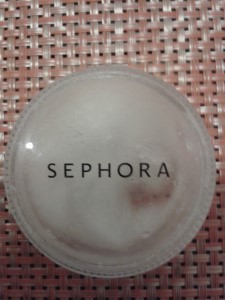
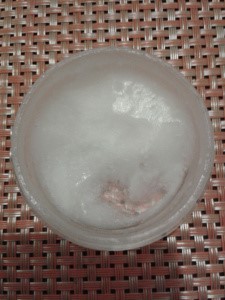
Regarding toothpaste, in the other post I recommended Fluocaril. But I changed my mind. One problem that I had and did not mention is that sometimes I got spots on my teeth because of tea, vegetables, juices, etc. I have not had that problem again because for two years I’ve been making my own toothpaste with coconut oil and baking soda. Baking soda is not abrasive, or it is not as much as any toothpaste (there is an online comparative table with the degree of abrasion of different tootphastes and of baking soda). In addition, it is mixed with coconut oil, which whitens. What you Keep in mind that it is better to throw the oil in the trash because if it is cold outside, coconut oil solidifies and may clog the pipe. If it is too hot, coconut oil becomes liquid. Here is my pasta:
The only problem is that I find it a little messy for travelling, so when travelling I use Weleda’s salt pasta instead.
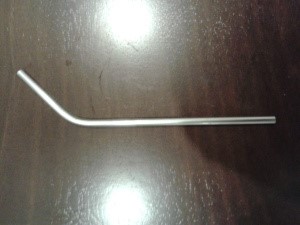
Another trick to prevent stains is to have liquids with a straw. This works also for acidic juices like orange juices, because acids weaken your enamel. I bought a stainless-steel straw and I wash it after each use (cheaper and more ecological). Remember: it is not good to drink hot drinks with plastic straws, because with heat the plastic releases substances that can pass to your drink. It is also not recommendable not to heat or put hot food in plastic tuppers, but to use glass tuppers;))
Here is my straw:
*To buy the products I speak about (I only recommend products that I’ve tested):
As an Amazon Associate I earn from qualifying purchases
This month’s post is going to be about … the deodorant! SAY NOT TO DEODORANT !!! HAHAHAHA Hurrah social ostracism !! Well, I’m not saying that you have to go around smelling bad, I just want to share some things that I’ve tried and to encourage you to try them too.
First, let’s distinguish between deodorant and anti-perspirant. Deodorants, as the name suggests, eliminate the odour (or at least they’re supposed to do it). Anti-perspirants prevent you from transpiring, that is, you don’t sweat, so you will not smell. What is the purpose of sweating? It is a normal and necessary physiological function, as it is to evacuate, to pee … What would you need to suppress these function? Sweating is necessary, it serves to regulate body temperature and eliminate toxins. It is not good to use antiperspirants that prevent sweating (yes, I know the famous Perspirex is very helpful and I have also used it for a wedding, but it has aluminum that is carcinogenic). Sweating is affected by the cloth that you wear (lycra for example), by the weather (heat), if you are nervous, if your’e fatter or thinner, and even by genetic/hereditary reasons (some people sweat more than others in the same circumstances, some people sweat throughout his body, some people almost don’t seat…). For very serious cases (for example, people whose hands do not stop sweating) botox injections are used. But I’m going to talk about normal cases and especially the armpits sweating, which is the most common case.
Using antiperspirants is not good because it nulifies the function of regulating the body temperature that sweating has, and all the toxins that sweating eliminates get trapped. What alternative would we have to Perspirex to avoid stains in the axillary area? If you use Perspirex once a year I do not think you’re going to die. But there are alternatives. I found this on YouTube, and I think it’s a very good idea:
The video is in French, but basically it talks about washable anti-stain patches that stick to your clothes, they are not noticeable and they prevent a sweat stain. It occurred to me that since we can put a panty liner on our high-heel shoes so that they do not hurt, we could do the same on the armpit area of our shirts.
Although I do not want to seem extreme, I have read on numerous occasions and I know from some testimonies that women who have or have had breast cancer are advised not to use antiperspirants and even deodorants. Some components of these products have been found in various tumors. Armpits are very close to breasts, and everything people put on their skin goes into their bloodstream, so the habit of using deodorant/antiperspirant everyday may not be good… Have you ever thought about reading the components of these products and see if you know them, if they are safe?
In theory, deodorants would not be as bad as antiperspirants, because they only kill or camouflage the bacteria that cause bad smell, but they don’t suppress the function of sweating (they don’t avoid stains, just smelling). Anyway, I think they just camouflage odours, and I do not like them at all. Aerosol deodorants are bad for the environment, and even if we talk about non-aerosol deodorants, they have a lot of strange ingredients that I do not know.
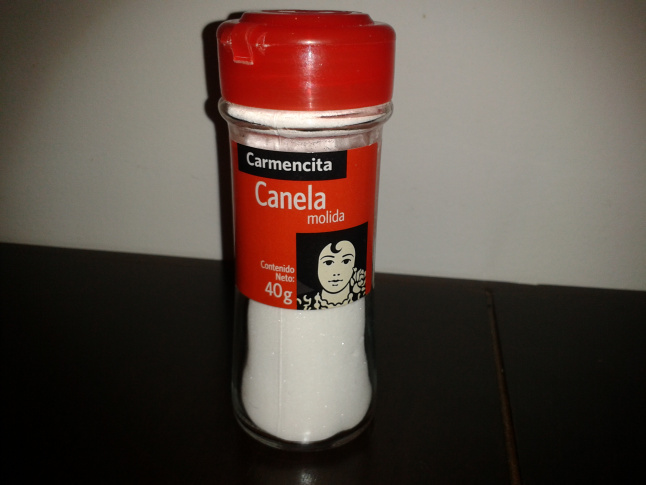
On the Internet, there are many recipes for homemade deodorants. But I’m going to give you two very simple ones that I’ve tried. The first is lemon juice. You squeeze it, put it in a diffuser, and you have your deodorant. The problem for me is that the diffuser always ended quite sticky. Some people warn that lemon photosensitizes and you can get spots in your armpits… but who sunbathe the armpits??? LOL. So I think a better idea is baking soda (this ingredient is good for everything, in another post I will talk about my homemade toothpaste;)) It is the ingredient of almost all homemade deodorants, but I use it simply. I put some powder in each armpit (before putting on my clothes) and that’s it. It works very well. I keep it in the bathroom in a spent bottle of cinnamon, put a little in my hand and pass it through the armpit:
Finally, it is also important to consider diet. Many people change their body odor when they leave a diet full of junk food. In fact, if you eat a lot of fruits and vegetables you will notice that your body (bad) odor is much lower, because you are not eliminating so many toxins. An exception for this are garlic and onions, which are very good for health but have some compounds that cause bad breath for a while even if you brush your teeth, and they also perspire through the skin. For that type of bad breath there are solutions like chewing parsley immediately afterwards or eating your garlic frozen. Garlic and onions smell more if they are eaten raw than cooked, but eaten raw they maintain more properties.
And of course, for the smell of the armpits, water and soap in the shower every day! :)))
I hope this post is useful and contributes to reduce the use of so much unnecessary chemical cosmetics, harmful to the environment, your health and pocket.
In the next posts I will update the post about electrolysis hair removal electrical, since I receive many questions (but everything is going very well;)). Also the post about oral care (I anticipate that the So-Wash irrigator still seems the best, and I have proven it in myself). And I will explain how I prepare my homemade toothpaste and how much I use it. Also how I ended up with the little spots on my teeth that appeared due to drinking too much tea.
Kisses to everyone!!!!!
*To buy the products I speak about (I only recommend products that I’ve tested):
As an Amazon Associate I earn from qualifying purchases




 en.secretsbeautyandhealth.blog