In a previous post I already talked about my interest in henna. Since I started to have some gray hair (around 28-30 years old) I tried to use a natural dye, that would not complicate my life too much and in my own color. As I had heard ugly stories (from people I know closely) about serious allergies, damaged hair, sick people who are forbidden to dye their hair… I decided I would use only vegetable dyes. I tried the Apivita and Herbalife ones in dark brown, and they worked quite well. But the truth is that they are expensive (even if I only use half a box per month) and although they are softer than the usual supermarket dye, they as well contain an equivalent to hydrogen peroxide and chemicals that I do not like at all. I didn’t want to spend too much money in dyes at the hairdresser (stop thefts!). Also, several people had already told me about henna and I wanted to try it. The problem is that in all the research I did on the internet it appeared that it is not effective in covering gray hair, and that it stained everything, so that discouraged me a lot. But I decided to try after talking to someone who assured me that it does cover gray hair.
Since I wanted a color similar color to mine (dark brown), I bought Radhe Shyam’s Indigo Henna Mix (specifically the deep brown color). Actually, the mix has more indigo than henna (the order of ingredients in the products goes from most to least, this also works for food ingredients). Indigo is the blue dye used to dye jeans, and just like jeans, it fades with washes. Mixing indigo with henna brings out the dark color. In fact, there are people who only use indigo to dye their hair black. The world of henna includes mixtures with plants to achieve different colors, shine… But what really covers gray hair is henna, which gives a reddish color to gray hair and blends with the natural hair color.
My experience with the indigo + henna mixture was not good. And I gave it several opportunities (about 4 or 5 applications) testing the application in different ways. To begin with, the indigo left black stains on my towel, collar, nails, hairbrush … a disaster. And I did not feel that the gray was covered well (indeed, the component that dyes gray hair is henna, and it comes in less quantity than indigo in the deep brown color). In addition, as I investigated later, the two plants have different ways of working: for henna you have to mix with water at a higher temperature and the indigo with less, the acid (for example from vinegar) that makes henna work better inhibits the indigo color… a mess, too complicated. In fact, they recommend that you dye first with henna alone to cover the gray hair and then with indigo to achieve the dark color. Just the complications that I don’t want.
So I decided to try henna alone. I was worried that the result would be weird as I have dark hair and gray hairs would be red. But hey, I don’t have that many either so it couldn’t be so horrible. I found a book called Henna for Hair. How-To Henna, by Catherine Cartwright-Jones, year 2006. Apparently it is the result of a doctoral thesis on henna. You can find it for free on the hennaforhair.com page. On this page they explain many things about henna, and the book is very interesting, it contains historical and practical information. In the book they explain how, experimenting with dyes in sheep’s wool, they saw that the color was much better mixing the henna with acid, and not with water (doesn’t matter temperature) as they usually recommend in the manufacturers’ instructions (in fact, another very famous and more expensive brand than Radhe Shyam, even though their dyes contain the same ingredients, is Khadi, who even sells you a thermometer to check that you have the perfect temperature for henna, purely to create unnecessary purchases). So, I started using the henna alone, preparing it the night before with white vinegar, and heating the mixture in double-boiler the next morning. And boy did it work. The gray hair was covered perfectly, and it does not look strange with my color, it looks like highlights. In the rest of the hair, you hardly notice anything, maybe some red highlights in the sun. This is perhaps because my hair is very thick and does not hold the color as much, but I repeat that gray hair is perfectly covered and it does not go away. In fact, I see perfectly when I need to dye again because my hair has grown, but the gray that is already dyed keeps red.
Another hotly debated issue is the issue of application. On the page and book that I have recommended they say that henna must be applied with clean hair, not so much because it cannot be applied with dirty hair but because they tell you that after the application (in my case I leave it 4 hours but a lot people have results in less time, although less than 2 hours would not be recommended) henna should only be rinsed with water, without shampoo. Then you should allow two or three days for the henna to release all the pigment in your hair when oxidizing, and then wash the hair. I did it like this the first few times, but it was very difficult for me to spend 3 days with traces of mud in my hair, which although they were not noticeable, left my hair very dull. In addition, this procedure involved washing my hair, then applying the henna (I tried both dry and wet) and then rinsing it in the shower. I wash my hair every 4-5 days, I have a lot of hair and it takes time to dry even with a hairdryer, so this process was too cumbersome and time-consuming. So, I tried applying it like regular dyes (on dirty hair and shampooing after application) and voilà, it worked just as well. So one less complication. In short, now the only different thing that henna implies compared to a normal dye is the time that I leave it on. Yes, it is more messy to apply, but a friend from work comes over and puts it on me in no time. Update: Iater I also learn to apply it myself. 😊
So I am very happy with the results of the henna. First, it’s very cheap: less than 3 euros for a box of Radhe Shyam that currently serves me for two applications, I buy the color “natural copper”, which is the one that contains only henna. Do not get confused with other brands that come from India, if you are in Spain, this brand is cheap, has been around for many years and has the eco certification. I cannot opine about the efficacy and ingredients of other colors, but for pure henna I would choose Radhe Shyam. Second, after about eight attempts, I finally discovered the most efficient/least cumbersome/least time-consuming way to apply it: mix with vinegar the night before, apply on dirty hair the next morning, leave it 4 hours and wash afterwards. I don’t know why people get so complicated, or maybe it’s a matter of what works for some and for others. On the mentioned page and on forums they recommend not using sulfate shampoos because it would damage the color, although I don’t think it’s that bad either. I will talk about sulfate-free, solid shampoos and other hair discoveries in the next post. Well, from the photos I have seen, it seems that brown/fine hairs get very caught by the red/copper tone, it is very beautiful. Not for me, as I said I just have some red highlights. The gray hairs are orange/reddish but with the days they blend more with the hair color.
Henna does not stain anywhere near as the mixture I used of indigo + henna, but in my case it does leave some smears on the hairbrush. Not so on clothes, sheets or pillow. In any case, some mud that may take a few washes to completely go away (but you can’t see anything in the hair, it looks completely clean) can help those with oily hair to space out washes. I don’t have greasy hair, but I don’t feel that henna has dried it out. In fact, henna in addition to dyeing is supposed to nourish and make hair thicker (I didn’t need more of this, but anyway).
I will continue with hair news 😊
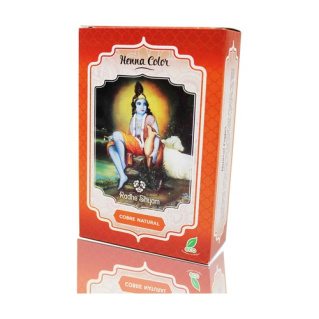
*To buy the products I speak about (I only recommend products that I’ve tested):
As an Amazon Associate I earn from qualifying purchases
*From the United States:
- Khadi pure henna: https://amzn.to/2FPrs24
*From Mexico:
- Henna pura (cobre natural): https://amzn.to/2FOtZd1
*From Spain:
- Henna pura Radhe Shyam (cobre natural): https://amzn.to/3kxh66a
- Henna pura Khadi: https://amzn.to/3iZkYwt
 en.secretsbeautyandhealth.blog