Travel Tips

Hello everyone!!

In this month’s post I am going to talk about some tips that are quite useful for traveling, I am referring especially to long trips. In the current moment, traveling seems a thing of the past, but sooner or later we will return to normality.

Due to my job I have traveled many times on long flights (transoceanic), flights of at least 10 hours. The longest lasted 14 hours! So, I have some experience and I have seen what is best for travel, from my personal experience. I am going to offer a list of recommendations, especially suitable for long flights, although they could be used for other types of trips, I hope they serve you!:

1. Comfortable clothes. I am always surprised by the photos of celebrities arriving at the airport super divine, with jeans, heels and makeup. I suppose those are occupational hazards. But for those who are not or aspire to look like celebrities, the best thing in the case of long flights is to wear comfortable clothes: leggings, sports shoes, sweatshirts. Clothes with which you can sleep in the most similar way to how you would in your pajamas. Footwear that you can put on and take off easily. And don’t wear a bra. If you have big boobs you can wear a comfortable sport bra. I don’t wear any bra when traveling. In a previous post I already talked about the lymphatic system and the convenience of not wearing a bra, but on a long flight this is even more necessary. When I have flown in the summer and I was wearing a T-shirt at the airport because of the heat, and I felt that I could not go without a bra because it was going to be too evident, what I did was to take it off in the bathroom of the plane and put it in my handbag or backpack. On airplanes it is never excessively hot, rather it is cold because there is usually ventilation going on, so you will be able to put on a sweater, even if it is thin, and not feel that people will realize you are not wearing a bra. Although, as I mentioned in my previous post, wearing a bra or not, noticeable, or not, shouldn’t be a problem or cause for embarrassment. Also, even if it is summer/hot, I think it is always better to wear more than less clothes when flying. On airplanes, I repeat, it is usually cold. Although they give you blankets, you can get cold, and anyway the excessive clothes that you wear can always be removed. For this reason, I never get on a plane wearing sandals (unless I have thick socks in my bag to put on later) or with not enough clothes, I always wear at least one sweatshirt just in case. And I also wear a neck scarf because the cold of the plane can cause sore throat.

2. Travel pillow. Although they also give a mini pillow on the plane (in the case of Iberia) it is better to take a travel pillow for the neck. You can end up with a terrible torticollis if you fall asleep with poor neck posture.

3. Glasses. If you wear contact lenses, do not take them to travel. You can take them off when boarding the plane or going directly to the airport with glasses. On airplanes your skin and mucous membranes get very dry, even if you do not fall asleep it would be very bad to fly for many hours with your contact lenses on.

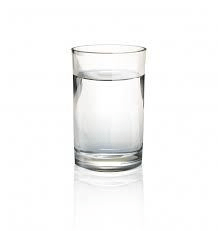
4. Big bottle of water. Continuing with the above, on the plane you get very dry on the outside and on the inside. It is advisable to drink plenty of water during the flight. At meals time (on a transoceanic flight there are usually 2 meals and a snack) they offer you a glass of water, but it is advisable to drink much more. And it is better not to drink wine, coffee, or anything like that, just water. Since I cannot carry liquids, I always buy a bottle of water as big as possible (1 or 2 liters) in a store inside the airport.

5. Ear plugs, eye mask, headphones. Again, they usually offer them to you on the plane, but just in case. The earplugs can help you sleep well, the mask protect you from the light, and the headphones are in case you want to listen to your own music, audiobooks or whatever, or if you are uncomfortable with those that are provided on the plane.

6. Toothbrush and toothpaste. After a long trip and several meals, bad breath can occur. At least before landing it is advisable to brush your teeth. Depending on whether you are going to see someone important when you arrive or not, you could also wear some cologne or makeup. I prefer not to wear makeup for long flights, because the skin suffers a lot on those trips. Sometimes I put some aloe vera before landing in order to hydrate. Some underarm wipes can also help you arrive with more dignity (I remind you that I don’t use deodorant).

I hope it helps you! Until next post!
Hydration

I am going to dedicate my first post to hydration: inside and outside.

I think more attention is paid to external hydration than to internal. I was recently on a trip with a friend, and I observed that every day, before getting dressed, she put cream to hydrate her entire body and face. However, throughout the day, despite the hot weather, she hardly drank any water. Instead of water, she drank coffee and beer, depending on what time it was (both drinks dehydrates). And she was surprised that I always drank water with my meals.

Hydration, both internal and external, is very important, but I think internal hydration is more important than the external one. We are 70-80% water, and that water must be replaced throughout the day, especially if we are in a hot environment. If it is cold, it is normal that we are less thirsty, but we must drink the same (if we want hot drinks, we can do it in the form of tea or infusion) and our skin can look dry due to heating. If it is hot, we will naturally be thirstier, and if we sunbathe our skin will dry out more than if we are in the shade. In the case of children and the elderly, it is necessary to ensure that they drink water, especially the elderly, as they have a decreased sensation of thirst.

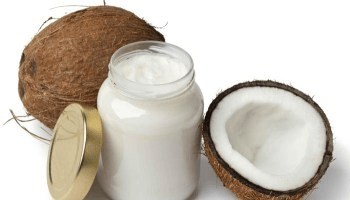
My trick to staying hydrated is to try to drink water every half hour (two sips). I drink water in the morning before breakfast (after rinsing my mouth with coconut oil), and at work. I have my water bottle (not plastic) to try to drink every half hour. Obviously if I’m on the street I can’t do this, but there is also the option of carrying a bottle of water in your bag. The green juices I have for dinner (two or three glasses) also hydrate. When you drink too much alcohol and coffee, or simply don’t drink enough water, it reflects on your energy and the condition of your skin.

Moving on to external hydration, I hydrate my face and neck in the morning and at night. I only use some good aloe vera (from my aloe vera plant), and lately, because I’m in my thirties, a little coconut oil at night, mainly in the eye and forehead area (I’m still scared that I get a grain for being oil, although not yet). I also hydrate my lips with coconut oil. And at night I put coconut oil on my hands, elbows, knees, and feet, before I go to sleep.

What I don’t normally do is hydrate my whole body. Why? Well, because it involves time and expenses on the product (even if it’s coconut oil) that I don’t want to assume. My face and hands are constantly exposed to the outside, so it makes sense to hydrate them daily. Elbows, knees and feet require very little amounts, and I hydrate them daily to prevent callus. But for the body, which is normally covered and only gets soaked briefly in the shower, I don’t see the need to use moisturizer (I don’t rub soap all over my body every day, just occasionally; I use soap only in private parts and armpits).

Of course, it would be another thing if, for example, I went swimming or to the beach to sunbathe, then I would hydrate my body too. But normally I don’t do that. And my skin is very soft (to a great extent thanks to the electrolysis hair removal). On TV and in pharmacies they sell us the idea that it is necessary to smear ourselves with creams every day (tonics, nutritive creams, eye contours, bla, bla, bla). Well look, it is not like that, and I have verified it in myself (in addition, creams are usually made of petroleum derivatives that seal the skin like a plastic). With a few products (aloe vera, coconut oil) normally applied only to the face, neck, hands and troubled areas, it is enough. And when the age is really noticeable (which will be less if the sun does not shine on our faces) it is better to go once or twice a year to one of those places that inject vitamins and all that stuff on your face, than to spend that money on creams. Anyway, I hope in my case that will be, at the earliest, at 40.

So, in conclusion, more internal hydration and fewer complications with the external one.

Until next time! 🙂

*To buy the products I speak about (I only recommend products that I’ve tested):

As an Amazon Associate I earn from qualifying purchases

*From the United States:

*From Mexico:

*From Spain:

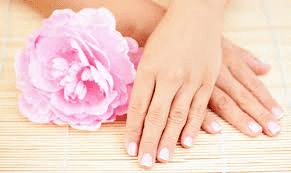
Take care of your hands!!

Hello everyone!!

It is said that the hands reveal the age of a person: a lady may have put botox, acid, vitamins and things like that on her face, have a facelift … and even tough the appearance of her face is that of someone younger, her hands provide a clue about her true age. This is because hands don’t receive much attention and, even when they do, it is difficult to make hands “appear younger” than their age (however, I have heard that infiltrations exist also for hands).

Hands have hardly any fat or collagen, so the aged appearance is noticeable earlier. Older people often have brown spots on their hands, just as on the face. These spots, as I said in a previous post, can be removed with the electric hair removal machine (although I suppose there will also be laser methods).

Although the advice that I am going to give seems quite obvious, I want to remember some things here precisely because I see many people who do not follow them every day:

1. Protect your hands from cold weather. Especially in winter months, never forget your gloves! Cold weather causes hands to become dry, scaly and rough.

2. Protect your hands from the sun. I already explained previously that I am not in favor of applying sunscreen every day, that this type of recommendation seems to me somewhat interested from people who want to sell creams (in addition to many other issues regarding their ingredients). My advice is to walk in the shade and to be protected with an umbrella, which also works for the rain. Besides, I use hats! I leave sunscreen only for situations in which I am going to be directly exposed to the sun for a long time (beach, swimming pool …). If we use umbrellas hands are already protected in the shade. But if your hands are going to be exposed to the sun, remember to also put sunscreen on your hands.

3. Use gloves for housework. It horrifies me when I see people washing dishes without gloves, exposing their hands to hot water and the chemicals in dish soap (it is better if you have a dishwasher, it saves water and involves less work for you). The same when we clean the house or wash clothes by hand. I have a hairdresser friend with shattered hands, because of course, she spends the day washing heads … in this case I don’t know if there will be any type of suitable gloves for it, but it would be recommended.

4. Hydrate your hands. Just as you wash your face and moisturize it at night, do the same with your hands. We wash and dry our hands several times a day, so they need extra hydration. Coconut oil is good for it. If you prefer creams (I am quite anti-creams), one that seems awesome to me is Neutrogena. Or you can just put petroleum jelly (although petroleum jelly is derived from petroleum and I’m a bit anti-it too).

5. Wash your hands! Well, this no longer applies to hand care but we all know that it is a basic hygiene measure: wash your hands before eating, cooking, after going to the bathroom, changing diapers or playing with the dog … Outside home it is always better, if we have the option, to dry our hands with paper than with hot air (it dries out the hands). And if it is not so easy to find a sink, antibacterial gels are a good option, they do not need rinsing and can be carried in your bag. And another tip that may also seem obvious but it is not so obvious: you have to wash your hands before washing your face or applying moisturizer or makeup. That is, our hands are clean when we put the soap with which we are going to wash our face, moisturizer or makeup. UPDATE!!: This post was written long before Covid-19, but this last recommendation seems more useful than ever.

*To buy the products I speak about (I only recommend products that I’ve tested):

As an Amazon Associate I earn from qualifying purchases

*From the United States and Mexico

·Neutrogena hand cream: https://amzn.to/3mzZIzg

*From Spain

·Crema de manos de Neutrógena: https://amzn.to/3iOulPa